
5G in India marks a historic transform in the country’s digital journey. With lightning fast internet speeds, ultra low latency and massive device connectivity, 5G in India is not just an upgrade from 4G, it is a complete transformation of how people live, work, communicate and innovate.
From smart cities to remote healthcare, online education to industrial automation, 5G in India is laying the foundation for a digitally empowered society and a trillion dollar digital economy.
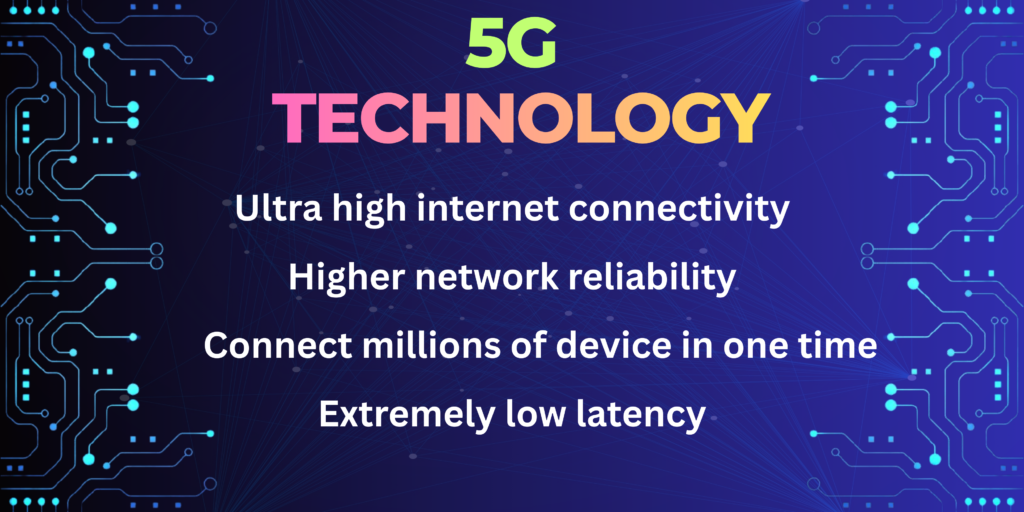
Table of Contents
What Is 5G in India?
5G in India refers to the fifth generation of mobile network technology introduced to deliver:
- Ultra high internet connectivity
- Extremely low latency (delay)
- Higher network reliability
- Ability to connect millions of devices simultaneously in one time
Unlike 4G, 5G in India supports advanced technologies such as Artificial Intelligence (AI), Internet of Things (IoT), Augmented Reality (AR) and also Virtual Reality (VR).
Evolution of Mobile Networks Leading to 5G in India
Journey from 1G to 5G in India
| Generation | Key Features |
|---|---|
| 1G | Voice calls only |
| 2G | SMS and basic data |
| 3G | Mobile internet |
| 4G | High-speed data & video |
| 5G in India | Smart connectivity & automation |
5G in India is the most advanced phase of this evolution.
Launch and Rollout of 5G in India
When Was 5G in India Launched?
5G in India was officially launched on 1st October 2022 by the Government of India. The rollout started in major metropolitan cities and gradually expanded nationwide.
Telecom Companies Offering 5G in India
Leading service providers delivering 5G in India include:
- Reliance Jio
- Bharti Airtel
- Vodafone Idea (planned rollout)
How 5G in India Works
Key Technology Behind 5G in India
5G in India operates across three spectrum bands:
Low Band Spectrum
- Wider coverage
- Moderate speed
Mid Band Spectrum
- Balance between speed and coverage
- Most commonly used for 5G in India
High Band (mmWave) Spectrum
- Extremely high speed
- Limited coverage
The Three Pillars of 5G in India
Enhanced Mobile Broadband (eMBB)
- This is the speed you notice immediately. While 4G maxed out around 100-200 Mbps, 5G in India can theoretically hit speeds up to 10 Gbps (Gigabits per second). Even in real-world scenarios, average speeds are multiple times faster than 4G, allowing for instant downloads of large files and seamless 4K/8K video streaming. The impact on live broadcasting and media is truly spectacular.
Ultra-Reliable Low-Latency Communications (urLLC)
- This is perhaps the most revolutionary aspect of 5G in India. Latency is the delay before a transfer of data begins following an instruction. 4G latency typically ranges from 60 ms to 98 ms. 5G promises latency under 5 milliseconds. This near-instantaneous response time is critical for applications like:
- Remote Surgery: A doctor can operate a robotic arm thousands of kilometres away with minimal delay.
- Autonomous Vehicles: Cars can communicate with each other and roadside infrastructure instantly to prevent accidents.
- Cloud Gaming: Gaming experiences become console-quality, streamed instantly to a mobile device.
Massive Machine-Type Communications (mMTC)
- This is the capacity of the network to handle a huge number of connected devices—up to one million devices per square kilometre. This is the foundation for the Internet of Things (IoT), allowing for smart homes, smart factories, and, most importantly, Smart Cities powered by 5G in India.
The different frequency bands (Low-band, Mid-band, and High-band/mmWave) used for 5G in India allow TSPs to balance between blanket coverage and ultra-high speed, providing the right connectivity for different needs.
Major Benefits of 5G in India
1. Ultra-Fast Internet Speed
With speeds up to 10 Gbps, 5G in India allows:
- Instant downloads
- Lag free streaming
- Seamless video conferencing
2. Low Latency Communication
Latency drops to 1 millisecond, making 5G in India ideal for:
- Online gaming
- Autonomous vehicles
- Remote surgeries
3. Increase Digital Economy
5G in India is expected to contribute USD 450 billion to the Indian economy by 2035.
Impact of 5G in India on Key Sectors
5G in India and Healthcare
- Remote surgeries
- Real-time patient monitoring
- AI-based diagnosis
5G in India and Education
- Virtual classrooms
- Immersive AR/VR learning
- Global access to education
5G in India and Agriculture
- Smart irrigation
- Crop monitoring using IoT
- Precision farming
5G in India and Smart Cities
- Smart traffic management
- Energy-efficient infrastructure
- Improved public safety
5G in India and Internet of Things (IoT)
5G in India supports massive machine-type communications, enabling:
- Smart homes
- Industrial automation
- Connected vehicles
IoT devices work more efficiently with 5G in India due to high bandwidth and low power consumption.
The Current Status of 5G in India
The speed and reach of the 5G in India rollout have genuinely been spectacular. In a country as vast and geographically diverse as India, deploying a new generation of cellular technology at this pace is a monumental achievement. The initial phase saw major telecom service providers (TSPs) aggressively deploy infrastructure, racing to cover major cities, but the expansion quickly moved beyond metropolitan hubs.
As of early 2025, the coverage for 5G in India has reached nearly $99.6\%$ of all districts nationwide. This phenomenal statistic showcases the commitment to bridging the digital divide, ensuring that the benefits of high-speed connectivity are not confined to just a few urban pockets. We are witnessing a massive deployment, with over 4.69 lakh (469,000) 5G Base Transceiver Stations (BTSs) installed across the country.
Challenges Facing 5G in India
1. High Infrastructure Cost
Deploying 5G in India requires heavy investment in:
- Fiber networks
- Towers
- Spectrum acquisition
2. Device Compatibility
Not all smartphones support 5G in India, limiting adoption.
3. Rural Connectivity
Expanding 5G in India to remote villages remains a challenge.
5G in India vs 4G: A Quick Comparison
| Feature | 4G | 5G in India |
|---|---|---|
| Speed | Up to 100 Mbps | Up to 10 Gbps |
| Latency | 30–50 ms | 1 ms |
| Device Support | Limited | Massive |
| Applications | Streaming | Smart ecosystems |
Future Scope of 5G in India
The future of 5G in India includes:
- 6G research initiatives
- AI-driven automation
- Smart governance
- Industry 4.0 revolution
By 2030, 5G in India will be the backbone of India’s digital transformation.
Conclusion
5G in India is more than just faster internet, it is a powerful enabler of innovation, growth and digital inclusion. While challenges exist, the long term benefits of 5G in India far outweigh the obstacles.
As India moves toward becoming a global digital leader, 5G in India will play a central role in shaping a smarter, faster and more connected future.