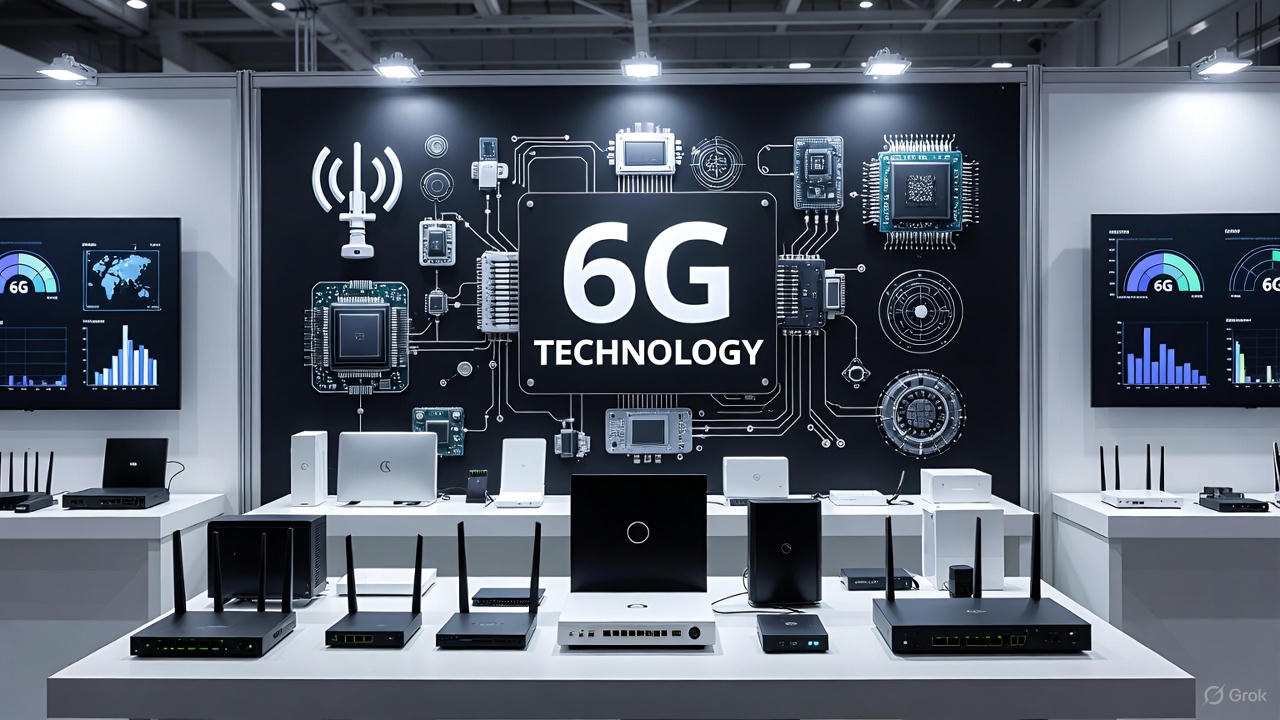

6G technology is set to redefine the future of digital communication by offering speeds, intelligence and connectivity far beyond what we experience today. As the world gradually adapts to 5G, researchers and governments are already working on 6G technology, which is expected to become commercially available by 2030.
6G technology is not just an upgrade in speed, it is a transformation of how humans, machines and artificial intelligence interact in real time. Let’s explore the intricacies of 6G Technology and why it’s generating so much buzz.
Table of Contents
What is 6G Technology?
6G technology refers to the sixth generation of wireless communication systems designed to succeed 5G networks. It aims to provide ultra high data speeds, near-zero latency and intelligent network capabilities using artificial intelligence and machine learning. Experts predicts that 6G Technology will operate in terahertz (THz) frequency bands, enabling the data transfer rates up to 1 terabyte per second that’s 100 times faster than 5G Technology.
Key Definition of 6G Technology
- Expected data speed: up to 1 terabit per second
- Latency: less than 1 millisecond
- Frequency bands: terahertz (THz) spectrum
- Integration of AI, sensing and communication
6G technology will blur the line between physical and digital worlds.
Timeline of Wireless Networks to 6G Technology
From 1G to 6G
- 1G – Voice calls only
- 2G – SMS and digital voice
- 3G – Mobile internet
- 4G – High-speed data & streaming
- 5G – Low latency and IoT
- 6G technology – Intelligent, immersive, and autonomous networks
Each generation laid the foundation for 6G technology, which represents a massive technological leap.
Features of 6G Technology
1. Ultra High Speed
6G technology can deliver data speeds up to 100 times faster than 5G, enabling instant downloads and real-time communication.
2. Terahertz (THz) Communication
Unlike previous generations, 6G technology will operate in the terahertz frequency range, allowing extremely high bandwidth.
3. AI Based Networks
6G technology will use artificial intelligence for:
- Self-optimizing networks
- Predictive maintenance
- Intelligent traffic management
4. Ultra Low Latency
With near-zero delay, 6G technology will support mission-critical applications like remote surgery and autonomous vehicles.
How 6G Technology Works
6G technology combines advanced hardware, intelligent software and new spectrum usage.
Core Components
- Terahertz antennas
- AI-powered network controllers
- Edge computing integration
- Quantum communication techniques
Working Mechanism
- Data is transmitted using THz waves
- AI optimizes routing in real time
- Edge devices process data instantly
- Feedback loops improve performance
This intelligent approach makes 6G technology self-learning and adaptive.
Applications of 6G Technology
Smart Cities
6G technology will enable fully autonomous smart cities with real-time traffic control, energy management, and public safety systems.
Healthcare
- Remote robotic surgeries
- Real-time patient monitoring
- AI-assisted diagnosis
6G technology will revolutionize telemedicine.
Extended Reality (XR)
- Holographic communication
- Immersive virtual meetings
- Real-time digital twins
Autonomous Vehicles
With ultra-low latency, 6G technology ensures safe communication between vehicles and infrastructure.
6G Technology vs 5G Technology
| Feature | 5G | 6G Technology |
|---|---|---|
| Speed | Up to 10 Gbps | Up to 1 Tbps |
| Latency | ~1 ms | <0.1 ms |
| Intelligence | Limited AI | Full AI integration |
| Spectrum | mmWave | Terahertz |
| Use Case | IoT | Smart reality |
6G technology is far more intelligent and immersive than 5G.
Benefits of 6G Technology
Major Advantages
- Seamless global connectivity
- Ultra-reliable communication
- Energy-efficient networks
- Enhanced cybersecurity
- Support for future AI systems
6G technology will serve as the backbone of the digital economy.
Challenges of 6G Technology
Technical Challenges
- Short range of THz waves
- High energy consumption
- Complex hardware design
Security Challenges
- Data privacy risks
- AI-based cyber threats
Infrastructure Challenges
- High deployment cost
- Need for global standards
Despite these challenges, 6G technology development continues at a rapid pace.
6G Technology Development in India
India has launched the Bharat 6G Vision, aiming to become a global leader in 6G technology by 2030.
India’s 6G Goals
- Indigenous 6G patents
- Affordable deployment
- Global collaboration
6G technology will play a vital role in India’s digital transformation.
Global Race for 6G Technology
Countries investing heavily in 6G technology include:
- China
- United States
- Japan
- South Korea
- European Union
International collaboration will be key to standardizing 6G technology.
Expected Launch Timeline of 6G Technology
Timeline
- 2025–2027: Research and testing
- 2028: Standardization
- 2030: Commercial rollout
By 2030, 6G technology is expected to reshape global connectivity.
Future Scope of 6G Technology
6G technology will enable:
- Brain-computer interfaces
- Smart holograms
- Digital human avatars
- Fully autonomous industries
The future of innovation depends heavily on 6G technology.
Conclusion
6G technology is not just the next step in wireless evolution it is the foundation of a hyper connected, intelligent world. With unmatched speed, AI integration and immersive capabilities, 6G technology will redefine how we live, work and communicate.
As research accelerates worldwide, 6G technology promises to unlock possibilities once considered science fiction. Stay tuned as we edge closer to this hyper connected reality.