
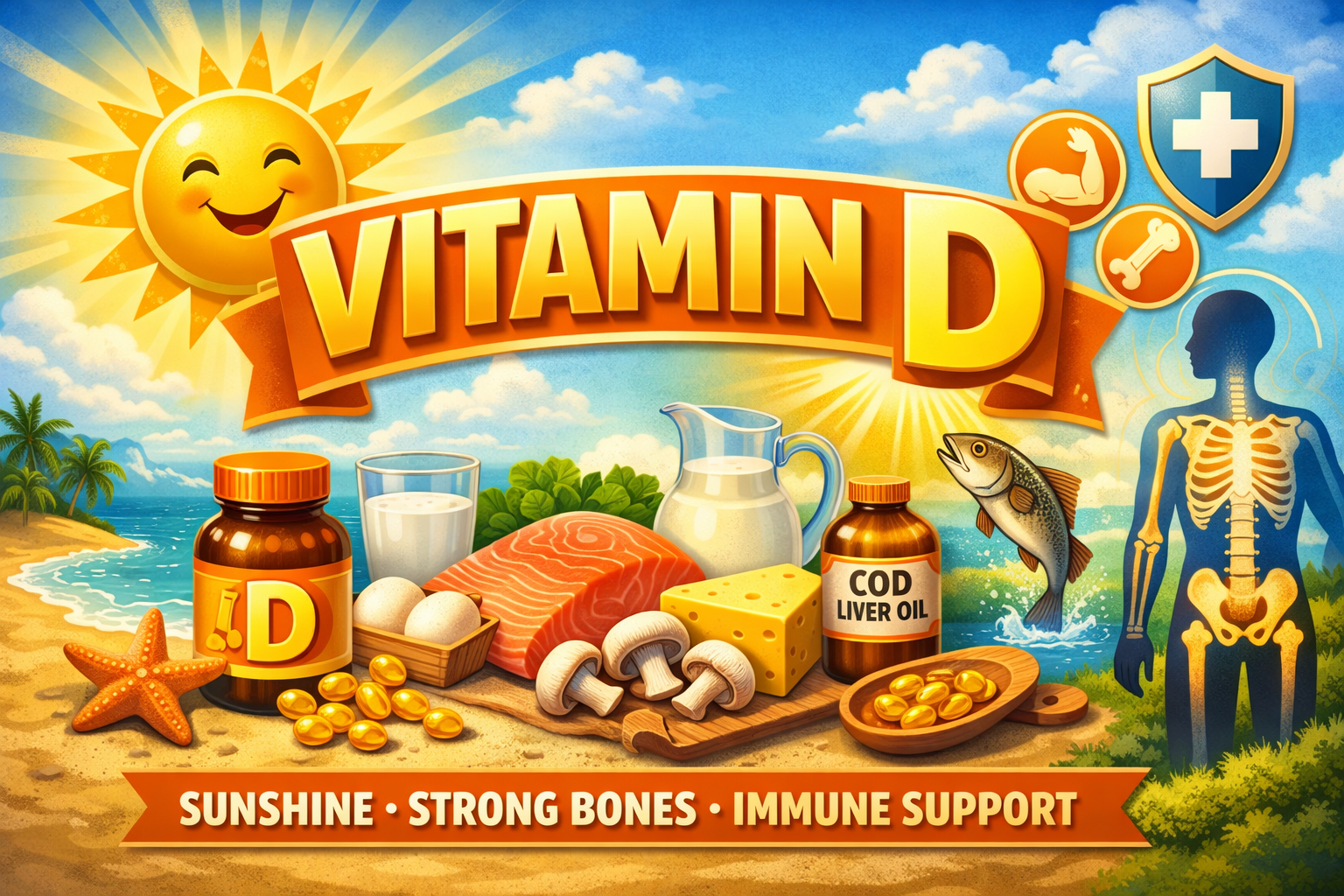

Vitamin D is often called the “Sunshine Vitamin” and for good reason. Our body produces Vitamin D naturally when our skin is exposed to sunlight. Unlike other vitamins, Vitamin D acts more like a hormone, playing a crucial role in bone health, immunity, muscle function and overall health.
In today’s modern lifestyle, despite living in sunny countries like India, Vitamin D deficiency is very common due to indoor living, sunscreen use, pollution and poor dietary intake.
Table of Contents
What Is Vitamin D?
Vitamin D is a fat soluble vitamin that helps the body absorb calcium and phosphorus, two minerals essential for strong bones and teeth.
There are two main forms of Vitamin D:
| Type | Name | Source |
|---|---|---|
| Vitamin D2 | Ergocalciferol | Plant sources, fortified foods |
| Vitamin D3 | Cholecalciferol | Sunlight, animal foods |
👉 Vitamin D3 is more effective in raising blood Vitamin D levels than D2.
Sources of Vitamin D
Vitamin D comes from three main sources: sunlight, food and supplements.
Sunlight: The Best Natural Source
When sunlight (UVB rays) hits your skin, your body produces Vitamin D. Best sunlight exposure tips:
- 15–30 minutes per day
- Morning sunlight (8 AM – 11 AM)
- Expose arms, face, and legs
- No sunscreen during short exposure
- ⚠️ Glass windows block UVB rays, so sunlight indoors does not help.
Vitamin D Supplements
Supplements are commonly recommended when:
- Sun exposure is limited
- Deficiency is diagnosed
- Elderly or pregnant women
- Bone or immune disorders
- 💊 Always take supplements under medical or dietician guidance.
Dietary Sources of Vitamin D
Very few foods naturally contain Vitamin D, which is why diet alone is often not enough.
Natural Food Sources
| Food | Vitamin D (IU per serving) |
|---|---|
| Fatty fish (salmon, tuna) | 400–600 IU |
| Egg yolk | 40–50 IU |
| Cod liver oil | 1000 IU |
| Mushrooms (sun-exposed) | 100–400 IU |
Fortified Foods
- Fortified milk
- Fortified curd & yogurt
- Fortified cereals
- Fortified plant milk (soy, almond)
Functions of Vitamin D in the Body
Vitamin D supports multiple body systems, not just bones.
Key Functions of Vitamin D
- Helps absorb calcium & phosphorus
- Maintains strong bones and teeth
- Increases immune system
- Improves muscle strength
- Regulates mood and mental health
- Strong heart health
- Plays a role in hormone balance
Importance & Health Benefits of Vitamin D
Vitamin D is essential at every stage of life from childhood to old age.
Major Health Benefits
1. Strong Bones & Teeth
Vitamin D prevents:
- Rickets in children
- Osteoporosis in adults
- Bone fractures in elderly
2. Boosts Immunity
Adequate Vitamin D:
- Reduces infections
- Supports immune response
- Helps fight seasonal illnesses
3. Muscle Strength & Balance
Low Vitamin D increases risk of:
- Muscle weakness
- Falls in older adults
- Body pain and fatigue
4. Mental Health
Studies show Vitamin D helps with:
- Mood regulation
- Reducing depression symptoms
- Brain health
5. Heart Health
Vitamin D helps:
- Regulate blood pressure
- Reduce inflammation
- Support cardiovascular health
Vitamin D Deficiency
Vitamin D deficiency is one of the most common nutritional deficiencies worldwide, especially in urban populations.
Common Causes of Deficiency
- Lack of sunlight
- Indoor lifestyle
- Dark skin tone
- Obesity
- Poor diet
- Digestive disorders
- Kidney or liver disease
Symptoms of Vitamin D Deficiency
| Adults | Children |
|---|---|
| Bone pain | Delayed growth |
| Muscle weakness | Soft bones |
| Fatigue | Bone deformities |
| Frequent illness | Weak immunity |
| Depression | Delayed walking |
⚠️ Many people have silent deficiency with no obvious symptoms.
Health Risks of Long Term Deficiency
- Osteoporosis
- Frequent fractures
- Weakened immunity
- Chronic fatigue
- Joint pain
- Increased risk of chronic diseases
Recommended Daily Intake of Vitamin D
| Age Group | Recommended Intake |
|---|---|
| Infants (0–12 months) | 400 IU |
| Children & Adults | 600–800 IU |
| Elderly (60+) | 800–1000 IU |
| Pregnant/Lactating women | 800–1000 IU |
💡 Individual needs may vary based on blood levels.
Latest News & Research on Vitamin D
Recent research highlights the growing importance of Vitamin D beyond bone health.
Latest Health Updates
- Vitamin D is linked to stronger immune response
- Research shows a connection between Vitamin D levels and metabolic health
- Studies suggest Vitamin D may support muscle recovery and inflammation control
- Doctors now recommend routine Vitamin D testing for high-risk groups
- Increased awareness of Vitamin D deficiency in sunny countries like India
👉 Health experts emphasize balanced sun exposure + diet + supplementation when needed.
Vitamin D and Immunity
Vitamin D helps activate immune cells like:
- T-cells
- Macrophages
It helps the body’s defence system and reduces excessive inflammation.
Vitamin D for Women & Men
- Helps in bone density
- Important during pregnancy
- Helps prevent osteoporosis
- Helps in muscle strength
- Plays a role in testosterone balance
- Increase heart health
Can You Take Too Much Vitamin D?
Yes, excess Vitamin D from supplements can cause toxicity.
Symptoms of Excess Intake
- Nausea
- Vomiting
- Kidney problems
- High calcium levels
⚠️ Sunlight does NOT cause Vitamin D toxicity.
Conclusion
Vitamin D is not just a vitamin it is a key nutrient for overall health. From strong bones and immunity to mental health and muscle strength, Vitamin D plays a vital role in our daily life. Despite abundant sunlight, deficiency is widespread due to lifestyle changes.
Vitamin D FAQ
Yes, deficiency often causes fatigue and low energy.
It is difficult through food alone; fortified foods and sunlight are important.
Yes, small daily intake or weekly supplementation helps maintain levels.