
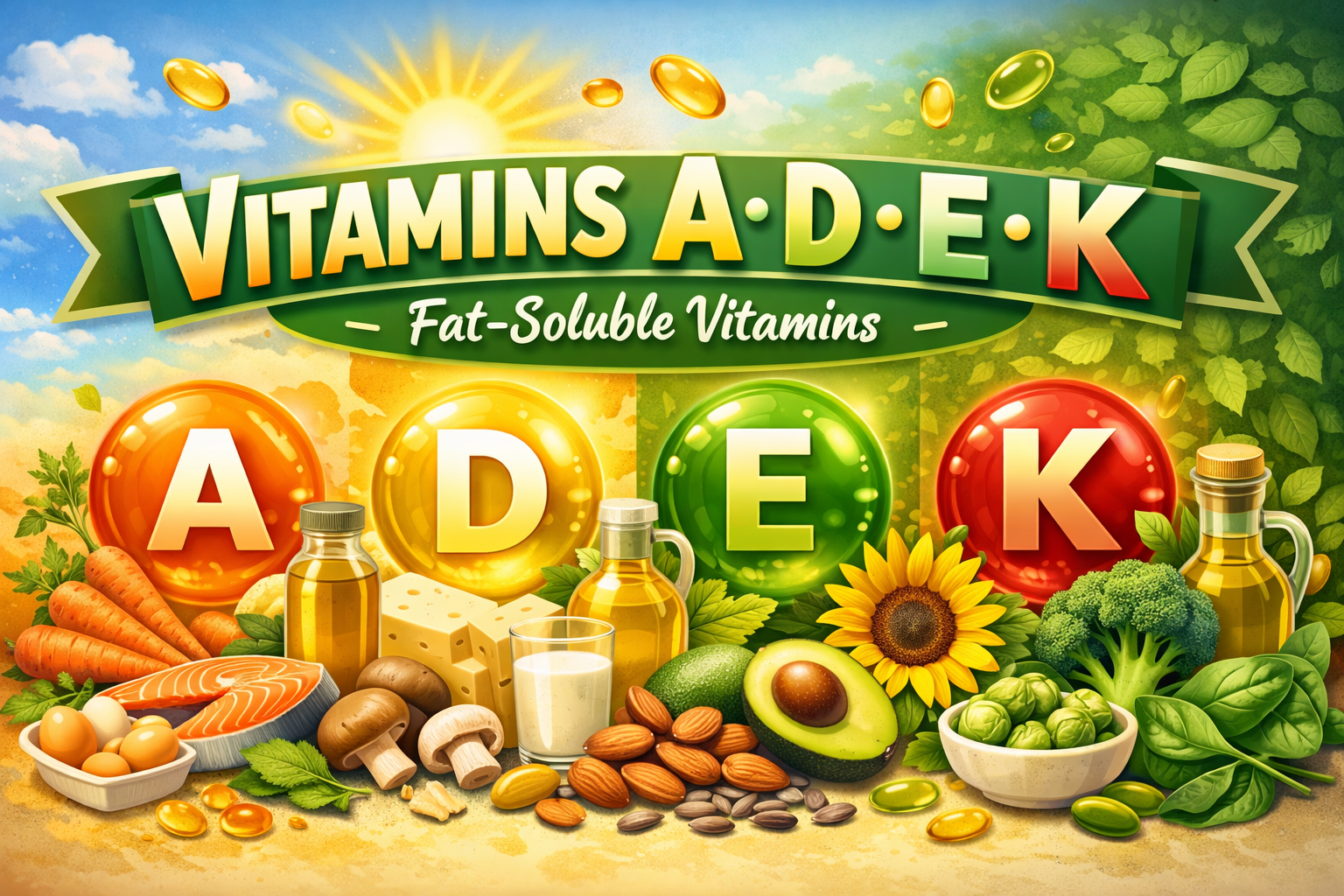

Vitamins are essential nutrients that our body needs in small amounts to stay healthy. Among them, Vitamin A, D, E and K are known as fat soluble vitamins. This means they are absorbed along with dietary fats and stored in the body’s liver and fat tissues.
Unlike water soluble vitamins, fat soluble vitamins do not need daily intake, but deficiency or excess can cause serious health problems. Each of these vitamins plays a unique role in maintaining vision, bone health, immunity, skin health, blood clotting and overall health.
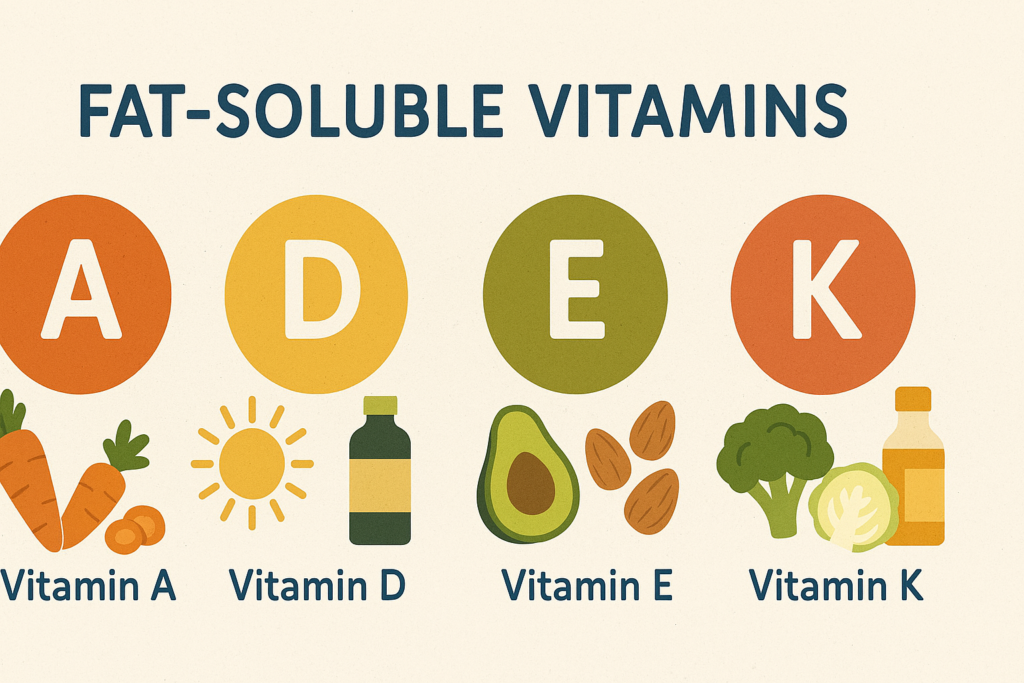
Table of Contents
Vitamin A, D, E & K at a Glance
| Vitamin | Solubility | Main Function | Stored In |
|---|---|---|---|
| Vitamin A | Fat soluble | Vision & immunity | Liver |
| Vitamin D | Fat soluble | Bone & calcium absorption | Fat tissues |
| Vitamin E | Fat soluble | Antioxidant protection | Fat tissues |
| Vitamin K | Fat soluble | Blood clotting | Liver |
1️⃣Vitamin A
What is Vitamin A?
Vitamin A is essential for healthy vision, skin, immune function and growth. It exists in two forms:
- Retinol (animal-based)
- Beta carotene (plant based)
Sources of Vitamin A
| Animal Sources | Plant Sources |
|---|---|
| Liver | Carrots |
| Egg yolk | Sweet potatoes |
| Milk & butter | Spinach |
| Fish liver oil | Pumpkin |
Functions of Vitamin A
- Maintains good eyesight, especially night vision
- Strengthens the immune system
- Keeps skin and mucous membranes healthy
- Supports cell growth and reproduction
Importance of Vitamin A
- Prevents night blindness
- Promotes healthy skin and hair
- Reduces risk of infections
- Supports child growth and development
Vitamin A Deficiency
Common symptoms include:
- Night blindness
- Dry eyes and skin
- Frequent infections
- Delayed growth in children
Vitamin A deficiency is still common in developing countries, especially among children and pregnant women.
2️⃣Vitamin D
What is Vitamin D?
Vitamin D is known as the “sunshine vitamin” because our body produces it when exposed to sunlight. It is crucial for bone strength and immunity.
Sources of Vitamin D
| Natural Sources | Food Sources |
|---|---|
| Sunlight | Fatty fish (salmon) |
| — | Egg yolk |
| — | Fortified milk |
| — | Mushrooms |
Functions of Vitamin D
- Helps absorb calcium and phosphorus
- Strengthens bones and teeth
- Supports immune function
- Reduces inflammation
Importance of Vitamin D
- Prevents rickets and osteoporosis
- Improves muscle strength
- Supports mental health
- Reduces risk of autoimmune diseases
Vitamin D Deficiency
Symptoms include:
- Bone pain
- Weak muscles
- Frequent illness
- Fatigue and low mood
Vitamin D deficiency is very common, even in sunny countries, due to indoor lifestyles and poor diet.
3️⃣Vitamin E
What is Vitamin E?
Vitamin E is a powerful antioxidant that protects cells from damage caused by free radicals.
Sources of Vitamin E
| Food Sources |
|---|
| Almonds |
| Sunflower seeds |
| Wheat germ oil |
| Spinach |
| Avocado |
Functions of Vitamin E
- Protects cells from oxidative stress
- Supports skin health
- Improves immune response
- Helps maintain healthy blood vessels
Importance of Vitamin E
- Slows signs of aging
- Supports heart health
- Improves skin glow
- Protects against chronic diseases
Vitamin E Deficiency
Rare but possible symptoms:
- Muscle weakness
- Vision problems
- Poor immunity
- Nerve damage
4️⃣Vitamin K
What is Vitamin K?
Vitamin K is essential for blood clotting and bone health. Without it, even small wounds can cause excessive bleeding.
Sources of Vitamin K
| Vitamin K1 (Plants) | Vitamin K2 (Animal/Fermented) |
|---|---|
| Spinach | Cheese |
| Kale | Egg yolk |
| Broccoli | Fermented foods |
| Lettuce | Chicken |
Functions of Vitamin K
- Helps in blood clot formation
- Supports bone strength
- Prevents calcium buildup in arteries
Importance of Vitamin K
- Prevents excessive bleeding
- Reduces fracture risk
- Supports heart health
- Works with Vitamin D for bone health
Vitamin K Deficiency
Symptoms include:
- Easy bruising
- Bleeding gums
- Nosebleeds
- Heavy menstrual bleeding
Comparison Table: Functions & Deficiency
| Vitamin | Main Role | Deficiency Effect |
|---|---|---|
| A | Vision & immunity | Night blindness |
| D | Bone health | Weak bones |
| E | Antioxidant | Nerve issues |
| K | Blood clotting | Excess bleeding |
Latest News & Research on Fat Soluble Vitamins
- Vitamin D is now strongly linked with immune health and reduced respiratory infections.
- Vitamin K2 is gaining attention for improving heart health and preventing artery calcification.
- Vitamin E is studied for anti aging and skin protection benefits.
- Beta-carotene (Vitamin A) is preferred over supplements for safer intake.
Nutrition experts now recommend food based sources over high dose supplements unless prescribed by a healthcare professional.
Tips for Better Absorption of Fat-Soluble Vitamins
- Always consume with healthy fats (olive oil, nuts, seeds)
- Avoid excessive supplementation
- Maintain balanced meals
- Get regular sunlight exposure (for Vitamin D)
Can You Take These Vitamins Together?
Yes! Vitamins A, D, E and K work best together, especially for:
- Bone health
- Immunity
- Heart health
However, dosage should always be balanced to avoid toxicity.
Final Thoughts
Fat soluble vitamins Vitamin A, D, E and K are essential for long term health, but they should be consumed wisely. A balanced diet rich in fruits, vegetables, healthy fats, dairy and sunlight exposure is the best way to meet daily needs.
Instead of relying heavily on supplements, focus on natural food sources and healthy lifestyle habits for optimal results.
Vitamin A, D, E & K FAQ
Vitamin A, D, E and K are fat soluble vitamins that support vision, bone strength, immunity, skin health, antioxidant protection and blood clotting. They are essential for overall growth, disease prevention and long term health benefits.
Deficiency can cause night blindness (Vitamin A), weak bones and low immunity (Vitamin D), nerve and muscle problems (Vitamin E) and excessive bleeding or bruising (Vitamin K). Long term deficiency may lead to serious health issues if not corrected.
Vitamin A is found in carrots, liver and spinach; Vitamin D in sunlight, fatty fish and fortified milk; Vitamin E in nuts, seeds and vegetable oils; and Vitamin K in green leafy vegetables like spinach and kale.