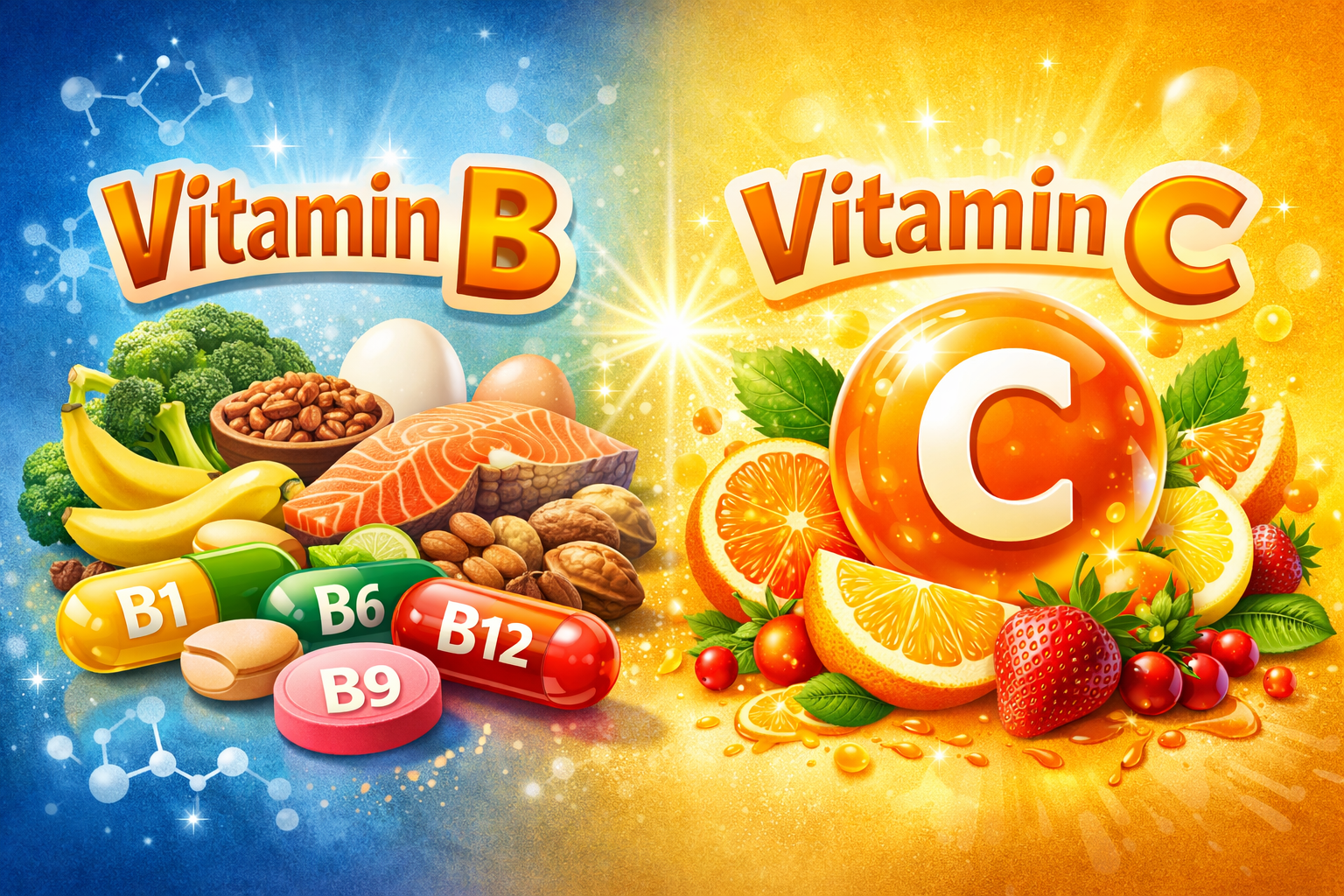

Vitamins play a vital role in keeping our body healthy, energetic and disease free. Among all vitamins, Vitamin B (B-complex) and Vitamin C are water soluble nutrients that are essential for daily body functions. They help in energy production, immunity, brain health, skin glow, digestion and stress management.
Since these vitamins are not stored in large amounts in the body, regular intake through food is very important. In today’s busy lifestyle, deficiencies of Vitamin B and C are becoming common due to poor diet, stress and processed food consumption.
Table of Contents
What is Vitamin B? (Vitamin B-Complex)
Vitamin B is not a single vitamin but a group of eight essential vitamins, collectively known as Vitamin B-complex.
Types of Vitamin B
| Vitamin | Name | Main Role |
|---|---|---|
| B1 | Thiamine | Energy metabolism |
| B2 | Riboflavin | Cell growth, skin health |
| B3 | Niacin | Digestion, cholesterol control |
| B5 | Pantothenic Acid | Hormone production |
| B6 | Pyridoxine | Brain and nerve health |
| B7 | Biotin | Hair, skin, nails |
| B9 | Folate | DNA formation, pregnancy |
| B12 | Cobalamin | Red blood cell formation |
What is Vitamin C?
Vitamin C, also called Ascorbic Acid, is a powerful antioxidant that protects the body from infections and supports skin, immunity, and healing.
Unlike some animals, humans cannot produce Vitamin C, so it must come from food sources.
Sources of Vitamin B and Vitamin C
Vitamin B Rich Foods
| Food Source | B Vitamins Present |
|---|---|
| Whole grains | B1, B3, B5 |
| Eggs | B2, B7, B12 |
| Milk & curd | B2, B12 |
| Green leafy vegetables | B9 |
| Pulses & legumes | B1, B6 |
| Nuts & seeds | B3, B6 |
| Fish & chicken | B6, B12 |
| Bananas | B6 |
Vitamin C Rich Foods
| Food Source | Vitamin C Content |
|---|---|
| Amla (Indian gooseberry) | Very high |
| Oranges & lemons | High |
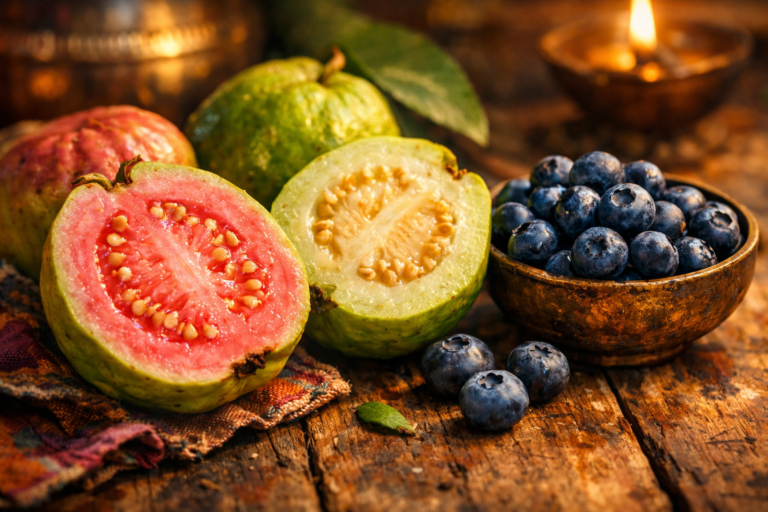
| Guava | Very high |
| Kiwi | High |
| Strawberries | Moderate |
| Capsicum (bell pepper) | High |
| Broccoli | Moderate |
| Tomatoes | Moderate |
Functions of Vitamin B and Vitamin C
Functions of Vitamin B-Complex
- Converts food into energy
- Increase brain and nerve function
- Helps in red blood cell formation
- Improves digestion and metabolism
- Maintains healthy skin, hair, and eyes
- Reduces stress and fatigue
- Improves heart health
Functions of Vitamin C
- Boosts immune system
- Acts as a powerful antioxidant
- Helps in collagen production
- Improves iron absorption
- Promotes wound healing
- Protects skin from aging
- Reduces inflammation
Importance and Health Benefits
Health Benefits of Vitamin B-Complex
- Improves energy levels
- Improves mental health and memory
- Reduces anemia risk
- Maintains healthy pregnancy
- Increase hair growth and skin glow
- Helps manage stress and mood swings
Health Benefits of Vitamin C
- Strengthens immunity
- Prevents common cold severity
- Improves skin brightness
- Improves heart health
- Reduces oxidative stress
- Helps fight infections faster
Deficiency Symptoms
Vitamin B Deficiency Symptoms
- Constant tiredness
- Weakness and dizziness
- Mouth ulcers
- Hair fall
- Numbness in hands and feet
- Poor concentration
- Anemia
- Depression or irritability
Vitamin B12 deficiency is very common in vegetarians.
Vitamin C Deficiency Symptoms
- Frequent infections
- Bleeding gums
- Slow wound healing
- Dry and dull skin
- Joint pain
- Fatigue
- Weak immunity
Severe deficiency may cause Scurvy.
Daily Recommended Intake (Adults)
| Vitamin | Recommended Intake |
|---|---|
| Vitamin B1 | 1.1–1.2 mg |
| Vitamin B6 | 1.3–2.0 mg |
| Vitamin B12 | 2.4 mcg |
| Folate (B9) | 400 mcg |
| Vitamin C | 75–90 mg |
Requirements may vary based on age, gender, pregnancy and health condition.
Latest News & Research
- Vitamin B12 deficiency is increasingly seen in young adults due to poor gut health and vegan diets.
- Recent studies show Vitamin C may help reduce inflammation and support faster recovery from viral infections.
- Research suggests B-complex vitamins play a role in reducing anxiety and improving sleep quality.
- Vitamin C is being studied for its role in skin aging prevention and collagen synthesis.
- Experts now recommend food first approach over unnecessary supplements.
Best Time to Take Vitamin B & Vitamin C
- Vitamin B and C are best taken in the morning
- Take after food to avoid stomach upset
- Avoid taking them late at night as B vitamins may increase alertness
Can One Take Vitamin B and C Together?
Yes ✅
Vitamin B and Vitamin C can be taken together safely because:
- Both are water soluble vitamins
- They work synergistically
- No harmful interaction between them
- Improve energy and immunity together
Dietician’s Tips for Better Absorption
- Eat fresh fruits and vegetables
- Avoid overcooking vegetables
- Include citrus fruits daily
- Combine Vitamin C with iron-rich foods
- Reduce junk and processed foods
- Stay hydrated
Who Needs Extra Attention?
- Vegetarians and vegans
- Pregnant and breastfeeding women
- Elderly people
- People with digestive issues
- Smokers and alcohol users
- High-stress individuals
Conclusion
Vitamin B and Vitamin C are essential nutrients that support energy, immunity, brain health, skin and overall health. Deficiency of these vitamins can silently affect your health, but the good news is that they are easily available through everyday foods.
Instead of depending only on supplements, focus on a balanced, colourful and natural diet. If one experience persistent symptoms, consult a qualified dietician or healthcare professional.
A healthy body starts with the right nutrition and Vitamin B & C are the foundation of daily health.
Vitamin B & C FAQ
Yes, Vitamin B and Vitamin C can be taken together safely. Both are water soluble vitamins, which means the body uses what it needs and removes the excess. Taking them together helps improve energy levels, immunity and overall health.
Vitamin B deficiency may cause fatigue, weakness, hair fall, poor memory and anemia, while Vitamin C deficiency can lead to frequent infections, bleeding gums, slow wound healing and dull skin. Long term deficiency should be checked by a healthcare professional.
Getting Vitamin B and Vitamin C from natural food sources is always the best option because foods provide better absorption and additional nutrients. Supplements should be taken only if recommended by a doctor or dietician.