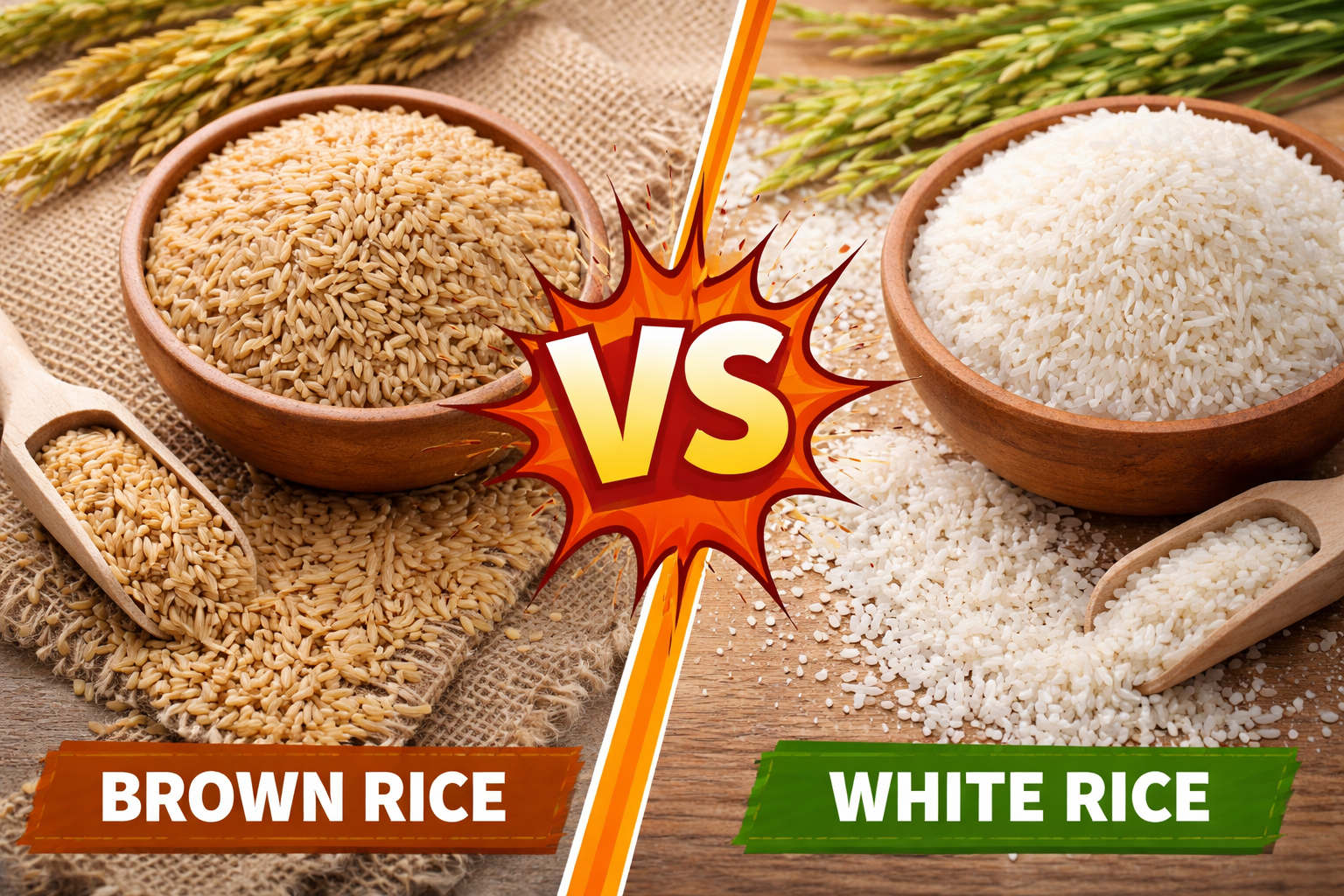

Rice is one of the most commonly eaten foods, especially in Indian households. From lunch to dinner, it is part of our daily meals. But many people feel confused when it comes to choosing between brown rice and white rice. Some say brown rice is always healthier, while others prefer white rice for its taste and easy digestion. The truth is, both types of rice have their own benefits. The right choice depends on your health, digestion and lifestyle.
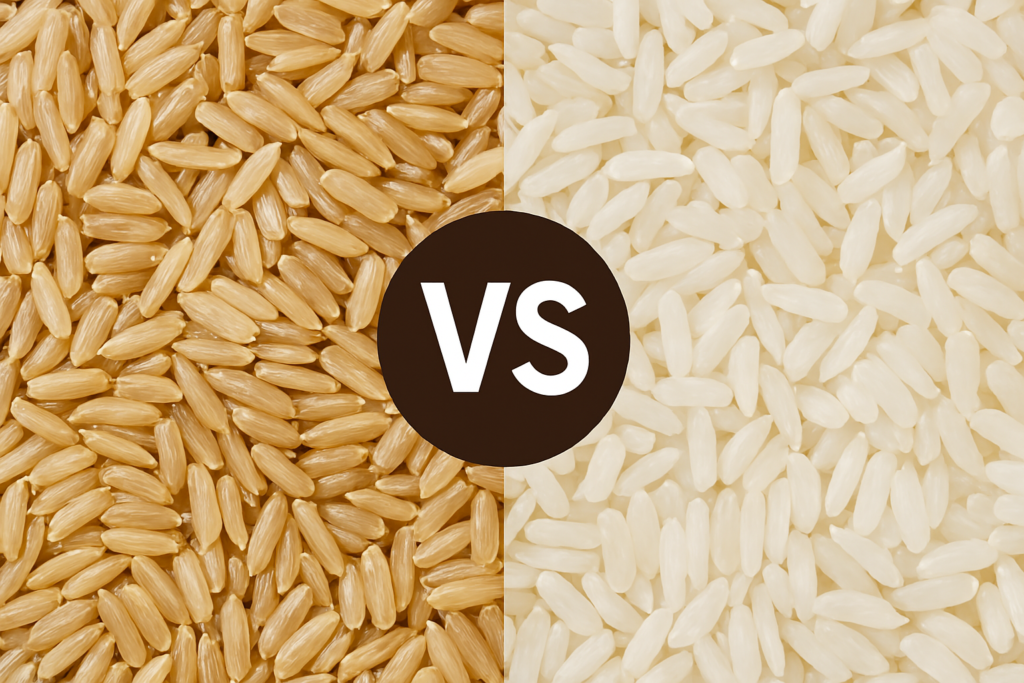
Table of Contents
What Is Brown Rice?
Brown rice is a whole grain. It contains all three parts of the grain:
- Bran
- Germ
- Endosperm
Only the outer husk is removed. Because of this, brown rice retains fiber, vitamins, minerals and antioxidants.
Key Characteristics of Brown Rice
- Light brown color
- Chewy texture
- Nutty flavor
- Takes longer to cook
- More filling
What Is White Rice?
White rice is a refined grain. During processing, the bran and germ are removed, leaving only the endosperm.
This makes white rice:
- Softer
- Faster to cook
- Longer shelf life
- Easier to digest
However, the refining process removes fiber and many nutrients.
Brown Rice vs White Rice: Nutritional Comparison
Below is a simple comparison per 100 grams cooked rice:
| Nutrient | Brown Rice | White Rice |
|---|---|---|
| Calories | 123 kcal | 130 kcal |
| Carbohydrates | 25.6 g | 28.2 g |
| Fiber | 1.8 g | 0.4 g |
| Protein | 2.7 g | 2.4 g |
| Fat | 1 g | 0.3 g |
| Magnesium | High | Low |
| Iron | Moderate | Low |
| Glycemic Index | Low–Medium | High |
👉 Key Takeaway:
Brown rice is richer in fiber and micronutrients, while white rice is lower in fiber but easier to digest.
Health Benefits of Brown Rice
1. Good for Weight Loss
Brown rice keeps you full for longer due to its high fiber content.
Benefits for weight management:
- Reduces hunger
- Controls portion size
- Prevents overeating
- Improves metabolism
2. Better for Diabetes Control
Brown rice has a lower glycemic index, meaning it releases sugar slowly into the blood.
✔ Helps maintain stable blood sugar
✔ Reduces insulin spikes
✔ Safer option for diabetics (in moderation)
3. Improves Digestion
Fiber in brown rice helps:
- Healthy gut bacteria
- Regular bowel movements
- Reduced constipation
4. Heart Health
Brown rice contains magnesium and antioxidants that:
- Lower bad cholesterol (LDL)
- Improve blood pressure
- Reduce heart disease risk
5. High Antioxidants
The bran layer has antioxidants that fight inflammation and oxidative stress.
Health Benefits of White Rice
White rice is often misunderstood as “unhealthy,” but it still has benefits.
1. Easy to Digest
White rice is ideal for:
- Children
- Elderly people
- People with weak digestion
- During illness or recovery
2. Quick Energy Source
White rice provides fast-digesting carbohydrates.
✔ Useful for athletes
✔ Helpful after workouts
✔ Good during physical labour
3. Better for Sensitive Stomachs
People with:
- IBS
- Acidity
- Gastritis
- Diarrhea
often tolerate white rice better than brown rice.
4. Affordable and Accessible
White rice is:
- Cheaper
- Widely available
- Easier to cook daily
Brown Rice vs White Rice for Weight Loss
Brown Rice
- High fiber
- Low glycemic load
- Keeps you full
- Slower digestion
White Rice
- Low fiber
- Faster digestion
- May increase hunger sooner
👉 Best choice for weight loss:
✔ Brown rice, portion-controlled, with vegetables and protein
Brown Rice vs White Rice for Diabetes
| Factor | Brown Rice | White Rice |
|---|---|---|
| Blood sugar spike | Low | High |
| Insulin response | Controlled | Rapid |
| Fiber content | High | Low |
| Diabetic-friendly | Yes (moderate) | Limited |
👉 Dietician’s Advice:
People with diabetes should prefer brown rice, but quantity still matters.
Brown Rice vs White Rice for Digestion
- Brown rice may cause bloating in some people due to fiber.
- White rice is gentle on the stomach.
✔ If you have digestive issues, white rice can be eaten safely
✔ If digestion is strong, brown rice is better long-term
Taste and Cooking Comparison
| Aspect | Brown Rice | White Rice |
|---|---|---|
| Taste | Nutty | Neutral |
| Texture | Chewy | Soft |
| Cooking time | 35–45 min | 15–20 min |
| Water needed | More | Less |
Who Should Eat?
Brown rice is ideal for:
- People trying to lose weight
- Diabetics
- Heart patients
- Fitness enthusiasts
- People with good digestion
White rice is better for:
- Children and elderly
- People with digestive problems
- Athletes needing quick energy
- During fever, diarrhea, or illness
How Much Rice Should You Eat Daily?
Portion control is more important than rice type.
Recommended portion (per meal):
- Cooked rice: ½ to 1 cup
- Combine with:
- Vegetables
- Dal or curd
- Protein (paneer, eggs, fish)
Healthier Ways to Eat Rice
- Mix rice with vegetables
- Add protein to reduce sugar spike
- Avoid overeating at night
- Choose hand-pounded or parboiled rice if possible
Brown Rice vs White Rice Eating Comparison
There is no single winner.
✔ Brown rice is better for long term health, weight loss and diabetes
✔ White rice is better for digestion, quick energy and daily comfort
👉 The best rice is the one that suits your body and lifestyle.
Advice
Instead of completely avoiding white rice, try:
- Eating brown rice 3–4 times a week
- White rice on other days in moderation
- Focus on balanced meals rather than food fear
Healthy eating is about consistency, balance and long time sustainability, not extreme rules.
Conclusion
Brown rice and white rice both can be part of a healthy diet if eaten the right way. Brown rice is richer in fiber and nutrients, which makes it a good choice for weight control, diabetes and for good health. White rice, on the other hand, is easier to digest and gives quick energy to the body, making it suitable for children, elderly people and those with sensitive stomachs. Instead of completely avoiding one type, focus on portion size and balanced meals daily. Listen to your body and choose the rice that suits your health and daily routine.
Frequently Asked Question (FAQ)
Brown rice is generally healthier because it contains more fiber, vitamins and minerals. It helps in better digestion, weight control and blood sugar management. However, white rice can also be eaten daily in moderate portions, especially if you have a sensitive stomach.
People with diabetes should limit white rice because it raises blood sugar quickly. If eaten, the portion should be small and combined with vegetables, protein or curd. Brown rice or parboiled rice is usually a better option.
Brown rice may cause bloating or gas in some people because of its high fiber content. If you are not used to it, start with small portions and increase slowly or mix it with white rice to improve digestion.