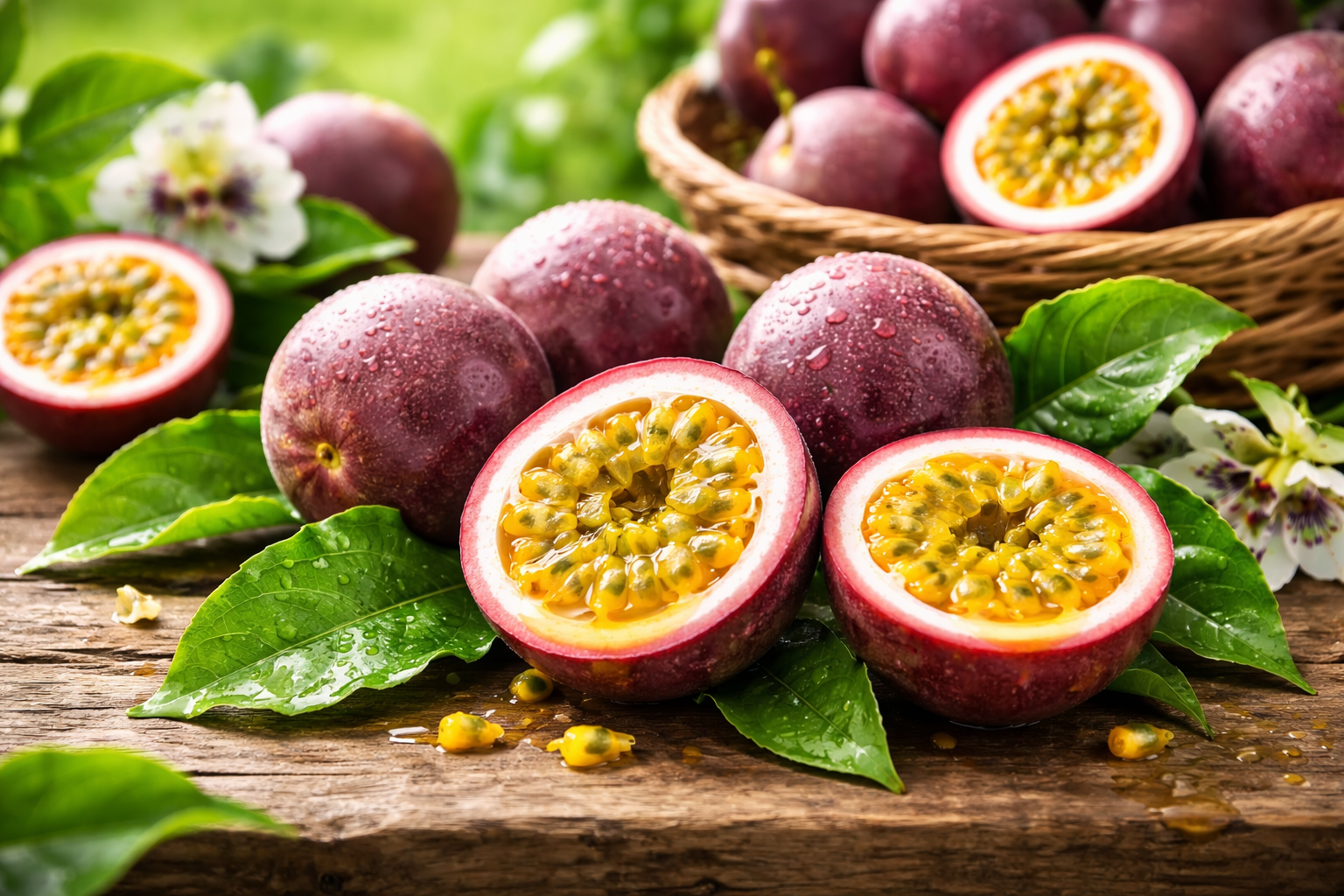

Passion fruit is a tropical fruit known for its unique aroma, tangy sweet taste and impressive nutritional value. It is widely used in juices, desserts, smoothies and traditional medicines. Scientifically known as Passiflora edulis, passion fruit is not only delicious but also packed with vitamins, minerals, antioxidants and plant compounds that support overall human health.
There are mainly two popular varieties of passion fruit: Purple passion fruit and Yellow passion fruit. Both are rich in nutrients, though they slightly differ in taste, size and acidity.
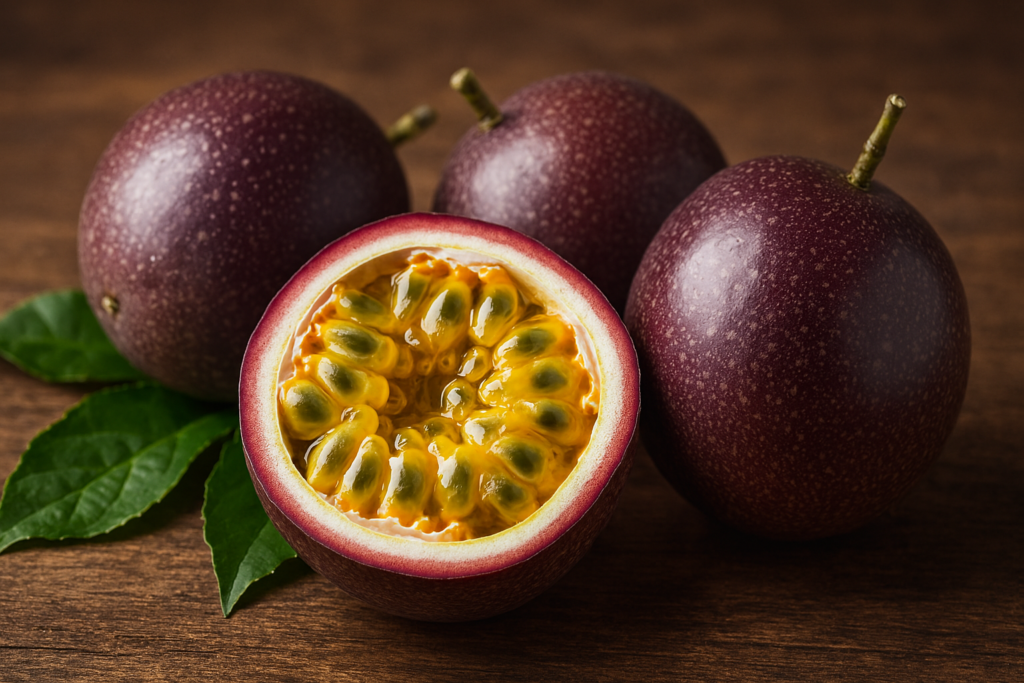
Table of Contents
What Is Passion Fruit?
Passion fruit is a round or oval shaped fruit with a hard outer rind and juicy, seed filled pulp inside. The pulp is aromatic and can range from sweet tart to very tangy.
Common Names of Passion Fruit
- Passion fruit (English)
- Krishna Phal (Hindi)
- Krishnakamalam (Malayalam)
- Passion pazham (Tamil)
Types of Passion Fruit
| Type | Color | Taste | Common Use |
|---|---|---|---|
| Purple Passion Fruit | Deep purple | Sweet and aromatic | Fresh eating, desserts |
| Yellow Passion Fruit | Yellow | More acidic | Juices, beverages |
| Sweet Granadilla | Orange-yellow | Mildly sweet | Fresh consumption |
Passion Fruit Nutrition Value (Per 100g)
| Nutrient | Amount |
|---|---|
| Calories | 97 kcal |
| Carbohydrates | 23 g |
| Protein | 2.2 g |
| Fat | 0.7 g |
| Dietary Fiber | 10.4 g |
| Vitamin C | 30 mg |
| Vitamin A | 1274 IU |
| Potassium | 348 mg |
| Iron | 1.6 mg |
Passion fruit is especially high in fiber, vitamin C, vitamin A and antioxidants, making it a superfruit for daily health.
Top Health Benefits of Passion Fruit
1. Improves Digestion
Passion fruit is rich in dietary fiber, which:
- Helps healthy digestion
- Prevents constipation
- Improves gut health
Just one passion fruit can provide a significant portion of daily fiber needs.
2. Boosts Immunity
High vitamin C content helps:
- Strengthen the immune system
- Protect against infections
- Increase faster healing
3. Improve Heart Health
Passion fruit contains potassium and antioxidants that:
- Regulate blood pressure
- Improve blood circulation
- Reduce bad cholesterol (LDL)
4. Helps in Weight Management
Low in calories and high in fiber, passion fruit:
- Keeps you full for longer
- Reduces unhealthy snacking
- Supports healthy weight loss
5. Good for Eye Health
Vitamin A and plant compounds in passion fruit:
- Improve vision
- Protect against age related eye disorders
6. Controls Blood Sugar Levels
Passion fruit has a low glycemic index and high fiber, which:
- Slows sugar absorption
- Helps manage diabetes when eaten in moderation
7. Improves Skin Health
Antioxidants and vitamin C help:
- Reduce wrinkles
- Promote collagen production
- Keep skin glowing and youthful
8. Improve Better Sleep & Mental Health
Passion fruit contains natural compounds that:
- Have calming effects
- Help reduce anxiety
- Improve sleep quality
Passion Fruit Uses
Culinary Use
- Fresh fruit consumption
- Juices and smoothies
- Ice creams and desserts
- Salad dressings
- Jams and sauces
Medicinal Use
- Used in traditional medicine for stress relief
- Helps improve digestion
- Improves immune health
Cosmetic Use
- Used in skincare products
- Helps hydrate and nourish skin
How to Eat Passion Fruit
Eating passion fruit is simple:
- Cut the fruit in half
- Scoop out the pulp with a spoon
- Eat directly or add to recipes
One can also:
- Add pulp to yogurt
- Mix into smoothies
- Use as topping for desserts
Passion Fruit for Diabetes: Is It Safe?
Yes, passion fruit can be consumed by people with diabetes in moderation. Due to its high fiber content, it helps regulate blood sugar levels. However:
- Avoid adding sugar
- Stick to fresh fruit instead of processed juice
Passion Fruit Side Effects
Although passion fruit is generally safe, excessive consumption may cause:
- Digestive discomfort
- Allergic reactions (rare)
- Interaction with sedative medications
Pregnant and breastfeeding women should consult a healthcare professional before regular use.
How to Grow Passion Fruit at Home
- Warm and tropical climate
- Full sunlight
- Well-drained soil
- Rich in organic matter
- Use seeds or seedlings
- Provide strong support (climber plant)
- Water regularly but avoid waterlogging
- Fruits are ready when they fall naturally
- Usually harvested within 6–8 months
Passion Fruit vs Other Tropical Fruits
| Fruit | Fiber | Vitamin C | Calories |
|---|---|---|---|
| Passion Fruit | High | High | Moderate |
| Mango | Medium | Medium | High |
| Papaya | Medium | High | Low |
| Pineapple | Low | Medium | Medium |
Tips to Select and Store Passion Fruit
- Slightly wrinkled skin (sweeter fruit)
- Heavy for its size
- No mold or cuts
- Store at room temperature for short time period
- Refrigerate for up to 1 week
- Freeze pulp for long time use
Conclusion
Passion fruit is a powerhouse of nutrition which offer numerous health benefits from improved digestion to better immunity and heart health. Its delicious taste and versatility make it easy to include in daily meals. Whether you eat it fresh, drink it as juice, or use it in desserts, passion fruit is a smart and healthy addition to your diet. Including passion fruit regularly can improve overall health while adding a tropical twist to your meals.
Frequently Asked Question (FAQ)
Yes, passion fruit is safe and healthy to eat daily when consumed in moderation. It is rich in fiber, vitamin C, antioxidants and plant compounds that support digestion, immunity and heart health. Eating 1–2 passion fruits per day is ideal for most people.
Yes, people with diabetes can eat passion fruit in moderation. It has a low glycaemic index and high fiber content, which helps control blood sugar levels. It is best consumed fresh without added sugar or in juice form.
The best time to eat passion fruit is in the morning or as a mid day snack. Eating it in the morning helps improve digestion and nutrient absorption. It can also be consumed before workouts or added to breakfast bowls and smoothies.
Yes, passion fruit helps in weight loss due to its low calorie count and high fiber content. Fiber helps you feel full for longer, reducing overeating and unhealthy snacking.
Yes, passion fruit seeds are completely edible and safe. They are rich in fiber, antioxidants and healthy fats that support digestion and gut health. You can eat them along with the pulp.
Passion fruit is generally safe, but excessive consumption may cause digestive discomfort or allergic reactions in sensitive individuals. People taking sedative medications or pregnant women should consult a healthcare professional before regular use.