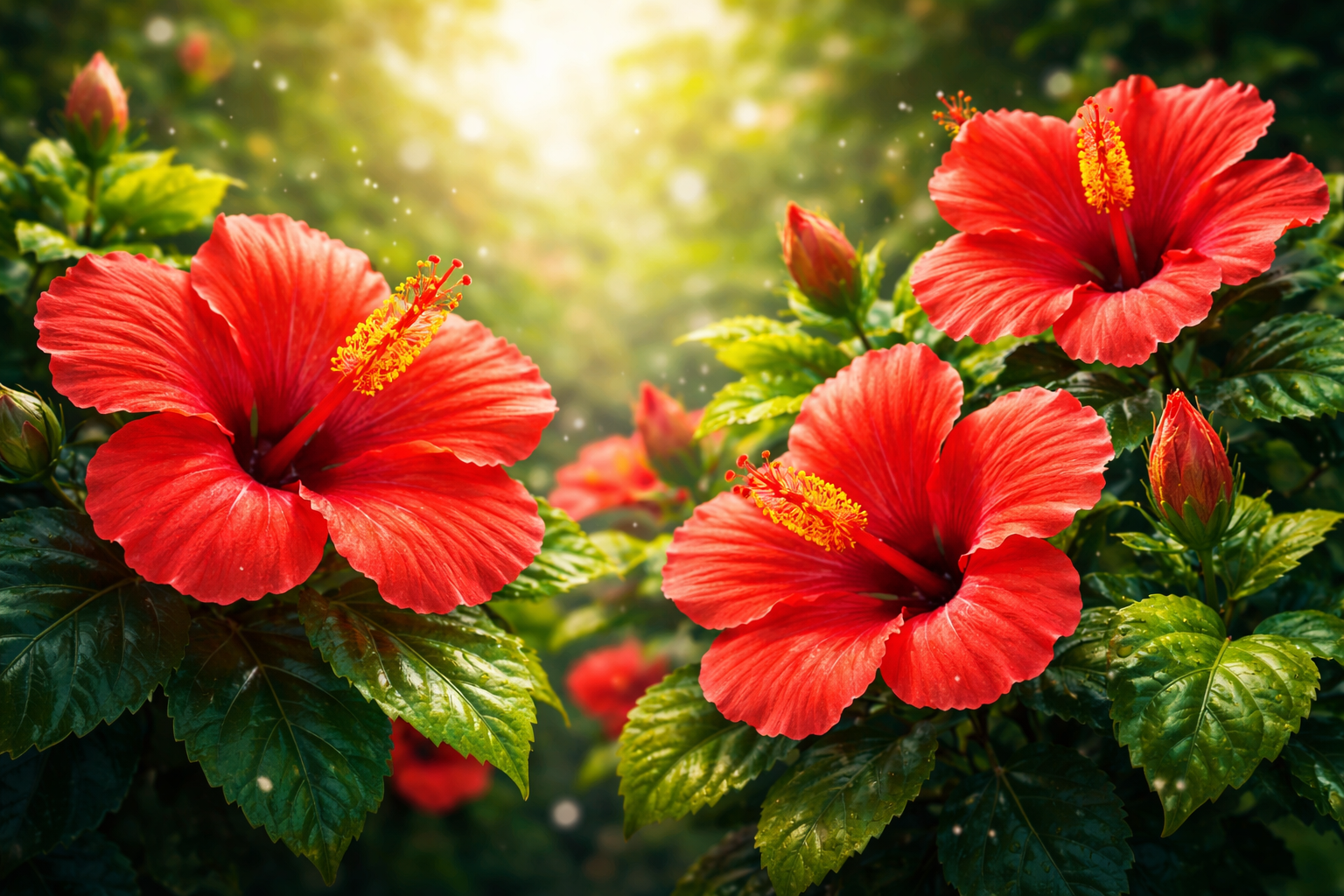

The hibiscus flower is one of the most beautiful and useful flowers found in tropical regions in the world. It is known not only for its bright colours but also for its amazing health, hair and skin benefits. For centuries, hibiscus has been used in Ayurveda, herbal medicine and traditional home remedies.
This flower plant is easy to grow, affordable and full of natural goodness. From hibiscus tea to hair oil and face packs, it plays an important role in natural healing.
Table of Contents
❓What is Hibiscus Flower?
The hibiscus flower is a bright, beautiful flowering plant commonly found in tropical and subtropical regions. It is known for its large, colourful petals, especially red, pink, yellow and white. Hibiscus is widely used for health, hair care, skin care and herbal tea. The flower is rich in antioxidants, vitamin C and natural minerals, making it beneficial for immunity, heart health and digestion. In Ayurveda and traditional medicine, hibiscus is valued for hair growth, glowing skin, while also being popular as an ornamental garden plant.
🌼 Types of Hibiscus Flowers
There are many varieties of hibiscus flowers, but the most common ones are:
| Type | Description |
|---|---|
| Red Hibiscus | Most popular, used for health and hair |
| Yellow Hibiscus | Mostly ornamental |
| White Hibiscus | Used in religious rituals |
| Pink Hibiscus | Decorative and medicinal |
| Hibiscus Sabdariffa | Used for hibiscus tea |
🧬 Nutritional Value of Hibiscus Flower
Hibiscus flower and leaves are rich in natural nutrients.
Key Nutrients:
- Vitamin C
- Antioxidants
- Iron
- Calcium
- Flavonoids
- Natural acids
Nutrition Table (Approximate)
| Nutrient | Benefit |
|---|---|
| Vitamin C | Boosts immunity |
| Antioxidants | Fights free radicals |
| Iron | Helps prevent anemia |
| Calcium | Strengthens bones |
| Polyphenols | Supports heart health |
❤️ Health Benefits of Hibiscus Flower
1. Improves Heart Health
Hibiscus tea helps in lowering blood pressure and cholesterol. It supports healthy blood circulation.
2. Boosts Immunity
Rich in vitamin C, hibiscus strengthens the immune system and protects against infections.
3. Helps in Weight Loss
Hibiscus helps reduce fat absorption and improves metabolism.
4. Controls Blood Sugar
Regular consumption of hibiscus tea may help manage blood sugar levels.
5. Improves Digestion
It helps in relieving constipation and improves gut health.
☕ Hibiscus Tea Benefits
Hibiscus tea is one of the most popular uses of this flower.
- Lowers blood pressure
- Detoxifies the body
- Improves liver health
- Reduces stress
- Refreshing and caffeine-free
- Dry hibiscus petals
- Boil water
- Add petals and steep for 5–10 minutes
- Strain and drink
💇 Hibiscus Flower for Hair Care
Hibiscus is a natural hair booster.
- Improves hair growth
- Reduces hair fall
- Prevents premature greying
- Adds shine and thickness
- Controls dandruff
- Hibiscus hair oil
- Hibiscus hair mask
- Hibiscus shampoo (herbal)
✨ Hibiscus Flower for Skin Care
Hibiscus is often called the “Botox plant” due to its anti aging properties.
- Reduces wrinkles
- Improves skin elasticity
- Treats acne
- Natural exfoliant
- Brightens skin tone
- Grind hibiscus petals
- Mix with honey or yogurt
- Apply for 15 minutes
- Rinse with water
🌱 How to Grow Hibiscus Plant at Home
Step 1: Choose the Right Hibiscus Variety
- Select Hibiscus rosa-sinensis for home gardens
- Choose a healthy cutting or nursery plant
- Avoid weak or yellow-leaf plants
Step 2: Select the Right Pot or Location
- Use a pot with drainage holes
- Pot size: 10–14 inches
- Place where it gets 5–6 hours of sunlight daily
Step 3: Prepare the Soil
Hibiscus loves rich, loose soil.
Best soil mix:
- Garden soil – 40%
- Compost or cow dung – 30%
- Sand or cocopeat – 30%
Soil should be well drained, not sticky.
Step 4: Planting the Hibiscus
- Fill the pot with soil mix
- Place the plant or cutting gently
- Press soil lightly around roots
- Water immediately after planting
Step 5: Watering Properly
- Water when top soil feels dry
- Do not overwater
- In summer: water every 1–2 days
- In winter: water 2 times a week
Step 6: Sunlight Requirement
- Needs bright sunlight
- Morning sunlight is best
- Avoid extreme afternoon heat in summer
Step 7: Fertilizing the Plant
Feed your hibiscus every 15 days.
Best natural fertilizers:
- Vermicompost
- Banana peel water
- Mustard cake water
- Seaweed liquid fertilizer
Step 8: Pruning for More Flowers
- Prune in early spring
- Remove dry and weak branches
- Encourages more buds and flowers
Step 9: Pest & Disease Control
Common pests:
- Aphids
- Mealybugs
- Whiteflies
Natural solution:
- Neem oil spray once a week
Step 10: Flowering Care Tips
- Do not move pot frequently
- Avoid water stress
- Remove dead flowers regularly
- Keep soil slightly moist
- Rotate pot weekly for even growth
- Clean leaves with water spray
- Use Epsom salt once a month for magnesium boost
With proper care, your hibiscus plant will start flowering within 2–3 months and bloom beautifully throughout the year.
🌍 Hibiscus in Ayurveda & Traditional Medicine
In Ayurveda, hibiscus is used to:
- Balance body heat
- Improve hair health
- Increase reproductive health
- Detoxify the body
Different parts like flowers, leaves and roots are used in herbal remedies.
⚠️ Side Effects & Precautions
Although hibiscus is natural, moderation is important.
Possible Side Effects:
- Low blood pressure (if consumed excessively)
- Not recommended during pregnancy
- May interact with certain medicines
Always consult a health expert if you have medical conditions.
🌺 Uses of Hibiscus Flower
- Herbal tea
- Hair oil & shampoo
- Face masks
- Natural dye
- Religious offerings
- Garden decoration
📊 Hibiscus Flower at a Glance
| Feature | Details |
|---|---|
| Scientific Name | Hibiscus rosa-sinensis |
| Common Names | Hibiscus, China Rose, Gudhal |
| Flower Color | Red, Pink, Yellow, White |
| Main Uses | Health, Hair care, Skin care, Tea |
| Taste | Slightly sour (when used as tea) |
| Climate | Tropical & Subtropical |
| Nutritional Value | Rich in antioxidants, vitamin C |
| Popular In | Ayurveda, Herbal medicine |
✒️Conclusion
The hibiscus flower is a perfect example of beauty with benefits. From improving heart health to increase hair growth and skin glow, this flower is truly a gift of nature. It is affordable, easy to use and suitable for daily healthy routines.
Whether you drink hibiscus tea, apply it on your hair or grow it in your garden, hibiscus can naturally improve your lifestyle. Adding hibiscus to your routine is a simple step towards better health and beauty.
Hibiscus Flower FAQ
Hibiscus flower is used for health, hair care, skin care and herbal tea. It helps lower blood pressure, improve immunity, promote hair growth, prevent premature greying and brighten skin naturally.
Yes. Hibiscus stimulates hair growth, reduces hair fall, prevents dandruff and adds shine. You can use it as hibiscus hair oil, hair mask or shampoo for best results.
Hibiscus is generally safe, but excessive consumption may lower blood pressure too much. Pregnant women and people on certain medications should consult a doctor before use.
Plant hibiscus in a sunlit spot or pot with drainage, use well drained soil, water regularly, fertilize every 15 days, prune weak branches and protect from pests. It blooms within 2–3 months with proper care.