
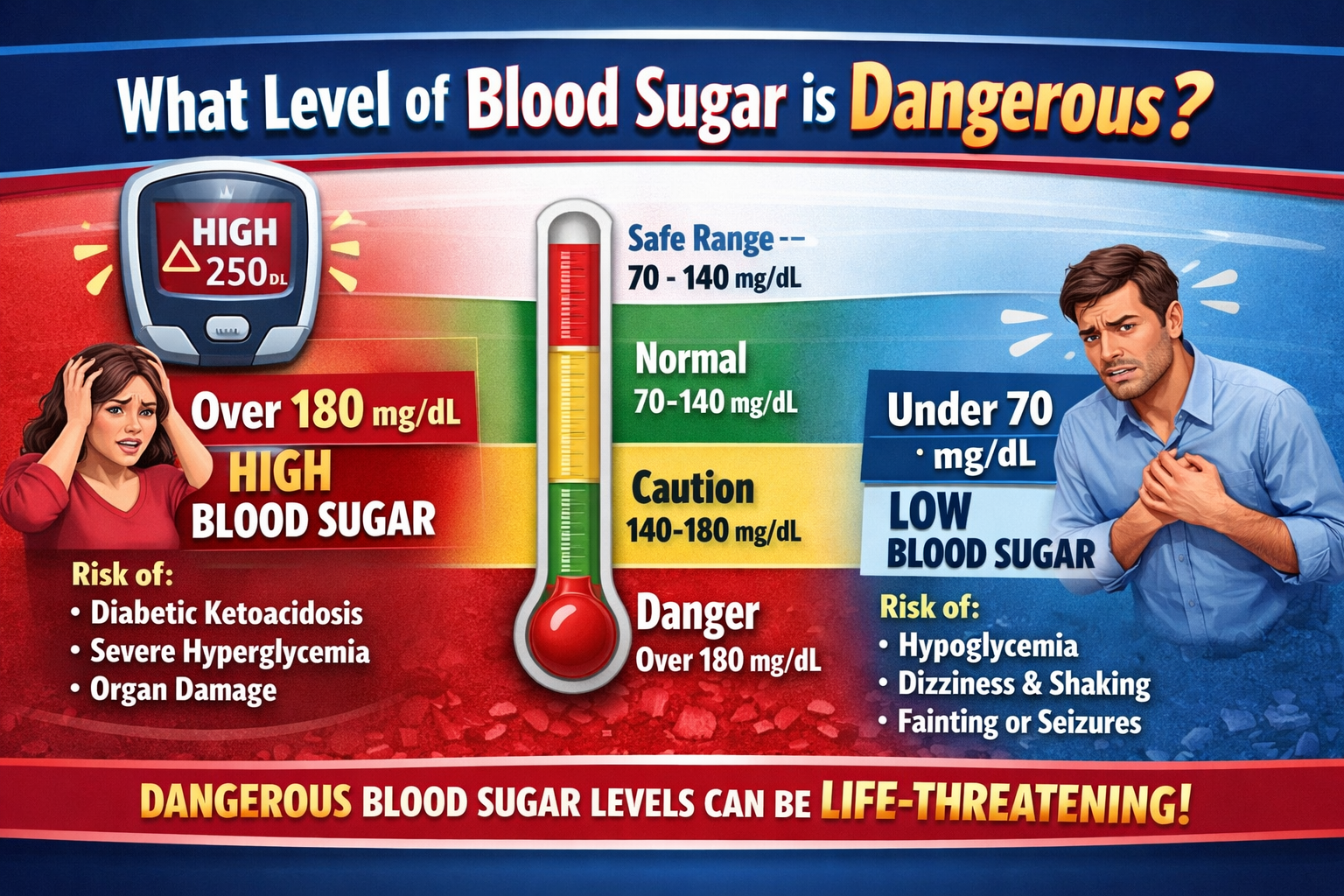

Blood sugar, also known as blood glucose, plays a vital role in keeping your body energized and functioning properly. It is the main source of fuel for your brain, muscles and organs. However, when blood sugar levels go too high or too low, they can quickly become dangerous and even life threatening if ignored. Many people think blood sugar problems only affect people with diabetes, but that is not true. Anyone can experience abnormal blood sugar levels due to stress, illness, medications, poor diet or hormonal changes. Understanding what level of blood sugar is dangerous can help you act early, prevent complications and protect your long term health.
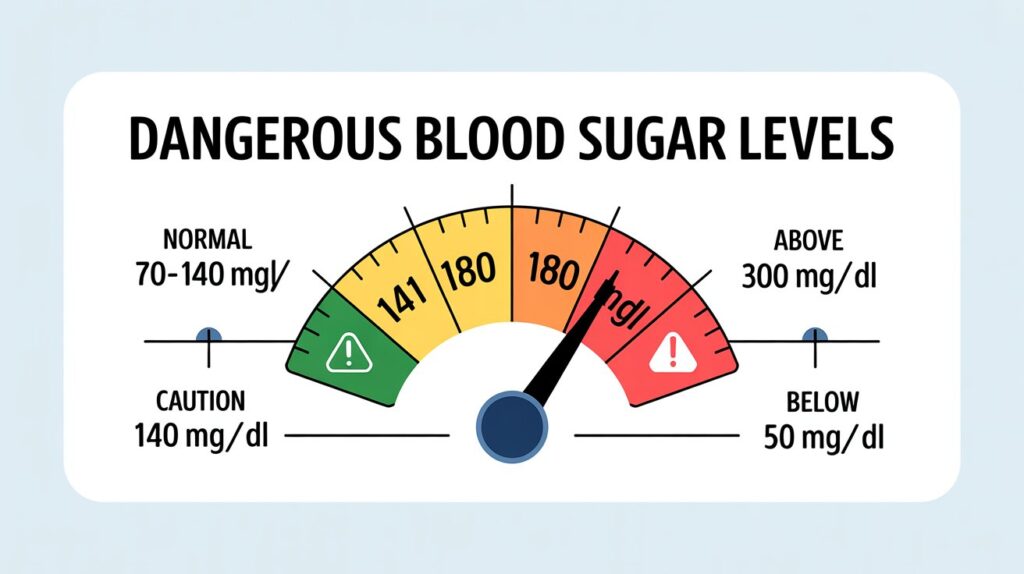
Table of Contents
🩸 What Is Blood Sugar and How Is It Measured?
Blood sugar refers to the amount of glucose present in your blood at a given time. It is usually measured in milligrams per decilitre, written as mg/dL. Blood sugar levels change throughout the day depending on food intake, physical activity, stress and overall health. Doctors typically measure blood sugar using fasting blood sugar tests, random blood sugar tests or post meal blood sugar readings. For people with diabetes, regular monitoring helps maintain safe levels and avoid complications. A healthy body carefully balances blood sugar using insulin and other hormones. When this balance fails, blood sugar can rise too high, called hyperglycemia or fall too low, called hypoglycemia.
⚖️ Normal, High and Low Blood Sugar Levels
Understanding safe and dangerous blood sugar ranges is essential. The table below provides a clear overview of blood sugar levels and their meaning.
| Blood Sugar Level (mg/dL) | Condition | Health Impact |
|---|---|---|
| Below 70 | Low blood sugar (Hypoglycemia) | Dangerous, requires immediate attention |
| 70–99 (fasting) | Normal | Healthy range |
| 100–125 (fasting) | Prediabetes | Increased risk of diabetes |
| 126 or higher (fasting) | Diabetes | Needs medical management |
| Above 180 (after meals) | High blood sugar | Potentially harmful |
| Above 250 | Very high blood sugar | Dangerous and may cause emergencies |
Both extremely low and extremely high blood sugar levels can be dangerous and in severe cases, they can lead to unconsciousness, coma or death.
🚨 What Level of Blood Sugar Is Considered Dangerous?
Blood sugar becomes dangerous when it drops below 70 mg/dL or rises above 250 mg/dL. These levels disrupt normal body functions and can cause immediate health risks. Low blood sugar deprives the brain of glucose, leading to confusion, dizziness, seizures or fainting. High blood sugar causes dehydration, electrolyte imbalance and damage to organs over time. For people with diabetes, repeated episodes of dangerous blood sugar increase the risk of heart disease, kidney failure, nerve damage and vision loss. For non diabetics, sudden blood sugar changes may signal underlying health issues that need evaluation.
🔻 Dangerous Low Blood Sugar Levels (Hypoglycemia)
Low blood sugar is especially dangerous because symptoms can appear suddenly. When blood sugar falls below 70 mg/dL, the body and brain struggle to function properly. Mild symptoms include shakiness, sweating, hunger, headache, and rapid heartbeat. As levels drop further below 55 mg/dL, confusion, blurred vision, slurred speech and lack of coordination may occur. If blood sugar falls below 40 mg/dL, it becomes a medical emergency that can cause seizures or unconsciousness. Hypoglycemia often occurs due to skipping meals, excessive exercise, alcohol consumption or diabetes medications. Immediate treatment with fast acting carbohydrates can prevent serious outcomes.
🔺 Dangerous High Blood Sugar Levels (Hyperglycemia)
High blood sugar occurs when the body does not produce enough insulin or cannot use insulin effectively. Blood sugar levels above 180 mg/dL after meals are considered high, while levels above 250 mg/dL are dangerous. Early symptoms include increased thirst, frequent urination, fatigue, dry mouth and blurred vision. If untreated, extremely high blood sugar can lead to diabetic ketoacidosis or hyperosmolar hyperglycemic state both of which are life threatening. Persistent high blood sugar damages blood vessels and organs, increasing the risk of heart attack, stroke, kidney disease, nerve damage and infections.
🧪 Blood Sugar Levels by Age and Health Condition
Blood sugar targets may vary slightly depending on age, pregnancy, and existing medical conditions. Children and older adults may experience symptoms sooner, even at moderately abnormal levels. Pregnant women must carefully monitor blood sugar because high levels can affect both mother and baby. Older adults may have a reduced ability to sense low blood sugar, making monitoring especially important. Doctors personalize blood sugar goals based on individual health needs, medications, and lifestyle factors.
🏥 When Should You Seek Medical Help?
Medical help should be sought immediately if blood sugar falls below 40 mg/dL or rises above 300 mg/dL, especially if symptoms like confusion, vomiting, chest pain, difficulty breathing, or loss of consciousness occur. Frequent episodes of abnormal blood sugar, even if mild, should not be ignored. They may indicate the need for medication adjustment, dietary changes, or further medical evaluation. Early treatment prevents complications and improves long term health outcomes.
🛡️ How to Prevent Dangerous Blood Sugar Levels
Maintaining stable blood sugar requires balanced meals, regular physical activity, proper medication use, stress management, and adequate sleep. Monitoring blood sugar regularly helps detect changes early. Avoiding excessive sugar intake, staying hydrated, and following medical advice are essential. Education plays a key role in preventing emergencies related to blood sugar. Healthy habits not only prevent dangerous blood sugar levels but also improve energy, mood and overall quality of life.
📊 Why Blood Sugar Control Is Important for Long Term Health
Uncontrolled blood sugar silently damages the body over time. Even moderately high or low levels can affect blood vessels, nerves, kidneys and eyes. Good blood sugar control reduces the risk of serious complications and helps maintain independence, especially as people age. Knowledge, awareness and proactive care empower individuals to take control of their health. Understanding what level of blood sugar is dangerous is the first step toward prevention and better well being.
🚀 Strong Call to Action
Your health is your most valuable asset. Do not wait for symptoms to become severe. Start monitoring your blood sugar regularly, follow healthy lifestyle habits and consult a healthcare professional if you notice unusual changes. Early awareness saves lives. Take control of your blood sugar today and protect your future with informed, proactive care.
❓ Frequently Asked Questions (FAQs)
Blood sugar becomes immediately dangerous when it drops below 40 mg/dL or rises above 300 mg/dL. At these levels, the brain and vital organs cannot function properly. Symptoms may include confusion, seizures, unconsciousness or severe dehydration. Immediate medical attention is required to prevent life-threatening complications and permanent damage.
Yes, non diabetics can experience dangerous blood sugar levels due to stress, illness, hormonal disorders, medications, or poor nutrition. Sudden drops or spikes in blood sugar may indicate underlying health issues. Persistent symptoms should be evaluated by a healthcare professional to identify and treat the root cause.
A blood sugar level of 200 mg/dL is considered high and potentially dangerous, especially if it occurs frequently. While it may not cause immediate symptoms, repeated readings at this level increase the risk of long term complications such as heart disease, nerve damage and kidney problems. Medical advice is recommended.
Warning signs include dizziness, shaking, confusion, extreme thirst, frequent urination, blurred vision, fatigue, rapid heartbeat and fainting. Severe symptoms such as seizures, vomiting or loss of consciousness indicate a medical emergency and require immediate treatment.
The frequency of blood sugar checks depends on individual health conditions. People with diabetes may need to check multiple times daily, while others may only need periodic testing. Regular monitoring helps detect dangerous levels early and allows timely adjustments to diet, activity or medication.