
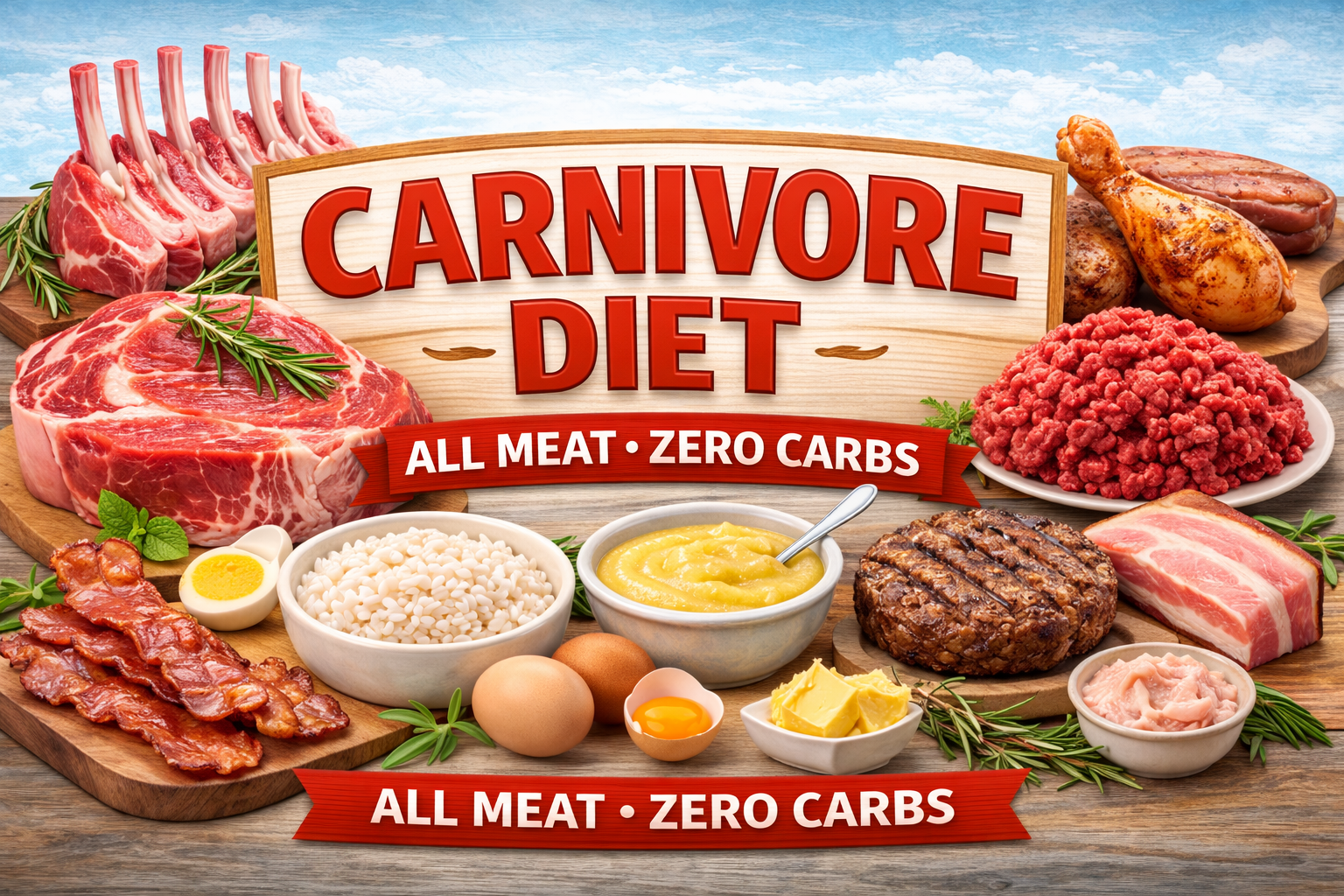

The carnivore diet is one of the most talked about eating patterns in recent years. It is simple, strict and very different from traditional diets. This diet focuses on eating only animal-based foods while completely removing plant foods like fruits, vegetables, grains and legumes. Many people follow it for weight loss, better digestion, improved mental clarity and relief from chronic health problems. Supporters of the carnivore diet believe that humans can thrive on animal foods alone. Critics argue that it is too restrictive and lacks essential nutrients.
Table of Contents
🧬 What Is the Carnivore Diet?
The carnivore diet is an all animal food diet. This means the diet includes meat, fish, eggs and some animal based fats. It excludes all plant based foods, including fruits, vegetables, nuts, seeds, grains and sugars. This diet is often compared to the ketogenic diet, but it is even more restrictive. While keto allows some plant foods, the carnivore diet does not. The goal is to eat foods that are high in protein and fat while eliminating carbohydrates completely. People who follow this diet usually eat when they are hungry and stop when they feel full. There is no calorie counting, portion measuring, or meal timing rules.
🥓 Foods Allowed on the Carnivore Diet
The carnivore diet focuses entirely on animal based foods. Below is a simple table showing commonly consumed foods.
| Food Category | Examples |
|---|---|
| Red Meat | Beef, lamb, goat, pork |
| Poultry | Chicken, turkey, duck |
| Seafood | Fish, shrimp, crab, salmon |
| Eggs | Chicken eggs, duck eggs |
| Animal Fats | Butter, ghee, tallow |
| Dairy (Optional) | Cheese, heavy cream |
Some people choose a strict version with only meat and water, while others include eggs and dairy depending on tolerance.
🔥 How the Carnivore Diet Works in the Body
When you remove carbohydrates completely, your body enters a state called ketosis. In this state, the body burns fat for energy instead of sugar. Protein helps maintain muscle mass, while fats provide long-lasting energy. By eliminating plant foods, some people notice fewer digestive issues such as bloating, gas and stomach pain. This may happen because certain plant compounds can irritate sensitive guts. The diet is also believed to reduce inflammation because it removes processed foods, sugars, and refined carbohydrates.
⚖️ Health Benefits of the Carnivore Diet
Many people report positive changes after following the carnivore diet for a few weeks. Weight loss is one of the most common results. Because protein and fat are very filling, people often eat fewer calories naturally without trying. Some individuals experience better mental focus, stable energy levels and reduced cravings. Blood sugar levels may improve due to the absence of carbohydrates, which can be helpful for people with insulin resistance. Others claim relief from autoimmune conditions, joint pain and skin problems. However, results vary from person to person.
🚨 Potential Risks and Side Effects
Despite its popularity, the carnivore diet is not risk-free. Removing plant foods means missing out on fiber, antioxidants, and certain vitamins. This can lead to digestive changes such as constipation, especially during the early stages. Some people experience headaches, fatigue, or nausea when transitioning. This is often called the adaptation phase and usually improves within a few weeks. Long term risks are still being studied. High intake of red meat may increase cholesterol levels in some individuals. People with kidney disease, heart conditions, or gout should consult a healthcare professional before starting.

🧠 Who Should Consider the Carnivore Diet?
The carnivore diet may be helpful for people who struggle with food sensitivities, digestive disorders or severe sugar addiction. It is also popular among individuals following elimination diets to identify trigger foods. However, it may not be suitable for everyone. Pregnant women, athletes with high energy demands and individuals with certain medical conditions should be cautious. Personalization is key. Some people follow the carnivore diet short-term, while others adapt a modified version long term.
🍽️ Sample Carnivore Diet Meal Plan
The table below shows a simple one day meal example.
| Meal Time | Food |
|---|---|
| Morning | Scrambled eggs cooked in butter |
| Lunch | Grilled beef steak |
| Snack | Bone broth |
| Dinner | Salmon cooked in ghee |
Water is the primary drink. Some people include black coffee or tea, but strict followers avoid all plant based beverages.
⏳ How Long Does It Take to See Results?
Most people notice changes within two to four weeks. Weight loss, reduced bloating, and increased energy often appear early. Digestive adaptation may take longer. Long term results depend on consistency, food quality and individual metabolism. Listening to your body is important throughout the process.
🧪 Carnivore Diet vs Keto Diet
Although both diets are low-carb, they are different. Keto allows vegetables, nuts, and some fruits, while the carnivore diet removes them completely. The carnivore diet is simpler but more restrictive. Keto offers more food variety but requires careful carb tracking. Choosing between them depends on lifestyle and health goals.
| Feature | Carnivore Diet | Keto Diet |
|---|---|---|
| Basic Concept | Focuses only on animal-based foods | Focuses on low carb, high fat eating |
| Allowed Foods | Meat, fish, eggs, animal fats, limited dairy | Meat, fish, eggs, vegetables, nuts, seeds, dairy |
| Plant Foods | Completely eliminated | Allowed in limited amounts |
| Carbohydrate Intake | Zero or nearly zero carbs | Typically 20–50 grams per day |
| Main Energy Source | Fat and protein | Fat (ketones) |
| Ketosis | Always in ketosis | Ketosis depends on carb intake |
| Food Variety | Very limited | Moderate variety |
| Ease of Following | Simple but very restrictive | Flexible but requires tracking |
| Fiber Intake | Very low or none | Low but present |
| Weight Loss | Rapid for many people | Steady and sustainable |
| Blood Sugar Control | Very strong due to zero carbs | Strong with controlled carbs |
| Digestive Impact | May reduce bloating for some people | Depends on vegetable choices |
| Nutrient Diversity | Limited to animal nutrients | Broader nutrient range |
| Long-Term Sustainability | Challenging for many people | Easier for long-term use |
| Ideal For | People with food sensitivities or elimination needs | People seeking balanced low-carb lifestyle |
| Popularity | Niche but growing | Widely adopted globally |
| Scientific Research | Limited and emerging | Well researched |
🌍 Scientific Perspective and Research
Scientific research on the carnivore diet is limited. Most evidence is anecdotal, based on personal experiences. However, research on low-carb and ketogenic diets supports some benefits such as weight loss and improved blood sugar control. More long-term studies are needed to fully understand the safety and effectiveness of the carnivore diet.
🚀 Strong Call to Action
The carnivore diet is bold, simple and powerful when done correctly. It may help with weight loss, mental clarity and digestive health, but it is not a one size fits all solution. Understanding your body and making informed decisions is crucial. If you are curious about trying the carnivore diet, start slow, listen to your body, and consult a health professional if needed. Take control of your health today and explore what works best for you. Your journey toward better wellness starts now.
❓ Frequently Asked Questions (FAQs)
The long term safety of the carnivore diet is still unclear due to limited research. Some people follow it for years without issues, while others experience nutrient deficiencies. Regular health monitoring and medical guidance are recommended if followed long term.
Yes, many people lose weight because the diet reduces calorie intake naturally. High protein and fat increase fullness, reduce cravings and stabilize blood sugar levels, which helps fat loss.
It can if not planned properly. While animal foods provide many nutrients, fiber and certain antioxidants are missing. Some people supplement electrolytes or vitamins to avoid deficiencies.
Strict carnivore followers avoid coffee because it comes from plants. However, many people include black coffee without noticing negative effects. This depends on personal tolerance.
Many people report improved digestion because the diet removes plant compounds that can irritate the gut. However, others may experience constipation initially due to lack of fiber.