
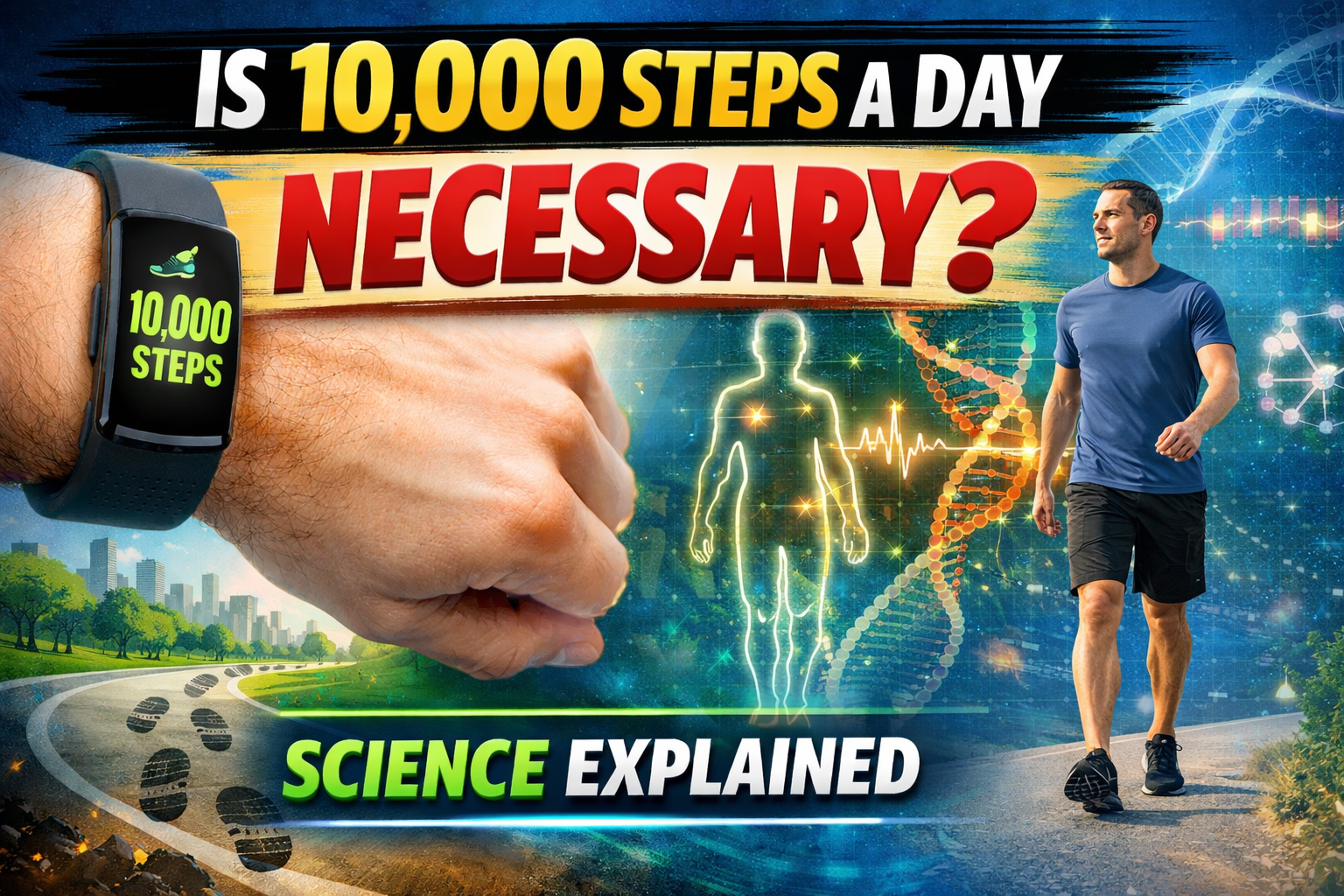

For years, the idea of walking 10,000 steps a day has been promoted as the ultimate fitness goal. Fitness trackers, smartphones and wellness apps constantly remind people to hit this number. Many believe that if they do not reach 10,000 steps daily, they are not active enough. But have you ever wondered where this number actually came from and whether it is truly backed by science?
Interestingly, the 10,000 step goal did not start as a scientific recommendation. It originated in Japan during the 1960s as part of a marketing campaign for a pedometer. The number sounded catchy, easy to remember and motivating. Over time, it became a global standard without strong scientific evidence behind it. Today, modern research paints a more balanced and realistic picture of daily step goals.
Table of Contents
🧠 What Science Really Says About 10,000 Steps a Day
Scientific studies over the last two decades have examined how daily step counts affect health, heart disease, weight management and lifespan. Research consistently shows that walking is one of the safest and most effective forms of physical activity. However, science does not agree that 10,000 steps is a magic number for everyone.
Large scale studies published in respected medical journals reveal that significant health benefits begin at much lower step counts. Walking between 6,000 and 8,000 steps per day is associated with reduced risk of heart disease, lower blood pressure, improved blood sugar control and better mental health. Benefits continue to increase with more steps but the improvements slow down after a certain point.
📊 Daily Step Count vs Health Benefits (Science Based)
| Daily Steps | Health Impact |
|---|---|
| 2,000–3,000 | Basic movement, helps reduce sedentary behavior |
| 4,000–5,000 | Improved circulation and joint mobility |
| 6,000–7,000 | Lower risk of heart disease and diabetes |
| 8,000–9,000 | Improved longevity and metabolic health |
| 10,000+ | Additional fitness gains, mainly for active individuals |
This table clearly shows that meaningful health benefits begin well before reaching 10,000 steps.
• 2,000–3,000 steps per day help reduce prolonged sitting time and gently activate muscles and joints. This range is ideal for beginners, elderly individuals or people recovering from illness, as it encourages basic movement without physical strain.
• 4,000–5,000 steps per day helps better blood circulation and improve joint flexibility. At this level, people often notice reduced stiffness, improved mood and a gradual increase in daily energy levels.
• 6,000–7,000 steps per day are strongly linked with lower risk of heart disease, type 2 diabetes and high blood pressure. Scientific studies show noticeable improvements in metabolic health and overall cardiovascular function within this range.
• 8,000–9,000 steps per day provide enhanced longevity benefits. Research suggests that people walking in this range experience better weight control, improved lung capacity and stronger immune function over time.
• 10,000 steps or more per day mainly benefit highly active individuals aiming for advanced fitness goals. While additional calories are burned, studies indicate that health benefits increase more slowly beyond this point.
• Consistency matters more than perfection, as walking daily even at moderate step counts delivers long term health improvements when sustained over weeks and months.
• Walking intensity also plays a role, since brisk walking fewer steps can sometimes offer greater cardiovascular benefits than slow walking over longer distances.
❤️ 10,000 Steps a Day and Heart Health: How Much Is Enough?
Heart health is one of the biggest reasons people aim for daily step targets. Scientific evidence shows that walking improves cholesterol levels, reduces resting heart rate and lowers blood pressure. Studies involving older adults found that people who walked around 7,000 steps per day had a significantly lower risk of premature death compared to those walking less than 3,000 steps. The key point is consistency. Walking regularly matters more than chasing a specific number. A steady daily routine of moderate walking helps heart health more effectively than irregular bursts of very high activity.
⚖️ Do You Need 10,000 Steps for Weight Loss?
Weight loss depends on calorie balance, diet quality, sleep and overall activity level. Walking helps burn calories, but 10,000 steps alone do not guarantee weight loss. For many people, walking 7,000 to 8,000 steps combined with mindful eating and strength training is enough to helps healthy weight management. Higher step counts can help create a calorie deficit, but intensity also matters. A brisk walk of fewer steps can burn more calories than slow walking over a longer distance. Science suggests focusing on movement quality along with quantity.
🧬 Age Matters: Step Goals for Different Age Groups
Daily step needs vary depending on age, fitness level and health conditions. Younger adults often benefit from higher step counts due to better recovery and mobility. Older adults gain substantial health benefits at lower step counts and should prioritize safety and consistency.
| Age Group | Ideal Daily Steps |
|---|---|
| 18–40 years | 8,000–10,000 |
| 41–60 years | 7,000–9,000 |
| 60+ years | 6,000–8,000 |
These ranges are prepared by population based studies and reflect realistic, sustainable goals.
🧘 Mental Health Benefits of Walking Fewer Steps
Walking is not just about physical health. Research shows that regular walking improves mood, reduces stress, lowers anxiety, and enhances cognitive function. Even 4,000 to 5,000 steps per day can significantly reduce symptoms of depression, especially when walking outdoors in natural environments. Mental health benefits appear at lower step counts because movement stimulates brain chemicals that promote relaxation and happiness. This means you do not need to hit 10,000 steps to feel mentally refreshed.
⏱️ Quality vs Quantity: Why Steps Alone Are Not Enough
Modern science emphasizes that not all steps are equal. Walking pace, posture, terrain and duration all influence health outcomes. A 30-minute brisk walk may provide more cardiovascular benefits than slow walking spread across the day. Experts now recommend combining step goals with movement variety. Including light stretching, strength exercises, and balance work improves overall fitness more effectively than focusing only on step numbers.
🌍 Lifestyle Factors That Matter More Than Step Count
Daily movement is just one part of a healthy lifestyle. Nutrition, hydration, sleep quality, stress management and social connection all play crucial roles. Someone walking 7,000 steps daily with balanced meals and proper sleep may be healthier than someone walking 12,000 steps while eating poorly and sleeping less. Science encourages a holistic view of health rather than chasing a single number.
📱 Fitness Trackers: Helpful Tool or Unnecessary Pressure?
Fitness trackers have helped millions of people become more active. They provide awareness, motivation and accountability. However, they can also create unnecessary pressure and guilt when goals are missed. Research suggests using step counts as a guide, not a strict rule. Listening to your body and adjusting goals based on energy levels and health conditions leads to better long-term results.

🧪 The Scientific Views on 10,000 Steps a Day
Science does not support the idea that 10,000 steps is a magic number for everyone. Health benefits start much earlier, around 6,000 to 8,000 steps per day. For many people, this range is more achievable, sustainable, and just as effective. The best step goal is one that fits your lifestyle, keeps you consistent, and helps your overall healthy well being.
🌟 Conclusion: The Real Truth About Daily Steps
The idea of walking 10,000 steps a day has motivated millions of people to move more and that in itself is a positive outcome. However, science clearly shows that this number is not a universal rule for good health. The real value of walking lies in consistency, comfort and sustainability rather than chasing a fixed target. Research confirms that meaningful health benefits begin much earlier, often between 6,000 and 8,000 steps per day, depending on age, lifestyle and overall health.
Walking is one of the most accessible and safest forms of physical activity for people of all ages. It improves heart health, helps weight management, boosts mental well-being, and reduces the risk of chronic diseases. Even moderate daily movement can make a noticeable difference when done regularly. Quality of movement, walking pace and daily habits matter just as much as the total number of steps.
Instead of focusing on perfection, it is better to focus on progress. Small, consistent increases in daily activity can lead to long term health improvements. Whether you walk 5,000, 7,000, or 10,000 steps, the key is to keep moving and enjoy the process. A healthy lifestyle is built step by step, not by numbers alone.
❓ Frequently Asked Questions (FAQs)
No, scientific research shows that significant health benefits begin at around 6,000 to 8,000 steps per day. Walking consistently matters more than reaching an exact number. For many people, lower step counts combined with healthy habits provide excellent physical and mental health benefits without unnecessary strain.
Yes, studies confirm that walking even 4,000 to 5,000 steps daily can reduce stress, anxiety and depression. Walking improves blood flow to the brain and releases mood-enhancing chemicals. Outdoor walking further enhances mental well being regardless of step count.
Not always. Weight loss depends on calorie balance, diet and overall activity. Brisk walking fewer steps can be more effective than slow walking more steps. A balanced approach that includes strength training and proper nutrition works best.
Most older adults benefit greatly from 6,000 to 8,000 steps per day. This range helps heart health, mobility and longevity while reducing injury risk. Consistency and comfort are more important than pushing for higher numbers.
Fitness trackers are useful for awareness and motivation, but they should not cause stress. Use them as flexible tools rather than strict rules. Adjust goals based on your body, lifestyle and health needs for long term success.