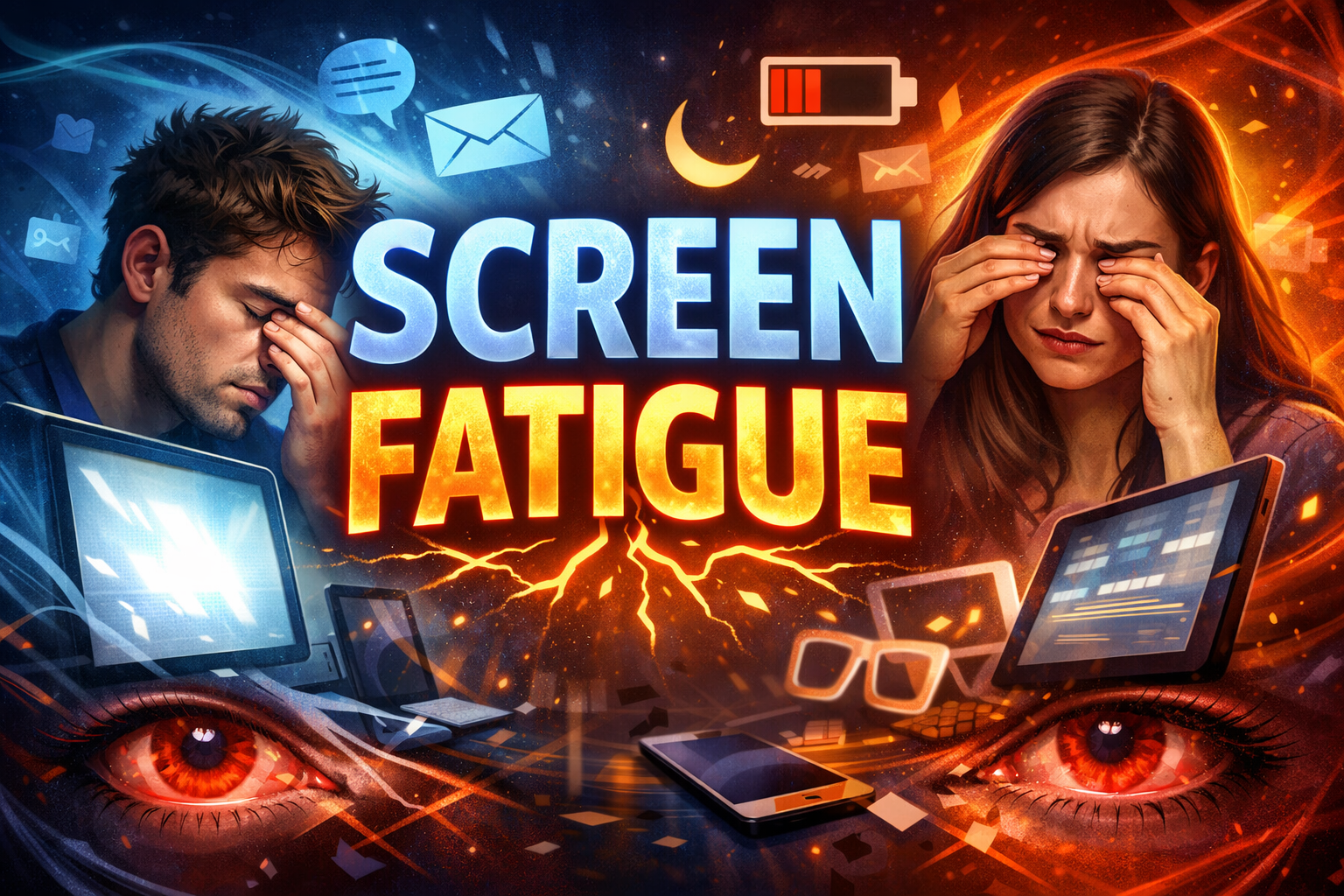

Screen fatigue is no longer a rare problem. It has quietly become part of our daily lives. From morning alarms on smartphones to late night scrolling, screens surround us almost every waking hour. If your eyes feel tired, your head feels heavy or your mind feels constantly distracted, it may be the real reason behind it.
It affects children, students, working professionals, homemakers and seniors alike. It does not matter whether you are watching reels, attending online meetings or reading articles. Too much screen exposure slowly drains your energy, focus and emotional balance. The good news is that it is not permanent. Small, simple habits can make a powerful difference.
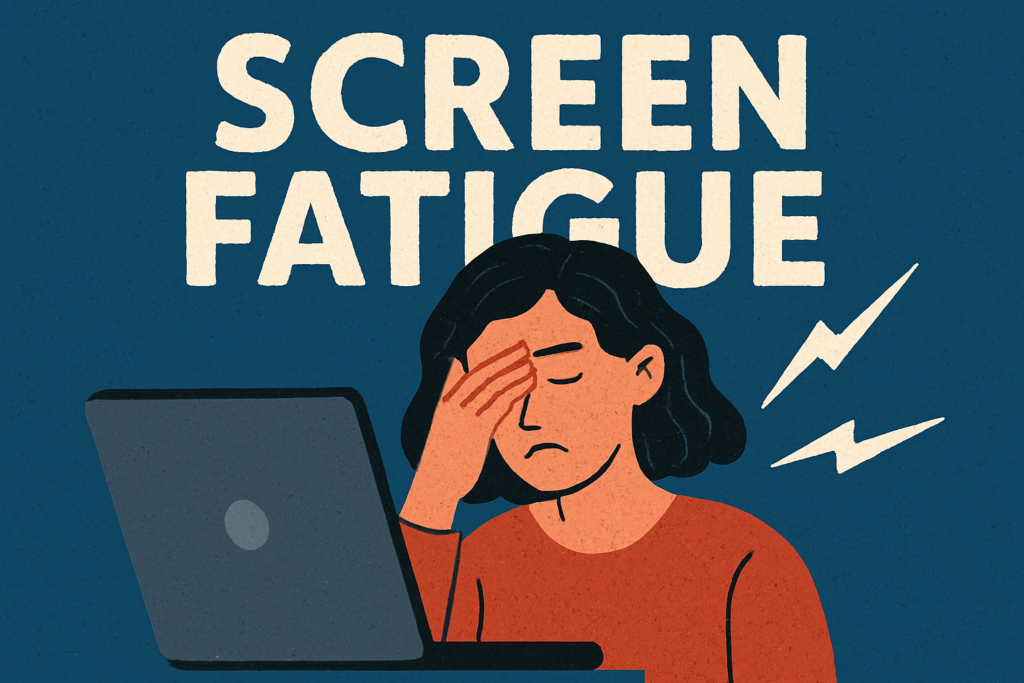
Table of Contents
🌐 What Is Screen Fatigue?
Screen fatigue is a condition where your eyes, brain and nervous system become overworked due to prolonged screen exposure. It happens when you spend long hours looking at phones, computers, tablets or televisions without enough breaks or proper care. It does not only affect your eyes. It also impacts your sleep, mood, posture, productivity and mental clarity. Many people confuse it with normal tiredness, but it is a specific form of digital overload that builds slowly and quietly.
When it sets in, your brain struggles to process constant visual information. Your eyes dry out, your neck tightens and your attention span reduces. Over time, this can lead to chronic discomfort if ignored.
⚠️ Common Signs and Symptoms of Screen Fatigue
It shows itself in many ways. Some symptoms appear physically, while others affect your emotions and thinking. Eye dryness, blurry vision, frequent headaches and sensitivity to light are common physical signs. Mental symptoms include irritation, lack of focus, restlessness and constant mental tiredness. Sleep problems are also a major symptom of fatigue. Excessive screen use, especially at night, confuses your body clock and delays deep sleep. Over time, poor sleep increases stress, anxiety and emotional imbalance.
| Category | Sign or Symptom | What It Feels Like |
|---|---|---|
| Eye Health | Dry or irritated eyes | Burning, itching or a gritty feeling in the eyes |
| Eye Health | Blurred vision | Difficulty focusing on text or objects after screen use |
| Eye Health | Eye redness | Eyes look red or bloodshot after long screen time |
| Eye Health | Sensitivity to light | Bright lights feel uncomfortable or painful |
| Head & Brain | Frequent headaches | Dull or sharp pain around the forehead or temples |
| Head & Brain | Mental tiredness | Feeling mentally drained or exhausted |
| Head & Brain | Difficulty concentrating | Trouble focusing on tasks or reading |
| Sleep Health | Poor sleep quality | Difficulty falling or staying asleep |
| Sleep Health | Late-night alertness | Feeling active or restless at bedtime |
| Muscles & Posture | Neck and shoulder pain | Stiffness or soreness in the upper body |
| Muscles & Posture | Back discomfort | Lower or upper back pain after sitting long hours |
| Emotional Health | Irritability | Feeling easily annoyed or frustrated |
| Emotional Health | Low motivation | Lack of interest in daily activities |
| Overall Well Being | Eye fatigue | Heavy or tired feeling in the eyes |
| Overall Well Being | Reduced productivity | Tasks take longer and feel more difficult |
📊 Screen Fatigue Causes at a Glance
| Cause | How It Affects You |
|---|---|
| Long screen hours | Overloads eyes and brain |
| Blue light exposure | Disrupts sleep cycle |
| Poor posture | Causes neck and back pain |
| Continuous scrolling | Reduces mental clarity |
| Lack of breaks | Increases eye strain |
| Night time screen use | Delays deep sleep |
This table shows that it is not caused by one habit alone. It develops when multiple small digital habits combine over time.
🧠 Why Screen Fatigue Is Increasing Rapidly
It has increased sharply because screens are now part of work, education, entertainment and social connection. Remote work, online classes, digital payments and social media have made screen exposure unavoidable. Another major reason is constant multitasking. Switching between apps, messages, emails and videos keeps the brain in a state of alertness. This prevents mental rest and accelerates it faster than ever before.
🌿 Simple Habits to Reduce Screen Fatigue Naturally
👀 Eye Friendly Habits for Screen Fatigue
Your eyes are the first to suffer from screen fatigue. Staring at screens reduces blinking, which dries the eyes. Developing the habit of consciously blinking more often helps restore moisture and comfort. Adjusting screen brightness to match room lighting reduces strain. Keeping screens slightly below eye level also reduces pressure on eye muscles. These small changes significantly reduce it over time.
⏳ Healthy Screen Time Awareness
It often increases because we lose track of time. Hours pass without us realizing it. Setting screen time awareness, even mentally, helps reduce overexposure. Regular short pauses from screens allow your eyes and brain to reset. Looking at distant objects or natural light during breaks refreshes vision and improves focus naturally.
🌙 Night Time Habits That Prevent Screen Fatigue
It becomes worse when screens are used late at night. Blue light interferes with melatonin, the sleep hormone. Reducing screen use at least one hour before sleep helps your body relax naturally. Replacing late night scrolling with calming activities like reading or light stretching improves sleep quality. Better sleep automatically reduces screen fatigue symptoms during the day.
🧍 Posture and Body Care for Screen Fatigue
It is not limited to eyes. Poor posture strains the neck, shoulders and spine. Sitting upright with relaxed shoulders and proper back helps reduces physical tension caused by screens. Gentle stretching during screen breaks releases muscle tightness and improves blood circulation. This habit reduces fatigue and increases energy levels.
🧘 Mental Calm and Screen Fatigue Relief
Constant notifications keep the brain alert and stressed. Turning off non essential alerts gives your mind breathing space. Fewer interruptions improve concentration and reduce mental exhaustion. Mindful screen use means being present with one task at a time. This reduces cognitive overload and protects mental health in the long run.
🌞 Natural Light and Screen Fatigue
Spending time in natural light balances eye health and mood. Natural light helps regulate sleep cycles and reduces dependency on artificial screens. Even a short daily walk outdoors refreshes vision and lowers stress hormones. This simple habit works as a natural therapy for it.
🔄 Long Time Benefits of Reducing Screen Fatigue
When it reduces, your productivity improves without extra effort. Focus becomes sharper, sleep deepens and mood stabilizes. Physical discomfort slowly disappears and mental clarity returns. Children perform better academically, professionals work more efficiently, and seniors feel more relaxed when it is controlled. These benefits make screen care an essential part of modern health.
🌈 Screen Fatigue and Digital Balance
Technology is not the enemy. The problem begins when balance disappears. Healthy screen habits allow you to enjoy technology without sacrificing well being. It’s awareness empowers you to use digital tools mindfully. Balance is the key to staying connected without feeling drained.
🌟 Conclusion
It is one of the most common yet ignored health issues today. It quietly affects your eyes, sleep, mood and productivity. The solution does not require expensive tools or drastic lifestyle changes. Simple daily habits can protect your eyes, calm your mind and restore energy. When you respect your limits and listen to your body, screens stop controlling your life. It fades and a healthier, more balanced digital life begins.
❓ Frequently Asked Questions (FAQs)
It is physical and mental exhaustion caused by prolonged screen exposure. It is serious because it affects vision, sleep, focus, posture and emotional health. If ignored, it can lead to chronic eye strain, headaches, poor sleep quality and reduced productivity. Managing it early helps prevent long term discomfort and helps overall digital well being.
It can begin after just two continuous hours of screen use without breaks. The risk increases when total daily screen time exceeds six to eight hours. Factors like screen brightness, posture, lighting and break frequency also influence how quickly screen fatigue develops. Regular breaks significantly reduce its impact.
Yes, it strongly affects mental health. It increases stress, irritability, anxiety and attention problems. Continuous digital stimulation keeps the brain overstimulated, preventing proper rest. Over time, this mental overload can contribute to burnout, mood swings and emotional exhaustion if healthy screen habits are not maintained.
Screen fatigue is reversible with simple natural habits. Reducing screen time, improving posture, taking eye breaks, sleeping well and spending time outdoors help the body recover. Most people notice improvement within a few weeks of consistent habit changes. Early action prevents screen fatigue from becoming chronic
Children can avoid screen fatigue by limiting recreational screen time, taking frequent breaks, maintaining proper posture, and avoiding screens before bedtime. Encouraging outdoor play and non-screen hobbies supports eye and brain health. Parental guidance and balanced digital routines help children develop lifelong healthy screen habits.