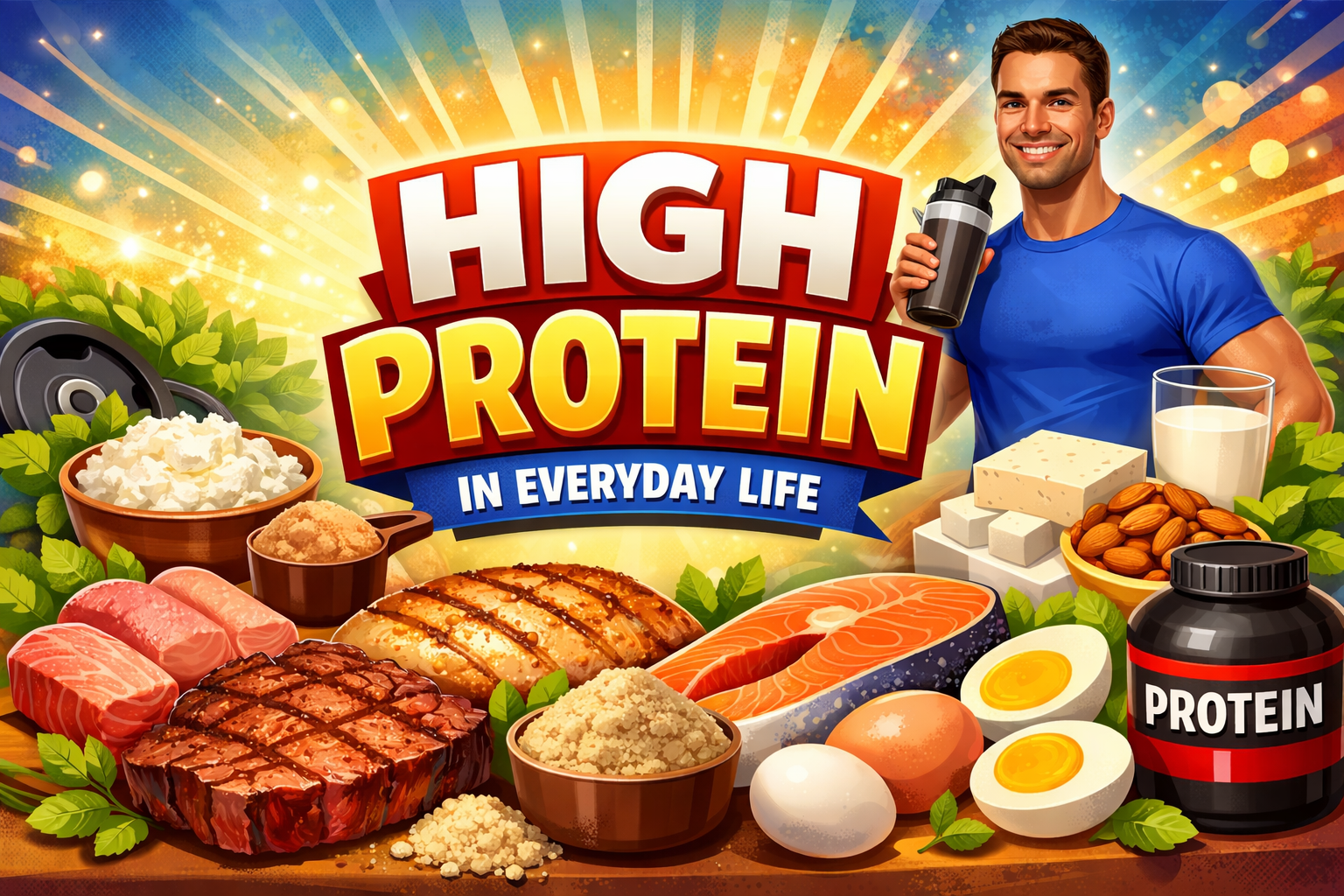

High protein in everyday life is no longer limited to bodybuilders or athletes. It has become an essential part of modern healthy living for people of all ages. From children to seniors, protein helps growth, repair, energy and overall wellness. In today’s busy lifestyle, many people unknowingly consume less protein than their body needs, leading to fatigue, poor immunity, muscle loss and slow recovery.
High protein in everyday life helps maintain strength, helps for good metabolism, balances blood sugar and keeps you feeling full for longer hours. When protein becomes a natural part of daily meals instead of a special diet, health improvements happen automatically and sustainably. This guide explains everything in simple language so anyone can understand, apply, and succeed.
Table of Contents
🧬 What Is High Protein in Everyday Life
High protein in everyday life means regularly including enough protein in your daily meals to support normal body functions, health and energy needs. Protein is one of the most important nutrients because it helps build and repair muscles, helps in immunity buildings, balances hormones and keeps you feeling full for longer. Instead of treating protein as a special diet or gym only nutrition, this approach makes protein a natural part of everyday eating.
In high protein everyday living meals are balanced so that protein is present at breakfast, lunch, dinner and even snacks. This helps maintain steady energy levels, improves focus, helps healthy weight management and reduces unhealthy cravings. High protein in everyday life is suitable for all age groups, including children, adults, seniors, vegetarians and non-vegetarians, as long as intake is balanced and based on individual needs. The goal is not excess protein, but the right amount spread across the day. When practiced consistently, high protein in everyday life improves strength, metabolism, digestion and overall wellness, making it a sustainable and practical lifestyle habit rather than a temporary diet.
| Daily Meal | Protein Contribution (%) | Purpose |
|---|---|---|
| Breakfast | 25% | Boosts energy and focus |
| Lunch | 30% | Supports stamina and productivity |
| Snacks | 15% | Controls hunger and cravings |
| Dinner | 30% | Aids recovery and repair |
🥗 Role of Protein in Daily Health
High protein in everyday life plays a vital role in physical and mental health. Protein supports muscle strength, bone density, immune response and even brain function. It helps stabilize energy levels throughout the day and prevents sudden hunger crashes. Protein also supports healthy aging by reducing muscle loss and improving mobility. For working professionals, students, and homemakers, protein improves concentration, endurance and stress recovery. When protein intake is consistent, the body functions more efficiently and remains resilient against lifestyle diseases.
🧬 Protein in Daily Health
- Protein helps build and repair muscles, tissues and cells every day.
- It helps a strong immune system by forming antibodies that fight infections.
- Protein maintains steady energy levels and prevents sudden hunger crashes.
- It plays an important role in hormone and enzyme production for body balance.
- Protein helps healthy metabolism and helps in weight management.
- It improves bone strength and reduces muscle loss with aging.
- Protein enhances brain function, focus and mental clarity.
- It helps faster recovery from physical activity and daily stress.
📊 Daily Protein Needs by Lifestyle
| Age Group / Lifestyle | Average Daily Protein Requirement | Health Focus |
|---|---|---|
| Children | Moderate intake based on growth | Growth and development |
| Adults | Balanced protein intake | Energy and maintenance |
| Active individuals | Higher protein intake | Muscle recovery |
| Seniors | Slightly increased intake | Muscle preservation |
| Vegetarians | Plant-based protein balance | Nutrient diversity |
This table highlights how high protein in everyday life adapts to different life stages without complexity.
🏠 How High Protein in Everyday Life Fits Into Daily Routine
High protein in everyday life succeeds when protein becomes part of routine eating habits. Breakfast with protein helps start the day with stable energy. Lunch with protein maintains focus and productivity. Dinner with protein supports overnight recovery. Small protein rich snacks prevent unhealthy cravings. When meals are planned naturally with protein, there is no feeling of restriction. Cultural foods, home cooked meals and simple ingredients can all support high protein in everyday life without stress.
Step 1: Start the Morning with Protein
Begin your day with a protein rich breakfast. Adding protein in the morning helps stabilize blood sugar levels, boosts energy and keeps you full for longer hours, reducing unnecessary snacking.
Step 2: Balance Protein at Lunch
Include a good portion of protein in your lunch. This helps sustained energy, improves concentration and prevents afternoon tiredness, especially during work or study hours.
Step 3: Add Protein to Snacks
Choose light protein based snacks between meals. This controls hunger, reduces cravings for unhealthy foods and maintains steady energy throughout the day.
Step 4: Include Protein in Dinner
End the day with a balanced protein rich dinner. Protein at night helps muscle repair, recovery and overall body maintenance while you rest.
Step 5: Maintain Consistency Daily
Follow this routine every day in moderate portions. Consistency is the key to making high protein in everyday life a natural and sustainable habit.
💪 Protein in Everyday Life and Weight Management
High protein in everyday life is highly effective for healthy weight management. Protein increases satiety, which means you feel full for longer and naturally eat fewer calories. It also supports metabolism by increasing the thermic effect of food, helping the body burn more calories during digestion. Unlike crash diets, high protein in everyday life helps sustainable weight control while preserving muscle mass. This makes it ideal for people who want long-term results without extreme restrictions.
⚡Protein in Everyday Life for Energy and Productivity
High protein in everyday life ensures steady energy throughout the day. Unlike carbohydrate-heavy meals that cause energy spikes and crashes, protein provides slow and sustained fuel. This helps improve focus, reduce fatigue, and support mental clarity. Students, office workers and busy parents benefit greatly from consistent protein intake. High protein in everyday life supports concentration, memory and emotional stability, making daily tasks easier and more productive.
🧘 Protein in Everyday Life and Overall Health Wellness
High protein in everyday life supports immunity, hormone balance, and gut health. Proteins form antibodies that protect the body from infections. They also helps enzymes that regulate digestion and nutrient absorption. Regular protein intake reduces the risk of muscle weakness, joint pain, and bone loss. When combined with balanced nutrition, high protein in everyday life contributes to long-term wellness and disease prevention.
🧠 Common Myths About High Protein in Daily Life
Many people believe high protein in everyday life is unsafe or only for gym users. This is a misunderstanding. When consumed in balanced amounts from natural foods, protein is safe and essential. Another myth is that protein damages kidneys. For healthy individuals, balanced protein intake does not cause harm. High protein in everyday life focuses on moderation, hydration and variety, ensuring safety and benefits.
🌍 Making High Protein in Daily Life Life Sustainable
Sustainability is the key to success. High protein in everyday life works best when it matches personal taste, culture, and budget. Home-cooked meals, seasonal foods, and mindful portions make protein intake enjoyable and affordable. Instead of drastic changes, small consistent improvements build long term habits. This approach ensures high protein in everyday life becomes a permanent part of a healthy lifestyle.
🌈 Conclusion
High protein in everyday life is a simple yet powerful approach to better health, strength and vitality. It supports energy, weight management, immunity and overall wellness for people of all ages. When protein becomes a natural part of daily meals, health improvements happen without struggle. By understanding your body’s needs, choosing balanced foods and maintaining consistency, high protein in everyday life becomes an easy and rewarding lifestyle choice. Success lies not in perfection, but in mindful daily habits that nourish the body and mind for years to come.
❓ Frequently Asked Questions (FAQs)
High protein in everyday life means including enough protein in daily meals to helps normal body functions. It does not mean excessive intake. It focuses on balanced portions at every meal to support energy, muscle health, immunity and overall wellness in a sustainable and natural way.
Yes, high protein in everyday life is safe when protein intake matches age and lifestyle needs. Children need protein for growth, adults for maintenance and seniors for muscle preservation. Balanced intake from natural foods supports health without causing harm.
High protein in everyday life is absolutely possible for vegetarians. Plant based foods like lentils, dairy, legumes, nuts and whole grains provide sufficient protein when eaten in balanced combinations throughout the day.
High protein in everyday life supports healthy weight loss by increasing fullness and reducing cravings. Protein preserves muscle mass while encouraging fat loss, making it an effective and sustainable approach compared to extreme dieting methods.
Beginners can start high protein in everyday life by adding protein to every meal gradually. Simple changes like protein rich breakfasts, lunches and mindful dinners help build habits without feeling overwhelmed or restricted.