


Sitting All Day Body Damages begin silently, often before you even realize something is wrong. Many people feel tired, stiff or mentally drained after work yet never suspect their chair could be the hidden culprit behind long-term health risks.
Modern work culture has turned prolonged sitting into a daily habit for millions. Office jobs, remote work, long commutes and binge watching have quietly reduced natural movement. Health experts now compare prolonged sitting to smoking in terms of lifestyle risk because inactivity impacts metabolism, muscles, heart health and mental wellness. This guide explains nine silent damages caused by sitting all day and shows how small daily changes can restore energy, posture and long-term health without drastic lifestyle shifts.
Also read: Why Is Guava India’s Blueberry? A Surprising Superfruit Truth
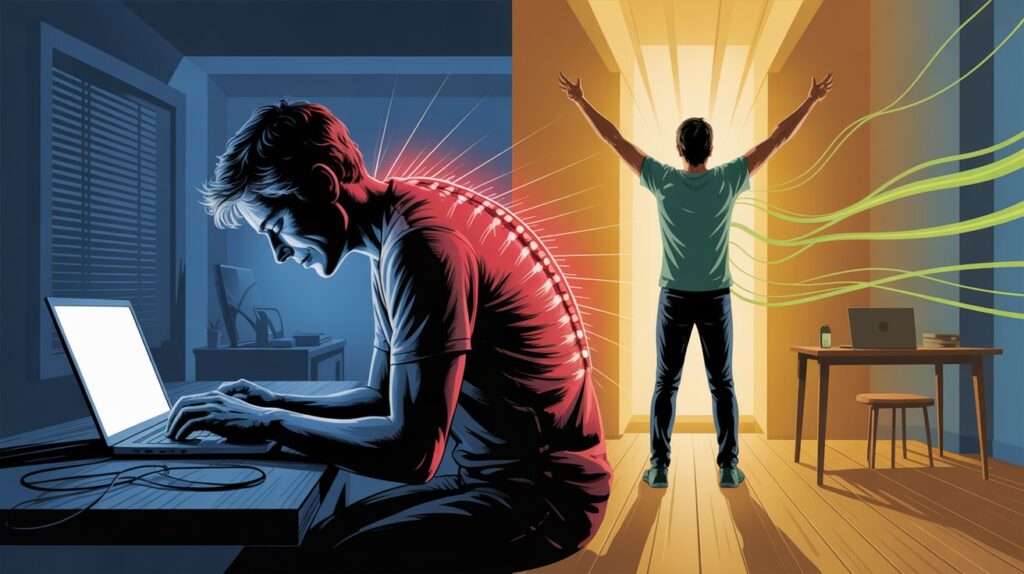
Table of Contents
Sitting All Day Body Damages Start Earlier Than You Think
A typical office professional now sits between 8 to 11 hours daily. Add screen time at home and the number often exceeds 13 hours. Research published in recent global health studies shows people who sit longer than eight hours daily without activity face up to 20 percent higher risk of early mortality. The scary part is symptoms appear slowly. People blame aging or stress instead of recognizing inactivity as the real trigger. Sitting All Day Body Damages affect muscles, circulation, hormones and posture long before pain begins. Many young professionals in their twenties already report chronic back pain, low stamina, and stiffness normally seen in older adults. Understanding early warning signs helps prevent long-term complications.
Read more: Yoga is a Medicine: 7 Powerful Truths That Can Heal Your Body Naturally
Sitting All Day Body Damages Because
• Sitting all day body damages the spine by increasing pressure on discs causing chronic back and neck pain
• Muscles weaken especially core and glutes leading to poor posture and joint strain
• Blood circulation slows increasing risk of leg swelling and clot formation
• Metabolism drops causing weight gain and fat accumulation
• Insulin function reduces raising diabetes risk
• Heart disease risk increases due to poor fat metabolism
• Mental fatigue and stress rise due to reduced brain oxygen flow
• Belly fat increases because calorie burn declines
• Energy levels fall causing daily tiredness and reduced productivity
Spine Compression and Chronic Back Pain
When you sit for hours, spinal discs compress under body weight, especially if posture is poor. Slouching pushes extra pressure on the lower back, creating pain and stiffness. Over time this leads to herniated discs or nerve compression. Sitting All Day Body Damages the natural S-curve of the spine, causing long-term alignment problems.
Sitting all day body damages because neck strain also develops because people lean forward while using screens. This creates “tech neck,” where neck muscles constantly helps extra head weight. Headaches and shoulder stiffness often follow. Many people assume expensive chairs alone solve this issue, yet movement remains the true solution because muscles need regular activation to help spinal structure effectively.
Weak Muscles and Slowed Metabolism
Sitting all day body damages long sitting periods cause glute muscles and core muscles to weaken due to inactivity. These muscles stabilize posture and helps movement. Once weakened, the body compensates, leading to knee pain or hip tightness. Sitting All Day Body Damages muscle efficiency and reduces calorie burning capacity.
Metabolism also slows when muscles remain inactive. According to recent metabolic studies, enzyme activity responsible for fat breakdown drops drastically within hours of inactivity. This increases risk of weight gain and insulin resistance. Even people who exercise daily can face risks if they remain sedentary for most of the day. Movement frequency matters as much as workout duration, making small movement breaks essential.
Know more: Sleep Is Medicine: Why Better Sleep Beats Most Modern Treatments

Poor Blood Circulation and Heart Risk
Sitting all day body damages because it reduces blood circulation, particularly in legs. Blood begins to pool, causing swelling or heaviness. In severe cases prolonged immobility may increase risk of deep vein thrombosis, a dangerous clot condition. Sitting All Day Body Damages circulation patterns needed to transport oxygen and nutrients efficiently.
Heart health also suffers because inactive muscles burn fewer fats from the bloodstream. This contributes to higher cholesterol levels and increased blood pressure over time. Cardiologists now warn sedentary lifestyle plays a major role in rising heart disease among young adults. The risk grows silently, often unnoticed until symptoms become serious, making daily movement breaks crucial preventive medicine.
Read more: Why Your Calf Is the 2nd Heart: 7 Powerful Ways Calf Muscles Protect Your Heart Health
Increased Risk of Diabetes
One of the most serious Sitting All Day Body Damages involves blood sugar regulation. When muscles remain inactive, they absorb less glucose from blood. This leads to elevated sugar levels and increased insulin resistance. Over months or years this pattern contributes to type 2 diabetes risk.
Recent workplace wellness reports show employees with desk jobs face significantly higher diabetes risk compared to active workers. The concerning part is many affected individuals appear healthy externally. Regular standing breaks and light activity significantly improve glucose response. Even short walks after meals help the body regulate sugar effectively, reducing long-term health threats linked to sedentary behaviour.
Mental Fatigue and Mood Changes
Physical inactivity also influences mental health. Sitting All Day Body Damages brain stimulation because movement boosts blood flow and oxygen supply to the brain. Without movement, people often feel sluggish, unfocused or mentally exhausted by evening.
Studies in occupational psychology reveal employees who take movement breaks report better concentration and reduced stress. Sitting continuously increases fatigue because the brain receives fewer stimulating signals from muscles. Regular movement enhances mood by releasing endorphins and improving alertness. Many professionals notice mood improvement simply by taking short walks or stretching breaks, proving mental wellness is deeply connected to physical movement patterns.
Read more: Foods That Destroy Your Memory: 9 Dangerous Choices to Stop Eating Today

Increased Belly Fat and Hormonal Imbalance
Extended sitting encourages fat storage around the abdomen because inactive muscles burn fewer calories. Sitting All Day Body Damages hormonal balance by reducing lipoprotein lipase activity, an enzyme responsible for fat processing. This leads to stubborn belly fat accumulation.
Abdominal fat increases risk of cardiovascular disease and hormonal imbalance. Many people exercise yet struggle with belly fat because they remain seated most of the day. Fitness experts now emphasize total daily movement rather than only gym workouts. Frequent standing, stretching, or walking interrupts fat storage cycles, helping maintain healthy metabolism and reducing long-term weight related health risks.
Sedentary Impact Overview
| Daily Sitting Hours | Health Impact Observed | Risk Level |
|---|---|---|
| 4–6 hours | Mild stiffness and fatigue | Moderate |
| 6–8 hours | Posture strain and weight gain risk | Elevated |
| 8–10 hours | Circulation and metabolism decline | High |
| 10+ hours | Heart disease and diabetes risk | Very High |
Recent global wellness trends show companies adopting standing meetings and active office designs to reduce Sitting All Day Body Damages among employees, improving productivity and health outcomes simultaneously.
Read more: Morning Walk Is Medicine: 15 Powerful Reasons It Can Transform Your Life Positively
Simple Movement Flow to Reverse Sitting Damage
A practical movement pattern can interrupt sedentary harm effectively. The flow below illustrates how small daily actions reverse Sitting All Day Body Damages.
Sit 30 minutes → Stand 2 minutes → Stretch shoulders → Walk briefly → Resume work with improved posture → Repeat hourly.
Health researchers suggest movement frequency matters more than workout intensity. Office workers who adopt hourly micro-movement habits report reduced back pain within weeks. Even gentle stretching or short walks activate muscles and improve circulation. The goal is consistency rather than perfection, making sustainable habits more important than dramatic fitness plans that rarely last long.
Why Health Experts Call “Sitting the New Smoking”
Recent workplace studies and wearable fitness data reveal people move 30 percent less today compared to a decade ago. Remote work increased comfort yet reduced natural walking routines previously linked with commuting or office movement. Sitting All Day Body Damages now appear in younger populations, raising alarms among healthcare professionals.
Technology companies now promote movement reminders in smart devices, while corporate wellness programs encourage standing desks and walking meetings. Fitness professionals emphasize “movement snacks,” short bursts of activity spread throughout the day. These trends show growing awareness that inactivity rather than intense workouts drives modern health risks. Small daily changes create powerful long-term benefits.
Read more: Capsule Isn’t Always the Answer: 7 Powerful Truths About Water as Medicine

Practical Prevention Tips
Preventing Sitting All Day Body Damages does not require expensive equipment or drastic lifestyle shifts. Small consistent actions produce remarkable health improvements. Standing during phone calls, walking while thinking through tasks, stretching during breaks and maintaining upright posture reduce physical stress significantly.
Keeping water away from your desk encourages regular movement. Parking farther away or choosing stairs adds natural activity. These micro-habits accumulate throughout the day, countering sedentary risks effectively. The goal is to design environments encouraging movement instead of forcing exercise sessions later. Sustainable routines fit naturally into daily life, making long-term success easier and healthier.
- Stand up and move for at least 2 minutes every 30 to 45 minutes of sitting
- Keep your screen at eye level to avoid neck and shoulder strain
- Sit with feet flat on the floor and maintain a neutral spine posture
- Use a standing desk or alternate between sitting and standing during work
- Walk while taking phone calls or brainstorming ideas
- Stretch shoulders, neck, hips and legs several times during the day
- Drink water regularly so you naturally get up for refills or restroom breaks
- Park farther away or choose stairs to add natural movement
- Take short walks after meals to support digestion and blood sugar control
- Strengthen core and glute muscles through simple exercises at home
- Set movement reminders on your phone or smartwatch
- Keep frequently used items slightly away so you must stand to reach them
- Practice posture checks throughout the day to avoid slouching
- Add light mobility exercises before starting work and after finishing work
- Build a habit of ending each hour with a quick stretch or walk
Conclusion
Sitting All Day Body Damages develop quietly yet impact nearly every system in the body. The good news is prevention remains simple and achievable through conscious movement habits. Every small action matters because the body responds quickly once movement returns.
Start with tiny changes today. Stand during calls, stretch hourly, or walk after meals. Share this knowledge with colleagues or family who spend long hours sitting. Small awareness shifts protect long-term health. Your future self will thank you for every step taken today toward a healthier and more energetic lifestyle.
Frequently Asked Questions (FAQs)
Research indicates sitting more than eight hours daily without movement significantly increases risk of metabolic and cardiovascular issues. However risk depends on lifestyle, age and activity levels. Even active individuals face health concerns if prolonged sitting dominates their routine. Breaking sitting periods every 30 to 60 minutes reduces risk considerably and helps maintain circulation and muscle activity throughout the day.
Daily workouts help but cannot fully cancel prolonged inactivity effects. If someone exercises for one hour yet sits ten hours, risks remain. Health experts now recommend combining exercise with frequent daily movement. Standing breaks, walking, and stretching throughout the day work together with workouts to protect metabolism, posture and circulation effectively.
Standing continuously can also strain legs and lower back. The healthiest approach combines sitting, standing and moving regularly. Alternating positions helps muscle balance and circulation. Using adjustable desks or taking movement breaks ensures body parts receive varied activation instead of prolonged pressure in one static position.
Improving posture, strengthening core muscles and taking hourly movement breaks deliver fastest relief. Gentle stretches targeting hip flexors and lower back muscles reduce stiffness. Walking boosts circulation while relieving pressure on spinal discs. Consistency rather than intensity produces lasting improvement and prevents recurring discomfort linked with sedentary habits.
Yes. Sedentary lifestyle impacts all age groups. Increased screen usage among students and remote workers leads to posture issues, reduced fitness and mental fatigue early in life. Preventive habits developed young help maintain lifelong health. Encouraging regular movement and posture awareness protects physical and mental well-being as technology usage continues growing globally.