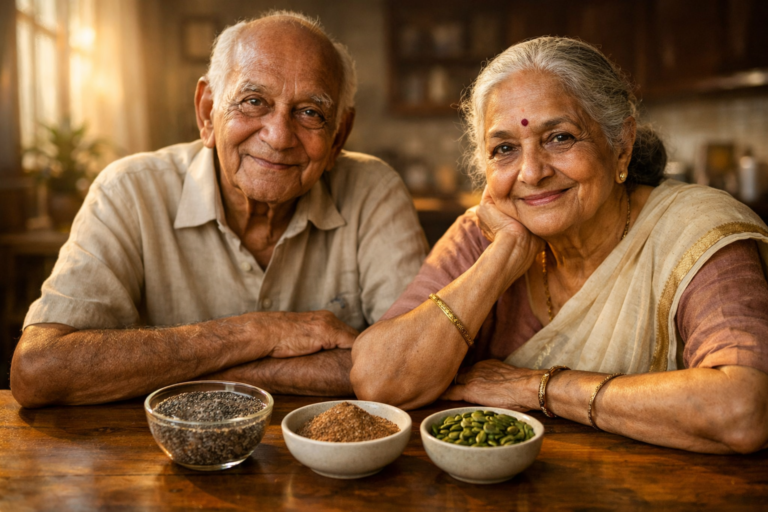
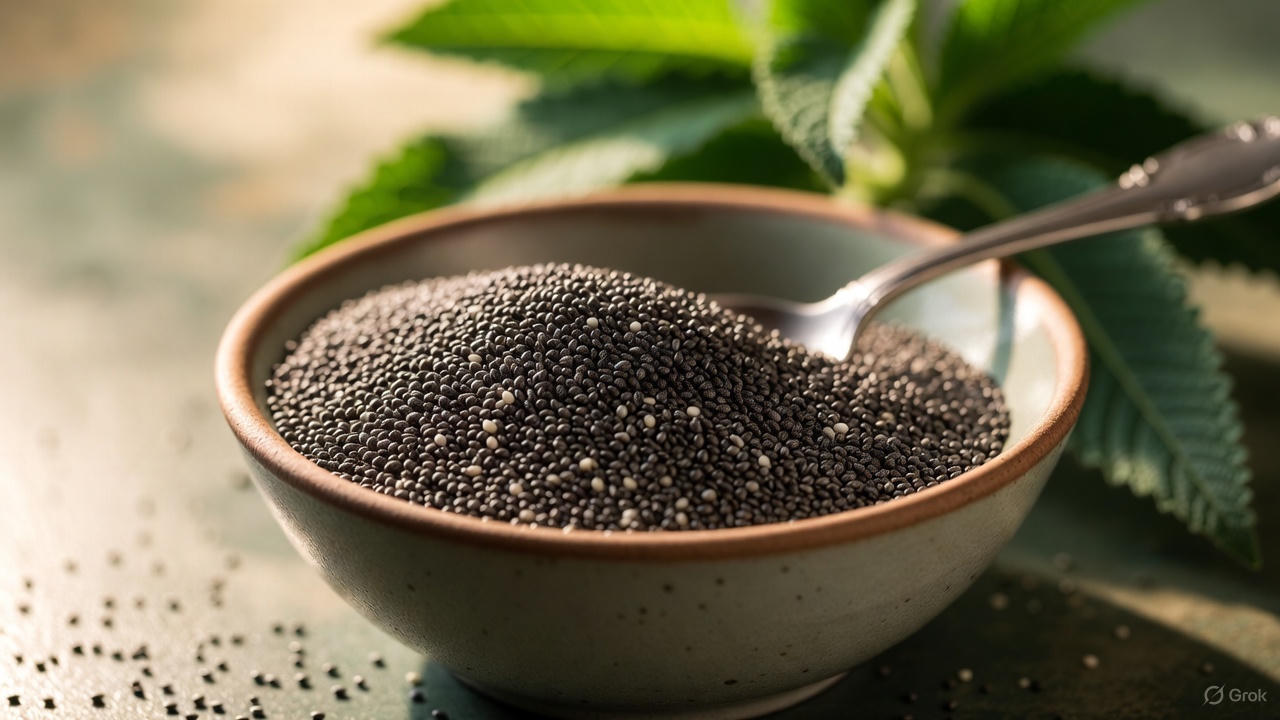

Chia seed is one of the most popular tiny superfoods in the world today. Even though these seeds are very small, they are full of nutrients that helps in overall health. Chia seeds come from the plant Salvia hispanica, which belongs to the mint family. These seeds have been used for centuries, especially by ancient civilizations like the Aztecs and Mayans, who believed chia seeds gave strength and energy.
In modern times, chia seeds are loved because they are easy to use, affordable and extremely nutritious. You can add them to water, milk, smoothies, yogurt or even traditional Indian foods. Chia seeds do not have a strong taste, which makes them perfect for daily consumption without changing the flavour of food.
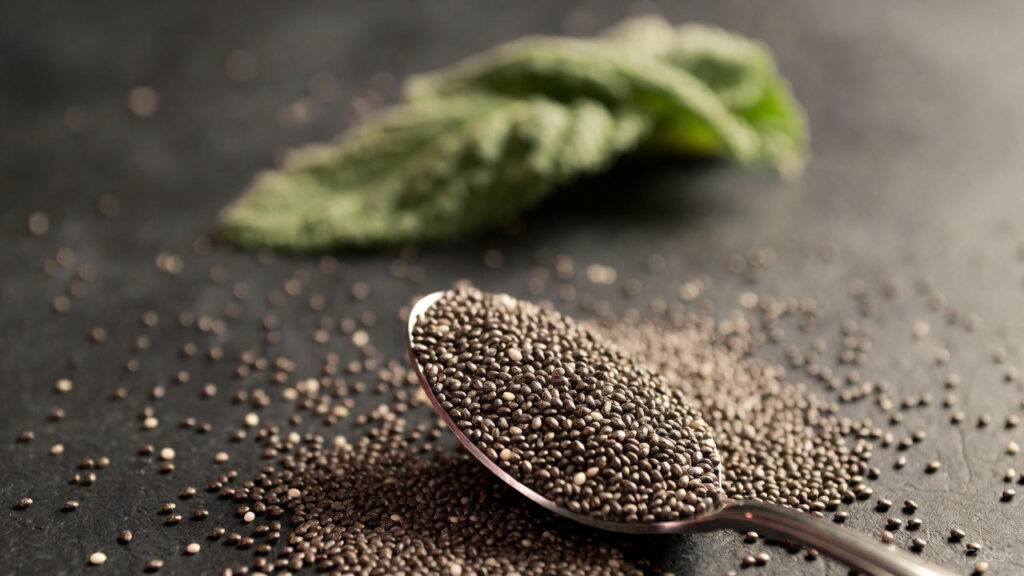
Table of Contents
📝What is Chai Seed?
Chia seed is a small, oval shaped edible seed that comes from the plant Salvia hispanica, which belongs to the mint family. Although tiny in size, chia seeds are highly nutritious and are considered a natural tiny superfood. They are rich in dietary fiber, plant based protein, omega-3 fatty acids, antioxidants, vitamins and minerals. When soaked in water or any liquid, chia seeds absorb moisture and form a gel like texture, which helps improve digestion and keeps the body hydrated. Chia seeds are easy to consume, helps in our overall health and are commonly used in drinks, smoothies and everyday meals.
💁What Makes Chia Seed So Special
Chia seeds may look tiny, but they expand when soaked in liquid and form a gel like texture. This unique quality helps in digestion and keeps you feeling full for a longer time. Chia seeds are naturally rich in fiber, plant protein, omega-3 fatty acids, calcium, iron, magnesium and antioxidants.
Unlike many other health foods, chia seeds do not need cooking. They can be eaten raw after soaking, which helps preserve all nutrients. This is one of the main reasons chia seeds are recommended for busy lifestyles.
💊Nutritional Value of Chia Seed
The nutritional profile of chia seed is one of the best among plant based foods. It provides balanced nutrition that supports heart health, digestion, weight management and overall energy levels.
| Nutrient | Amount per 28g |
|---|---|
| Calories | 138 |
| Fiber | 10 grams |
| Protein | 4.7 grams |
| Fat | 9 grams |
| Omega-3 | 4.9 grams |
| Calcium | 18% of daily need |
| Iron | 12% of daily need |
| Magnesium | 23% of daily need |
👉Health Benefits of Chia Seed
Chia seeds are known for improving digestion because of their high fiber content. Fiber helps clean the digestive system and improves healthy bowel movement. Regular intake of chia seeds can help prevent constipation and bloating.
Chia seeds are also excellent for heart health. The omega-3 fatty acids present in chia seeds help reduce bad cholesterol and increase good cholesterol levels. This lowers the risk of heart disease over time.
For people trying to manage weight, chia seeds are very helpful. When soaked, they expand in the stomach and help control hunger. This reduces overeating and unhealthy snacking. The combination of fiber and protein helps you stay full for longer hours.
Chia seeds are beneficial for blood sugar control. The gel formed by soaked chia seeds slows down the digestion of carbohydrates, which helps maintain stable blood sugar levels. This makes chia seeds suitable for people with diabetes when consumed in moderation.
Chia seeds also helps in bone health. They contain calcium, phosphorus and magnesium, which are important for strong bones and teeth. This is especially useful for people who do not consume dairy products.
🍽️How to Eat Chia Seed Daily
The most common way to consume chia seeds is by soaking them in water. When soaked for at least 30 minutes or overnight, the seeds absorb water and become soft. This makes them easier to digest and more beneficial for the body.
Chia seeds can be mixed with warm milk to create a healthy morning drink. Many people add them to smoothies along with fruits for added nutrition. Chia seeds can also be added to curd, oats, homemade energy drinks and traditional foods.
For Indian households, chia seeds can be mixed into lemon water or added to sabja style drinks. They can also be sprinkled over salads, rice dishes or homemade sweets in small amounts.
⌛Best Time to Consume Chia Seed
Chia seeds can be consumed at any time of the day. Many people prefer having them in the morning because they provide energy and improve digestion. Consuming chia seeds in the morning also helps control appetite throughout the day.
Some people prefer having chia seeds at night, especially for better digestion and hydration. When consumed at night, chia seeds can support overnight gut health and prevent constipation in the morning.
The most important rule is to always soak chia seeds before eating them. Dry chia seeds should never be consumed in large amounts because they absorb water and may cause discomfort.
🏋️Chia Seed for Weight Loss
Chia seeds are widely used in weight loss diets. They are low in calories but high in fiber and protein. This combination helps reduce hunger and improves metabolism.
When you drink soaked chia seeds before meals, they help reduce portion size naturally. Over time, this leads to gradual and healthy weight loss without extreme dieting.
Chia seeds also support fat burning by improving digestion and providing steady energy. They are especially useful for people following vegetarian or vegan diets.
👱♂️Chia Seed for Skin and Hair
Chia seeds are rich in antioxidants that help fight free radicals. This helps slow down aging and keeps skin healthy and glowing. The omega-3 fatty acids in chia seeds help maintain skin hydration and reduce dryness.
For hair health, chia seeds provide essential nutrients like protein, zinc and iron. These nutrients helps hair growth and reduce hair fall. Regular intake of chia seeds can improve hair strength and shine over time.
⚠️Side Effects of Chia Seed
Although chia seeds are very healthy, consuming them in excess can cause problems. Eating too many chia seeds may lead to bloating, gas or stomach discomfort due to high fiber content.
People with sensitive digestion should start with small amounts and gradually increase intake. Drinking enough water is very important when consuming chia seeds.
People with swallowing problems should avoid dry chia seeds, as they expand quickly when exposed to liquid and may cause choking. Soaking is always recommended.
🔖Difference Between Chia Seed and Sabja Seed
| Feature | Chia Seed | Sabja Seed (Basil Seed) |
|---|---|---|
| Botanical name | Salvia hispanica | Ocimum basilicum |
| Common name | Chia seed | Sabja seed |
| Origin | Central America | India and Southeast Asia |
| Color | Grey, black, or white with spots | Completely black |
| Shape | Oval and slightly larger | Round and smaller |
| Taste | Mild and neutral | Slightly herbal |
| Soaking time | 30 minutes to 2 hours | 10 to 15 minutes |
| Water absorption | Absorbs water slowly and expands moderately | Absorbs water very quickly and expands more |
| Texture after soaking | Gel-like but slightly crunchy | Soft, jelly-like outer layer |
| Fiber content | Very high | High |
| Omega-3 content | Very high | Very low |
| Protein content | High | Low |
| Calories | Slightly higher | Lower |
| Cooling effect | Neutral | Strong cooling effect |
| Common uses | Weight loss, heart health, digestion | Summer drinks, body cooling, digestion |
| Suitable for cooking | Yes, can be added to foods | Mostly used in drinks |
| Popular in | Global health diets | Indian traditional remedies |
| Best time to consume | Morning or anytime | Mostly in summer or daytime |
🫙Storage and Shelf Life of Chia Seed
Chia seeds should be stored in an airtight container in a cool and dry place. They have a long shelf life and do not spoil easily. Proper storage helps maintain freshness and nutritional value.
Once soaked, chia seeds should be consumed within 24 hours and kept in the refrigerator to prevent spoilage.
👉Informational Table
| Topic | Details |
|---|---|
| Botanical Name | Salvia hispanica |
| Common Name | Chia Seed |
| Origin | Central America |
| Taste | Mild and neutral |
| Texture | Gel-like after soaking |
| Main Nutrients | Fiber, omega-3, protein |
| Best Consumption | Soaked in water or milk |
| Suitable For | Weight loss, digestion, heart health |
| Shelf Life | Up to 2 years if stored properly |
✒️Conclusion
Chia seed is a powerful yet simple superfood that easily fits into a daily healthy routine. Despite its small size, it provides essential nutrients like fiber, protein, omega-3 fatty acids and minerals that helps in digestion, heart health, weight management and overall health. When consumed correctly by soaking before use, chia seeds are safe, versatile and beneficial for people of all ages. Adding chia seeds to regular meals or drinks is an easy and natural way to improve nutrition, boost energy levels, and maintain long time health naturally.
❓Frequently Asked Question (FAQ)
Yes, chia seeds can be eaten daily in moderate amounts. Consuming one to two tablespoons per day is generally safe and provides good nutrition.
Yes, chia seeds should always be soaked in water or milk before consumption to improve digestion and prevent discomfort.
Chia seeds helps in weight loss by keeping you full for longer, reducing hunger and helping control calorie intake naturally.
Yes, chia seeds can help manage blood sugar levels when eaten in moderation, but diabetic individuals should consult a doctor.
Chia seeds can be eaten at any time, but morning consumption is preferred for better digestion and sustained energy.