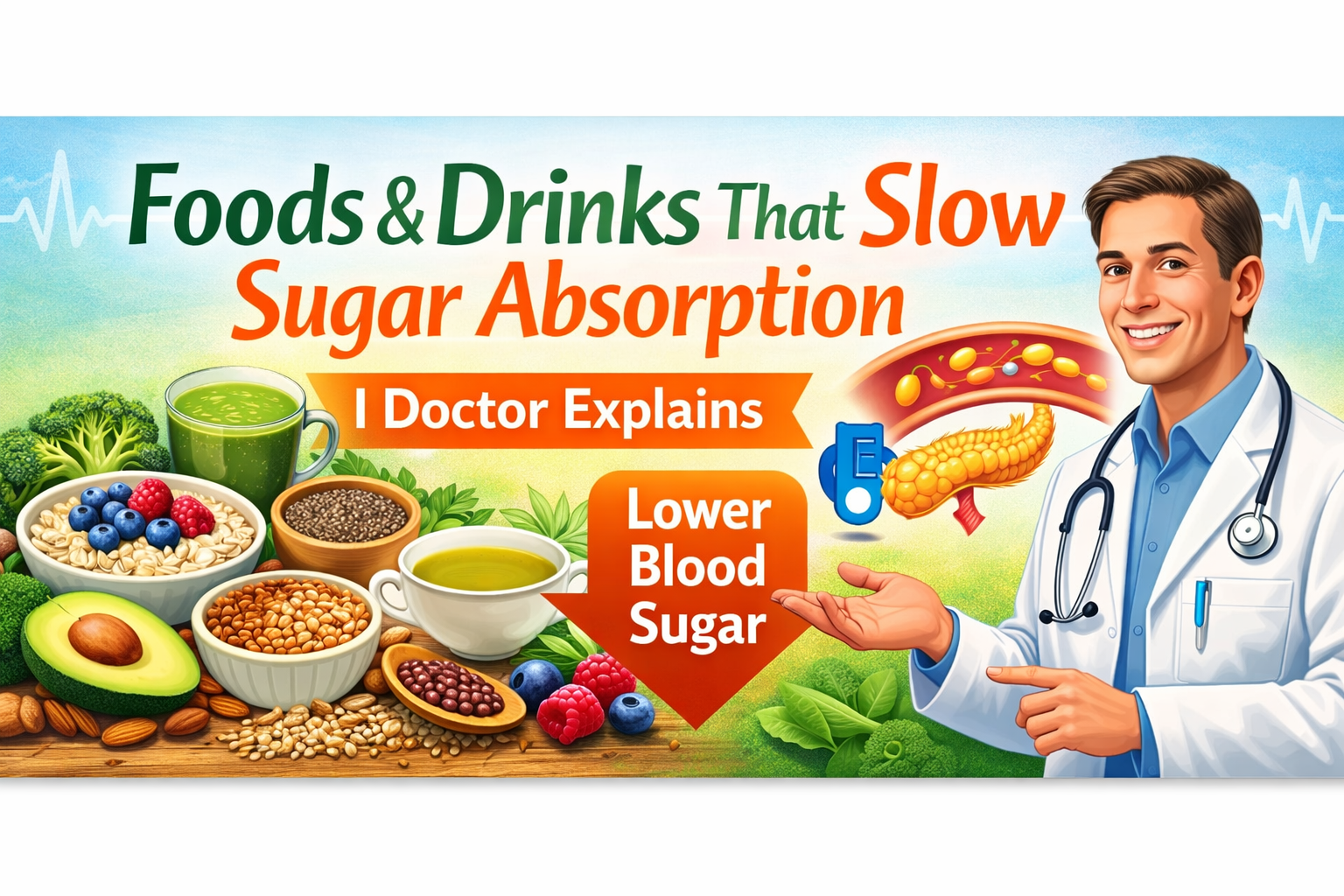

Foods & Drinks in today’s busy lifestyle has quietly become a constant companion in our daily meals. From morning tea to packaged snacks and even so called healthy foods, sugar is everywhere. While sugar itself is not the enemy, the speed at which it enters our bloodstream can create serious health challenges. Many people experience sudden energy crashes, frequent hunger, weight gain or rising blood sugar levels without realizing that fast sugar absorption is the root cause. Understanding which foods and drinks slow down sugar absorption can help protect the body, especially for people with diabetes, prediabetes, insulin resistance or those simply trying to live a healthier life.
Table of Contents
🧬 What Does Sugar Absorption Mean in Simple words?
Sugar absorption refers to how quickly carbohydrates from food are broken down into glucose and released into the bloodstream. When sugar enters the blood too fast, it causes a sharp spike in blood glucose levels. The body responds by releasing insulin to manage this spike. Over time, repeated spikes can exhaust the system, leading to insulin resistance, diabetes, obesity and heart problems. Foods that slow sugar absorption digest more gradually. They release glucose slowly, allowing the body to use it efficiently without overwhelming the pancreas. This process helps maintain stable energy, improves mood, helps weight management and protects long term metabolic health.
🥗 How Certain Foods Naturally Slow Sugar Absorption
The secret behind slow sugar absorption lies in nutrients like fiber, protein, healthy fats and natural plant compounds. These components delay digestion, slow stomach emptying and reduce how quickly sugar enters the bloodstream. Foods rich in these elements act as natural shields against sudden glucose spikes, making them especially valuable for everyday meals.
📊 Essential Table: Foods and Drinks That Slow Sugar Absorption
| Food or Drink Type | Key Nutrient | How It Helps Control Sugar Absorption |
|---|---|---|
| Whole grains | Soluble fiber | Slows digestion and glucose release |
| Nuts and seeds | Healthy fats and protein | Reduces speed of carbohydrate absorption |
| Legumes | Fiber and resistant starch | Stabilizes blood sugar levels |
| Vegetables | Fiber and antioxidants | Lowers glycemic impact of meals |
| Fruits with skin | Natural fiber | Prevents rapid sugar spikes |
| Fermented foods | Probiotics | Improves insulin sensitivity |
| Protein rich foods | Amino acids | Delays stomach emptying |
| Healthy oils | Monounsaturated fats | Slows carbohydrate digestion |
| Herbal teas | Polyphenols | Helps glucose control |
| Vinegar based drinks | Acetic acid | Reduces post meal blood sugar rise |
🥦 Fiber Rich Foods: Nature’s Sugar Regulator
Fiber is one of the most powerful nutrients for controlling sugar absorption. Soluble fiber forms a gel like substance in the digestive tract that slows down the breakdown of carbohydrates. Foods such as oats, barley, lentils, beans, vegetables and fruits with edible skin help regulate blood sugar naturally. Regular fiber intake not only reduces sugar spikes but also improves gut health, digestion and heart health.
🥑 Healthy Fats That Balance Blood Sugar
Healthy fats play a major role in slowing sugar absorption. When fats are consumed with carbohydrates, they delay stomach emptying and slow glucose release. Foods like avocados, olive oil, nuts, seeds and natural nut butters help create balanced meals. These fats also improve satiety, meaning you feel full longer and are less likely to crave sugary snacks later.
🍗 Protein Rich Foods That Stabilize Glucose
Protein reduces the glycemic effect of meals by slowing digestion and reducing insulin spikes. Eggs, dairy products, fish, lean meats, tofu, paneer and legumes are excellent protein sources. Adding protein to meals not only helps muscle health but also ensures steady blood sugar levels, especially after carbohydrate rich foods.

🍎 Low Glycemic Fruits That Release Sugar Slowly
Not all fruits raise blood sugar quickly. Fruits rich in fiber and water content release sugar gradually. Apples, pears, berries, citrus fruits and guava are excellent examples. Eating whole fruits instead of fruit juices preserves fiber and significantly slows sugar absorption while still providing vitamins and antioxidants.
🥛 Drinks That Help Control Sugar Absorption
What you drink matters just as much as what you eat. Water helps digestion and prevents sugar concentration in the blood. Herbal teas such as green tea, cinnamon tea and chamomile tea contain natural compounds that improve insulin sensitivity. Unsweetened fermented drinks like buttermilk and kefir also help regulate blood sugar by improving gut bacteria balance.
🧉 The Role of Vinegar and Fermented Foods
Vinegar, especially apple cider vinegar, has been shown to reduce post meal blood sugar levels by slowing carbohydrate digestion. Fermented foods like curd, yogurt, pickles and fermented vegetables enhance gut health and insulin response. Including small amounts of these foods regularly can improve glucose control naturally.
🍽️ Meal Combinations That Slow Sugar Absorption
The way foods are combined can significantly affect sugar absorption. Eating carbohydrates with fiber, protein and fat creates a balanced meal that digests slowly. For example, pairing rice with vegetables and lentils or eating fruit with nuts reduces the glycemic impact. Balanced meals protect the body from sudden sugar surges and energy crashes.
🩺 Who Benefits Most from Slower Sugar Absorption
People with diabetes, prediabetes, hormonal imbalances, obesity and heart disease benefit greatly from slowing sugar absorption. However, even healthy individuals experience improved energy, better focus, controlled appetite and reduced risk of future metabolic disorders when blood sugar remains stable.
🌼 Lifestyle Habits That Helps Better Sugar Control
Beyond food choices, mindful eating, regular physical activity, proper sleep and stress management further helps healthy sugar metabolism. Eating slowly and avoiding highly processed foods strengthens the body’s natural glucose regulation system.
🌈 Conclusion: Small Food Choices, Big Health Impact
Slowing down sugar absorption is not about strict dieting or eliminating carbohydrates. It is about choosing smarter foods and drinks that work in harmony with your body. Fiber rich foods, healthy fats, proteins, fermented items and mindful drink choices can transform how your body handles sugar. By making these gentle yet powerful changes, you protect your energy levels, support long term health and reduce the risk of lifestyle related diseases. Your plate can truly become your medicine when chosen wisely.
❓ Frequently Asked Questions (FAQs)
Yes, slowing sugar absorption helps prevent sudden blood sugar spikes that trigger hunger and cravings. When glucose enters the bloodstream gradually, insulin levels remain balanced, reducing fat storage. This leads to better appetite control, fewer cravings and improved metabolism. Over time, stable blood sugar supports sustainable weight loss and prevents overeating caused by energy crashes.
No, carbohydrates are not bad when absorbed slowly. Whole carbohydrates rich in fiber provide steady energy, helps digestion and nourish the brain. Slow-digesting carbs improve insulin sensitivity and reduce the risk of diabetes. The key is choosing whole, unprocessed sources rather than refined sugars and white flour products.
Yes, drinks significantly affect sugar absorption. Sugary beverages cause rapid glucose spikes, while water, herbal teas and fermented drinks helps stable blood sugar. Liquids without fiber are absorbed faster, so choosing unsweetened, low glycemic drinks helps maintain glucose balance and prevents insulin overload.
Fiber is essential but works best when combined with protein and healthy fats. Together, they slow digestion more effectively and improve insulin response. A balanced meal that includes fiber, protein and fats offers better blood sugar control than relying on fiber alone.
Positive changes can be noticed within days. Many people experience reduced cravings, stable energy and improved digestion within a week. Long term benefits such as better insulin sensitivity and metabolic health develop with consistent healthy eating habits over weeks and months.