
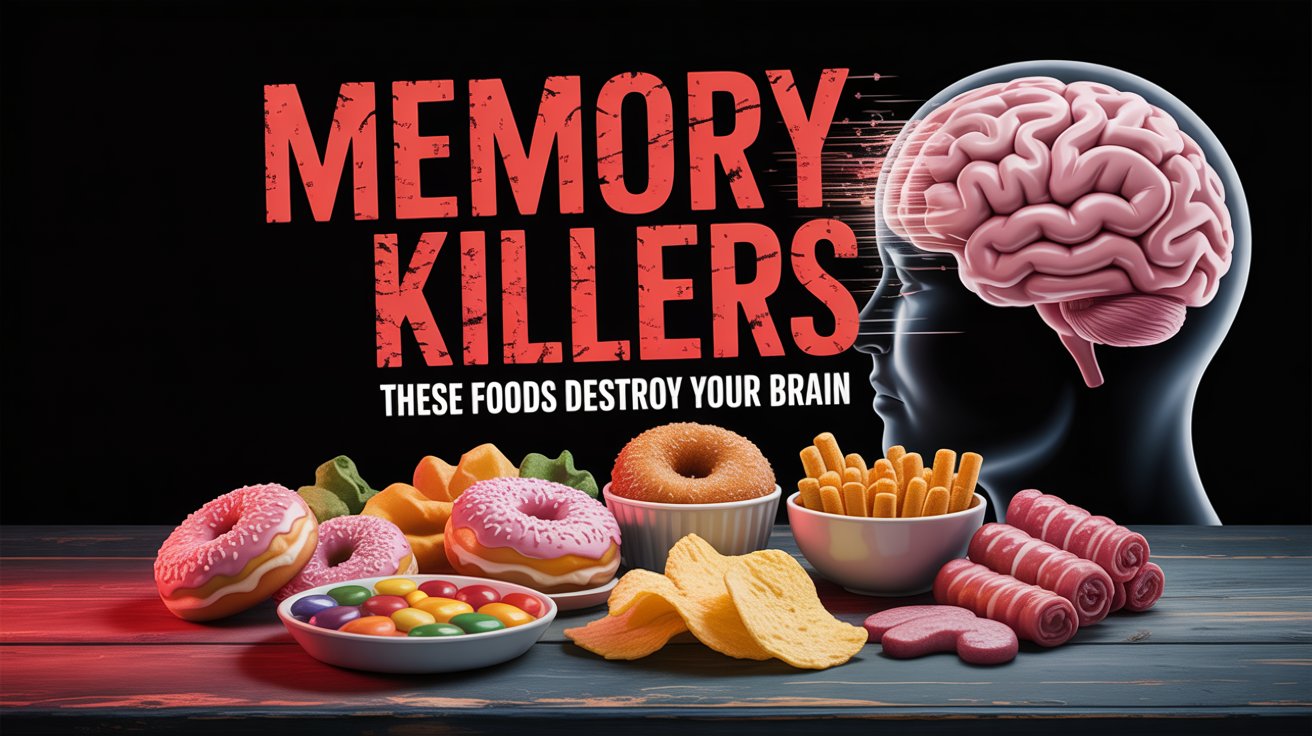

Foods that destroy your memory rarely come with warning labels. They sit quietly on our plates, inside our refrigerators and on our favourite takeout menus. Memory loss is often blamed on age, stress or genetics, but diet plays a much bigger role than most people realize. Your brain uses about twenty percent of your body’s energy and the quality of that fuel directly affects how clearly you think, remember names and stay focused.
This article walks you through nine everyday foods that slowly damage memory and brain performance. Think of this as a friendly conversation meant to help you protect your mind, not scare you. Small changes today can preserve sharp thinking for years to come.

Table of Contents
Why Foods That Destroy Your Memory Are More Common Than You Think
Foods that destroy your memory are often marketed as convenient, tasty or even healthy. Modern food processing has changed how our brains receive nutrients. When the brain lacks proper fats, antioxidants, and vitamins, memory cells struggle to communicate. Over time, this weak communication feels like forgetfulness, mental fog and slow thinking. The scary part is how gradual it happens. You do not wake up one day with poor memory; it builds silently. Many people eat these foods daily without realizing their long-term impact. Understanding how food affects brain chemistry is empowering. Once you see the connection, better choices become easier and feel less like sacrifice and more like self-care.
Read more: Shocking Truth: 12 Common Food Preservatives Which Increased Risk of Cancer
Foods That Destroy Your Memory and How the Brain Reacts
Foods that destroy your memory interfere with neurotransmitters, the brain’s messengers. Imagine your brain as a busy city where signals travel on highways. Poor-quality food creates traffic jams, road damage and broken signals. Sugar spikes cause inflammation, trans fats stiffen brain cell walls, and artificial additives confuse nerve communication. Over time, these disruptions weaken memory storage and recall. This explains why poor diet is linked to conditions like brain fog and even dementia. The good news is that the brain is adaptable. Removing harmful foods can repair pathways and restore clarity. Awareness is the first step toward protecting one of your most valuable assets: your memory.
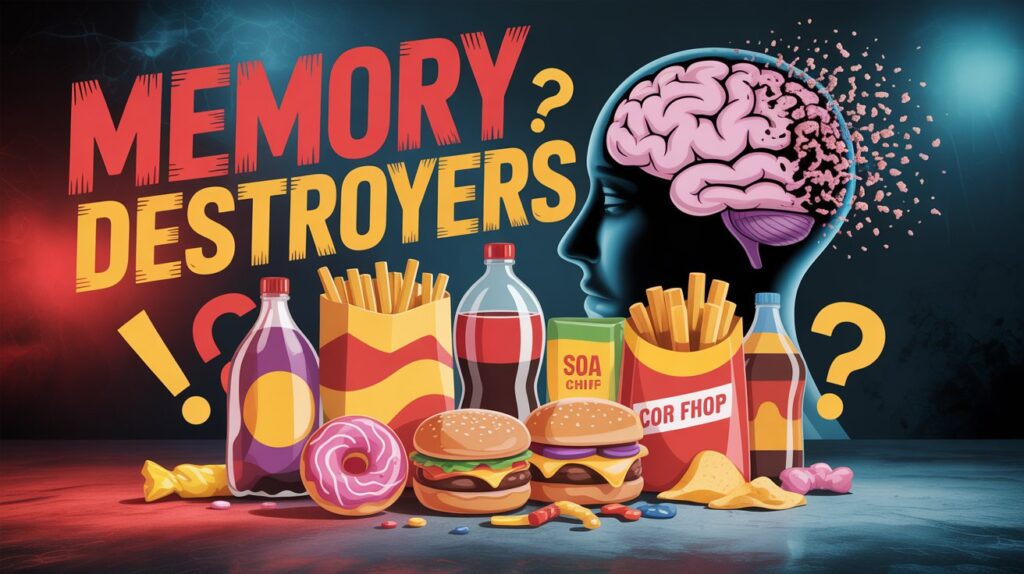
1. Sugary Drinks: The Sweetest Foods That Destroy Your Memory
Sugary drinks are among the most dangerous foods that destroy your memory because they flood the brain with glucose. Soft drinks, sweetened juices and energy drinks cause rapid blood sugar spikes. These spikes trigger inflammation that damages neurons responsible for memory formation. Over time, high sugar intake reduces the brain’s ability to store information and increases insulin resistance, which affects brain signaling. Many people notice poor concentration after consuming sugary drinks but ignore it as temporary. The long-term effect is reduced learning ability. Choosing water or unsweetened beverages gives your brain steady energy and better mental endurance throughout the day.
2. Refined Carbohydrates as Foods That Destroy Your Memory
Refined carbohydrates like white bread, pastries, and processed cereals break down into sugar almost instantly. These foods that destroy your memory act like slow poison when eaten regularly. They deprive the brain of fiber and nutrients needed for stable energy. The brain prefers steady fuel, not sharp rises and crashes. Refined carbs cause mental fatigue and poor recall. People often feel sleepy or unfocused after eating them. Over time, this pattern weakens memory performance. Switching to whole grains supports brain health by releasing glucose slowly, which keeps memory sharp and concentration steady for longer periods.
3. Fried Foods and Memory Damage
Fried foods are classic foods that destroy your memory due to harmful fats created during high-temperature cooking. These fats cause oxidative stress, which damages brain cells. Frequent consumption of fried snacks, fast food and deep-fried meals increases inflammation throughout the body, including the brain. Studies link fried food intake with slower cognitive processing and poor memory recall. The brain needs healthy fats to maintain flexible cell membranes. Fried foods do the opposite by making cells rigid. Baking or grilling foods preserves nutrients and protects memory. Small cooking changes can make a surprisingly big difference in how clearly you think.
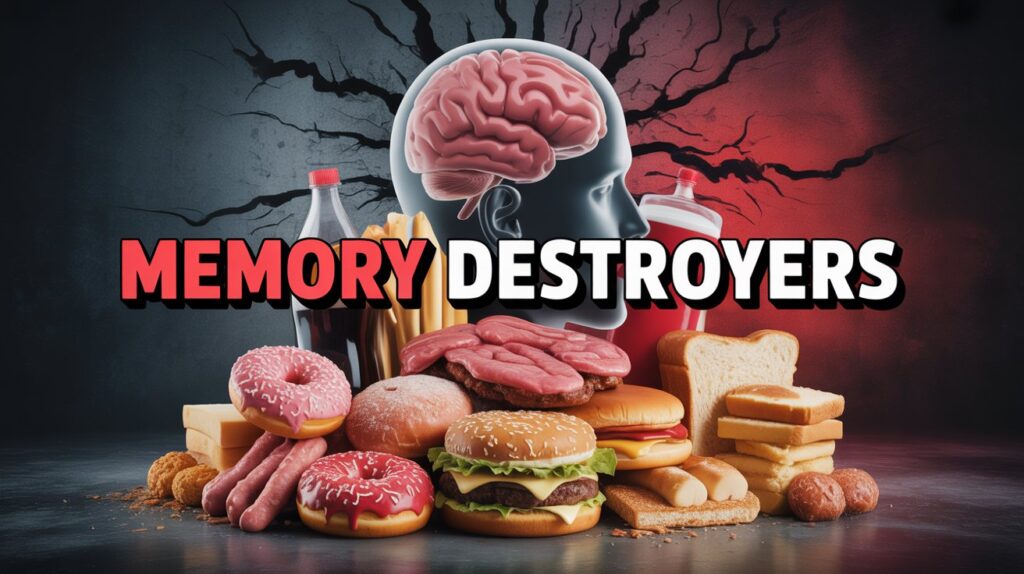
4. Artificial Sweeteners as Hidden Foods That Destroy Your Memory
Artificial sweeteners often appear harmless, but they are subtle foods that destroy your memory. Chemicals like aspartame can interfere with neurotransmitter production. Many people experience headaches, confusion or forgetfulness after regular consumption. Artificial sweeteners trick the brain into expecting energy that never arrives, causing mental stress. Over time, this disrupts learning and memory formation. Because they are marketed as healthy, people consume them daily without concern. Choosing natural sweetness in moderation, such as fruits, supports memory without confusing the brain’s chemistry.
5. Processed Meats: STOP Eating These Foods That Destroy Your Memory
Processed meats are among the most dangerous foods that destroy your memory, and this is where you should stop immediately. Sausages, bacon and deli meats contain preservatives that increase inflammation and oxidative stress in the brain. These chemicals damage blood vessels that supply oxygen to memory centres. Regular intake is linked to cognitive decline and reduced attention span. Many people rely on processed meats for convenience, but the cost to brain health is high. Replacing them with fresh protein sources improves blood flow to the brain and supports memory retention. This single change can deliver noticeable mental clarity within weeks.
Read more: Top 6 Yoga Poses That Help You Stay Young and Ageless Naturally
6. Alcohol and Its Role as Foods That Destroy Your Memory
Alcohol is socially accepted yet remains one of the most powerful foods that destroy your memory. It interferes with the hippocampus, the brain’s memory center. Even moderate drinking affects short-term recall and learning. Long-term alcohol consumption shrinks brain volume and disrupts neural connections. Many people joke about forgetting things after drinking, but repeated exposure causes lasting damage. Alcohol also dehydrates the brain, reducing mental sharpness. Limiting intake or choosing alcohol-free days allows memory cells to recover and function more efficiently.
7. Packaged Snacks as Everyday Foods That Destroy Your Memory
Packaged snacks often combine sugar, salt, and unhealthy fats, making them triple-threat foods that destroy your memory. Chips, crackers, and flavored snacks lack nutrients the brain needs to repair itself. Instead, they promote inflammation and oxidative stress. These snacks are designed to be addictive, encouraging overeating. Frequent consumption leaves the brain undernourished and overstimulated. This imbalance results in poor focus and memory lapses. Choosing natural snacks like nuts or fruits supports memory and keeps energy levels stable throughout the day.
8. Highly Processed Cheese and Brain Fog
Highly processed cheese products fall into the category of foods that destroy your memory because they contain emulsifiers and artificial flavours. These additives disrupt gut health, which is closely connected to brain function. A healthy gut produces neurotransmitters essential for memory. When gut balance is disturbed, mental clarity suffers. People often report brain fog after consuming processed cheese regularly. Natural, minimally processed dairy provides nutrients without chemical interference, supporting better memory and cognitive performance.
Read more: Yoga: The Ancient Path to Healthy Body, Calm Mind and Improved Life Quality for 365 Days
9. Fast Food Meals and Long-Term Memory Loss
Fast food meals combine several foods that destroy your memory into one convenient package. They are high in trans fats, refined carbs, and additives. Regular consumption reduces the brain’s ability to learn and remember. Fast food also lacks antioxidants that protect memory cells. Many people rely on fast food during busy schedules, not realizing the mental toll. Preparing simple home meals restores nutrient balance and helps long-term brain health.
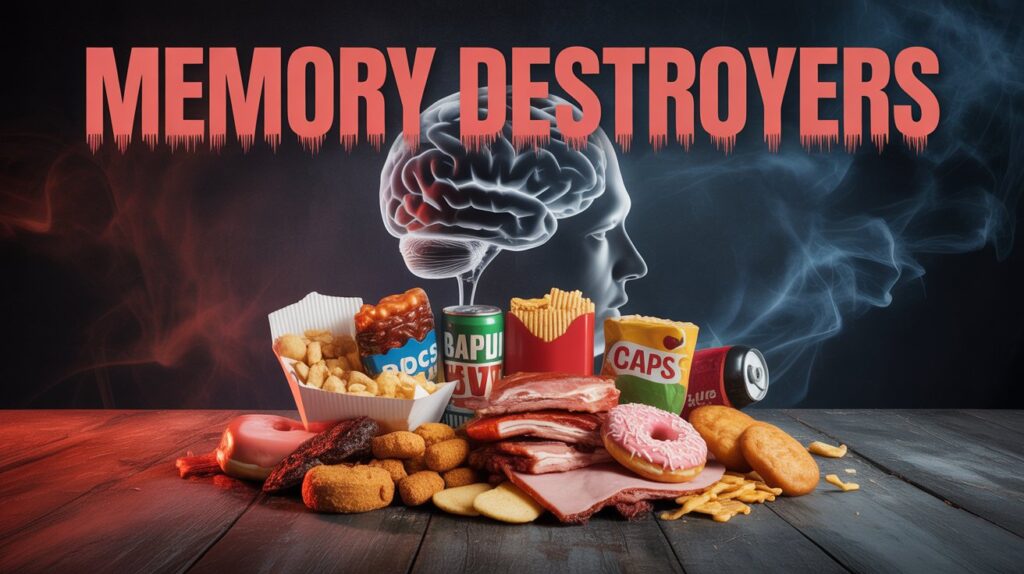
How Foods That Destroy Your Memory Affect the Brain
Food Intake → Blood Sugar Spikes → Inflammation → Neuron Damage → Poor Memory Recall
Understanding this chain helps explain why diet changes lead to clearer thinking and better memory.
Foods That Destroy Your Memory vs Brain Friendly Alternatives
| Harmful Food | Effect on Memory | Better Alternative |
|---|---|---|
| Sugary drinks | Inflammation | Water, herbal tea |
| Processed meat | Reduced blood flow | Fresh lean protein |
| Fried food | Oxidative stress | Grilled foods |
Read more: Chia Seed: The Tiny Superfood With Big Health Benefits
Conclusion
Foods that destroy your memory do not erase intelligence overnight, but they quietly weaken mental performance. The encouraging truth is that the brain responds quickly to positive changes. Removing just a few harmful foods can improve focus, recall, and mental energy. Think of your brain as a lifelong companion that deserves care and respect. Choosing nourishing foods is not about perfection but consistency. Start small, stay aware and notice how your thinking improves. Share this knowledge with others who value mental clarity and take the first step toward a healthier, sharper future.
Frequently Asked Questions (FAQs)
Foods that destroy your memory can cause long-term damage if consumed regularly over many years. Chronic inflammation, reduced blood flow and oxidative stress slowly weaken brain cells. The good news is that early changes are often reversible. When harmful foods are reduced and replaced with nutrient-rich options, the brain can repair and rebuild connections. Consistency is key to preventing permanent memory decline.
Many people notice better focus and recall within two to four weeks after removing foods that destroy your memory. The brain responds quickly to improved nutrition and reduced inflammation. Hydration, balanced meals and stable blood sugar help faster improvement. Long-term benefits continue to build over months as brain cells regain strength and efficiency.
Occasional treats are unlikely to cause serious harm. Foods that destroy your memory become dangerous when eaten frequently. Balance matters more than perfection. Enjoying small portions occasionally while maintaining a nutrient-rich diet supports both mental health and enjoyment. The brain thrives on consistency, not strict restriction.
Yes, these foods affect memory at any age. Young people may notice reduced concentration, poor academic performance or mental fatigue. Early exposure increases the risk of cognitive issues later in life. Building healthy eating habits early protects memory and learning ability long-term.
The most powerful change is reducing sugar and processed foods. Stabilizing blood sugar reduces inflammation and improves brain signaling. Pairing this with hydration and whole foods delivers noticeable mental clarity. Small consistent steps create lasting memory protection.