
The Mediterranean Diet is one of the healthiest eating patterns in the world. Inspired by the traditional food habits of countries like Greece, Italy and Spain, this diet focuses on fresh, natural and wholesome foods. It is not a strict diet but a lifestyle that promotes heart health, weight management and long term well being for the good health.
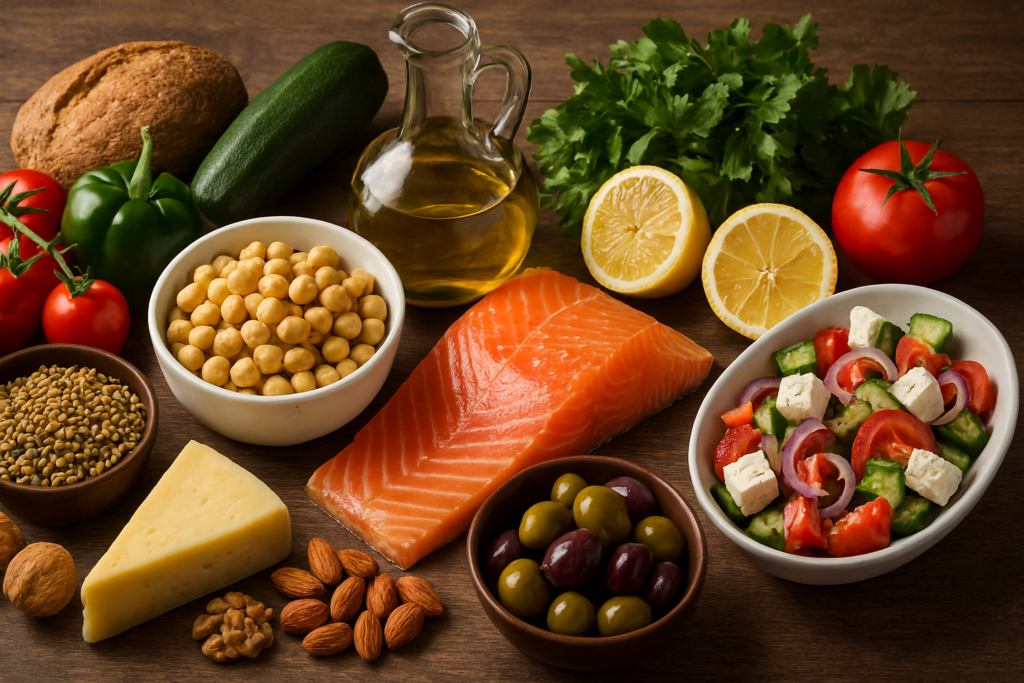
Table of Contents
What is Mediterranean Diet?
The Mediterranean Diet is a healthy eating pattern based on the traditional food habits of people living in Mediterranean countries like Greece, Italy and Spain. It focuses on natural, whole and minimally processed foods and is known for promoting long term health rather than quick weight loss.
Key Features of the Mediterranean Diet
- High intake of vegetables, fruits, whole grains and legumes
- Uses olive oil as the main source of fat
- Includes nuts and seeds regularly
- Emphasizes fish and seafood
- Moderate intake of dairy and poultry
- Limited red meat, sugar and processed foods
Why Is the Mediterranean Diet Healthy?
- Supports heart health
- Helps with weight management
- Improves blood sugar control
- Reduces inflammation
- Supports brain and gut health
Unlike restrictive diets, the Mediterranean Diet is a balanced lifestyle that encourages mindful eating, physical activity and enjoying meals with others.
Basic Rules for Mediterranean Diet
The Mediterranean Diet is simple and flexible. Instead of counting calories, it focuses on food quality and balance.
Basic Principles
- Eat mostly plant based foods
- Use olive oil as the main fat source
- Eat fish and seafood regularly
- Limit red meat and processed foods
- Enjoy meals mindfully and socially
What Can One Eat on Mediterranean Diet?
This diet allows a wide variety of nutritious and flavorful foods.
Mediterranean Diet Food Groups
| Food Group | Examples |
|---|---|
| Vegetables | Spinach, tomatoes, cucumber, broccoli |
| Fruits | Apples, oranges, berries, grapes |
| Whole Grains | Brown rice, oats, whole wheat bread |
| Healthy Fats | Olive oil, nuts, seeds |
| Protein | Fish, lentils, beans, eggs |
| Dairy (Moderate) | Yogurt, cheese |
Can the Mediterranean Diet Help One Lose Weight?
Yes, the Mediterranean Diet can support healthy and sustainable weight loss.
Why It Works for Weight Loss
- High fiber keeps you full longer
- Healthy fats reduce cravings
- Balanced meals prevent overeating
- Improves metabolism naturally
Unlike crash diets, weight loss happens slowly but permanently.
Is the Mediterranean Diet Good for People with Diabetes and Prediabetes?
Absolutely. Many studies show that the Mediterranean Diet helps regulate blood sugar levels.
Benefits for Diabetes
- Improves insulin sensitivity
- Reduces blood sugar spikes
- Supports heart health (important for diabetics)
- Encourages low glycemic foods
⚠️ Portion control and regular monitoring are still important.
Healthy Benefits of Mediterranean Diet
This diet is linked to overall longevity and disease prevention.
Major Benefits
- ❤️ Improves heart health
- 🧠 Supports brain function
- 🦠 Reduces inflammation
- 🩺 Lowers cholesterol
- 🦴 Strengthens bones
- 😊 Improves gut health
What Foods Should One Avoid on Mediterranean Diet?
While no food is completely banned, some should be limited.
Foods to Avoid or Limit
- Processed meats (sausages, bacon)
- Refined grains (white bread, pastries)
- Sugary drinks and sweets
- Fast food
- Excess butter and margarine
Foods You Can Eat on the Mediterranean Diet
Daily Foods
- Vegetables
- Fruits
- Olive oil
- Whole grains
Weekly Foods
- Fish (2–3 times)
- Eggs
- Poultry
- Legumes
Occasional Foods
- Red meat
- Desserts
- Alcohol (optional, moderate wine)
A Sample Mediterranean Diet Meal Plan for a Week
| Day | Breakfast | Lunch | Dinner |
|---|---|---|---|
| Monday | Greek yogurt + fruits | Veg salad + olive oil | Grilled fish + veggies |
| Tuesday | Oats + nuts | Lentil soup | Brown rice + stir-fry |
| Wednesday | Whole grain toast + avocado | Chickpea salad | Baked chicken |
| Thursday | Smoothie | Veg wrap | Fish curry |
| Friday | Eggs + veggies | Quinoa bowl | Grilled paneer |
| Saturday | Fruit bowl | Bean salad | Pasta (whole wheat) |
| Sunday | Yogurt + seeds | Light veg meal | Seafood + salad |
Mediterranean Diet Snacks for Health
Healthy Snaks
- Handful of nuts
- Fresh fruits
- Hummus with veggies
- Greek yogurt
- Olives
- Roasted chickpeas
Tips & Tricks of Mediterranean Diet
- Cook with olive oil not butter
- Add vegetables to every meal
- Choose seasonal and local foods
- Eat slowly and mindfully
- Stay active daily (walking, yoga)
Tips for Eating Out on a Mediterranean Diet
- Choose grilled or baked dishes
- Ask for olive oil instead of butter
- Order salads with vinaigrette
- Avoid fried foods
- Watch portion sizes
Side Effects and How to Overcome Them
Some beginners may face mild issues.
Possible Side Effects
- Bloating (from fiber increase)
- Digestive discomfort
- Temporary weight fluctuation
How to Overcome
- Increase fiber slowly
- Drink enough water
- Balance meals properly
Does the Mediterranean Diet Have Any Risks?
The diet is safe for most people. However:
- Excess olive oil can add calories
- Too much seafood may increase mercury exposure
- People with allergies should customize food choices
Always consult a dietician if you have medical conditions.
Supplements for the Mediterranean Diet
Supplements are usually not required, but some may help.
Optional Supplements
- Omega-3 (if fish intake is low)
- Vitamin D
- Magnesium
- Probiotics
Food should always be the main source of nutrition.
Conclusion
The Mediterranean Diet is not just a diet it’s a healthy lifestyle. It focuses on real foods, balanced nutrition and mindful eating. Whether your goal is weight loss, diabetes management or long term health life, this diet is a sustainable and enjoyable choice for beginners and adults alike.
Mediterranean Diet Frequently Asked Question (FAQ)
Yes, it can be easily adapted for vegetarians.
Weight loss is gradual and sustainable.
Yes, using local vegetables, pulses and oils.
Olive oil is recommended, but other healthy oils can be used occasionally.