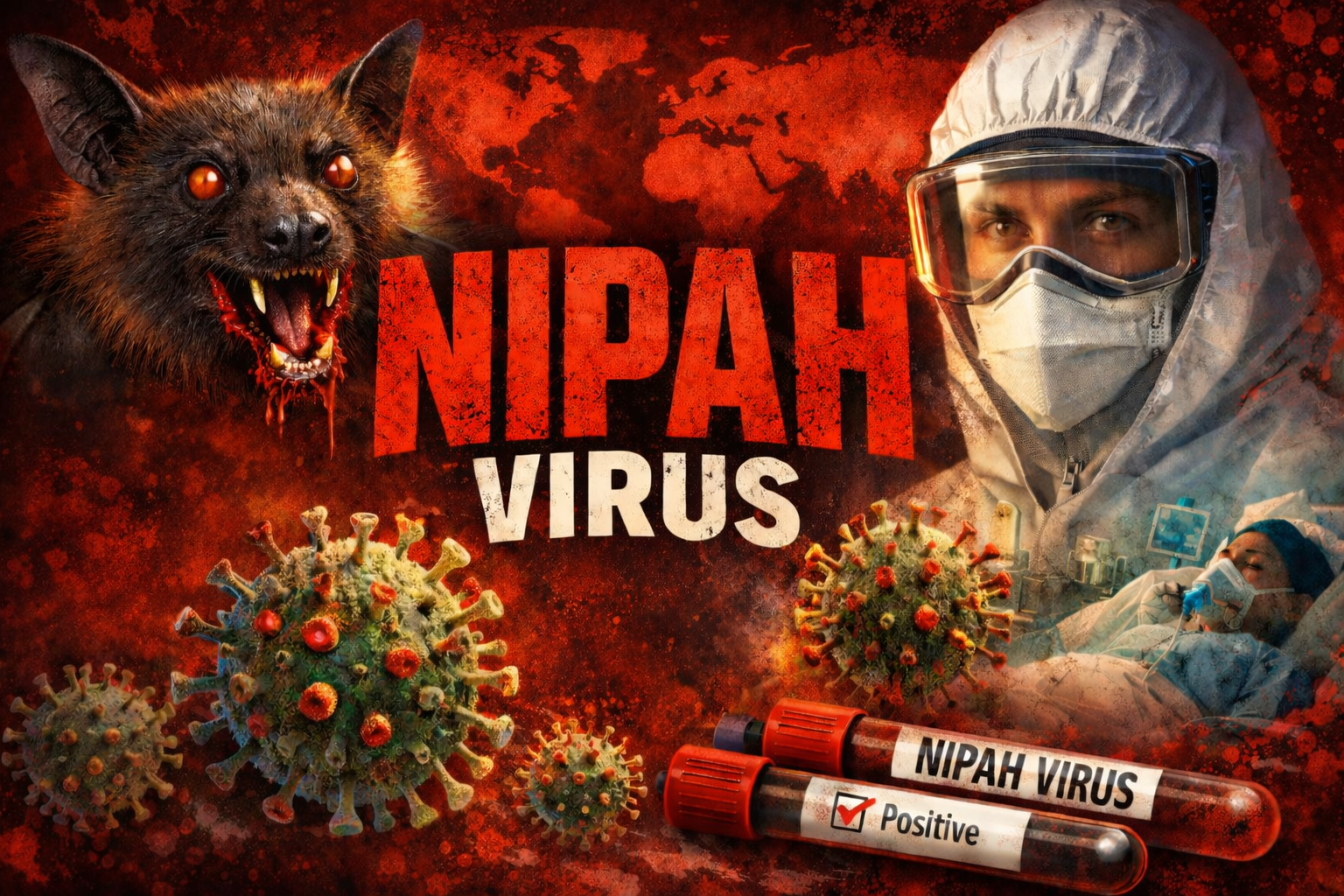

Nipah Virus is one of the most dangerous infectious diseases known to humans today. It may not spread as fast as some viral infections but when it does, it causes serious illness and has a very high death rate. The virus has created fear across many countries, especially in South and Southeast Asia, because of its sudden outbreaks and deadly nature. What makes this virus more frightening is that it can spread from animals to humans and also from humans to humans.
Table of Contents
📖 What Is Nipah Virus?
Nipah Virus is a highly infectious and deadly virus that belongs to the Henipavirus family. It is a zoonotic virus, meaning it can spread from animals to humans. The primary natural hosts of the virus are fruit bats, also known as flying foxes. Humans can become infected through direct contact with infected bats, contaminated food such as fruits or raw date palm sap or through close contact with infected animals like pigs.
Once the virus enters the human body, it primarily attacks the respiratory system and the brain. Early symptoms resemble common flu, including fever, headache and muscle pain, which can make initial detection difficult. In severe cases, the virus can cause encephalitis, leading to confusion, seizures, coma and even death. Human-to-human transmission is also possible through direct contact with bodily fluids, making Nipah Virus a serious public health concern in affected regions.
🧬 History and Origin of This Virus
The history and origin of the Nipah Virus trace back to the late 1990s, when the world first became aware of this deadly pathogen. The Nipah Virus was first identified in 1999 during a major outbreak in Malaysia. The outbreak occurred among pig farmers where pigs acted as intermediate hosts. The virus spread from fruit bats, its natural reservoir, to pigs and then to humans through close contact. The disease caused severe brain inflammation and respiratory illness, leading to a high number of deaths.
The virus was named “Nipah” after the village Sungai Nipah in Malaysia, where one of the earliest cases was reported. During this outbreak, thousands of pigs were culled to control the spread, which caused significant economic loss. After Malaysia, outbreaks were later reported in Bangladesh and India. Unlike the Malaysian outbreak, these cases showed direct transmission from bats to humans often through consumption of contaminated fruits or raw date palm sap.
Over time, human-to-human transmission was also observed, making the Nipah Virus a serious public health concern. Since its discovery, the virus has been closely monitored by global health organizations due to its high fatality rate and potential to cause future outbreaks.
📊 Facts About Nipah Virus
| Aspect | Details |
|---|---|
| Virus Name | Nipah Virus |
| Virus Family | Henipavirus |
| Natural Host | Fruit bats |
| First Identified | 1999 |
| Mortality Rate | 40% to 75% |
| Transmission | Animal to human, human to human |
| Main Affected Area | Brain and lungs |
| Vaccine Availability | No approved vaccine |
🔬 How this Virus Spreads
This Virus spreads through direct contact with infected animals, especially fruit bats and pigs. Consuming fruits or drinks contaminated with bat saliva or urine can transmit the virus. Human-to-human transmission happens through close contact with bodily fluids such as saliva, blood or respiratory droplets. Hospitals and caregiving environments are high risk areas when safety measures are not followed properly.
🔁 Nipah Virus Transmission
1️⃣
Fruit Bats (Natural Host)
↓
Saliva, Urine or Droppings Contaminate Fruits, Date Palm Sap or Environment
↓
Humans Consume Contaminated Food or Come in Direct Contact
↓
Initial Human Infection
2️⃣
Fruit Bats
↓
Infect Domestic Animals (Especially Pigs)
↓
Close Contact Between Animals and Humans
↓
Human Infection
🚩 After Human Infection
Infected Person
↓
Close Physical Contact
↓
Exposure to Saliva, Blood, Respiratory Droplets or Bodily Fluids
↓
Person-to-Person Transmission
🤒 Symptoms of Nipah Virus Infection
This Virus symptoms usually appear within a few days to two weeks after exposure. Early symptoms look like common flu, which makes the infection difficult to detect in the beginning. As the disease progresses, symptoms become severe and life threatening. Patients may develop inflammation of the brain, known as encephalitis, which can lead to confusion, seizures and coma. Respiratory problems are also common and can worsen rapidly.
✏️ Symptoms of this Virus Infection
- High fever that appears suddenly and continues to rise
- Severe headache that does not improve with common medication
- Muscle pain and extreme body weakness
- Sore throat and persistent cough
- Vomiting and nausea causing dehydration
- Difficulty in breathing due to lung involvement
- Dizziness and feeling unusually sleepy
- Mental confusion and trouble concentrating
- Blurred vision or sensitivity to light
- Seizures caused by brain inflammation
- Loss of consciousness in severe cases
- Acute encephalitis leading to brain swelling
- Chest discomfort and respiratory distress
- Rapid worsening of symptoms within a short time
- Long time neurological problems in survivors
These symptoms may start mildly but can progress very quickly into life threatening conditions that makes early medical attention extremely important.
🧠 How this Virus Affects the Human Body
Once this Virus enters the body, it quickly spreads through the bloodstream. The virus targets the nervous system and lungs. Brain swelling caused by the virus can lead to long time neurological damage in survivors. Even after recovery, many patients suffer from memory loss, personality changes and difficulty performing daily activities.
🚩 Step by Step
Entry into Human Body
↓
Virus Enters Through Mouth, Nose or Broken Skin
↓
Virus Spreads into Bloodstream
↓
Rapid Multiplication of Nipah Virus
↓
Attack on Respiratory System
↓
Lung Inflammation
↓
Cough, Breathing Difficulty, Oxygen Shortage
AND
Attack on Nervous System
↓
Brain Inflammation (Encephalitis)
↓
Headache, Confusion, Seizures
↓
Severe Complications
↓
Loss of Consciousness or Coma
↓
Organ Failure in Critical Cases
↓
Outcome
↓
Recovery With Possible Brain Damage or death in Severe Untreated Cases
🏥 Diagnosis of Nipah Virus
Diagnosing this Virus requires specialized laboratory tests. Blood samples, throat swabs, urine samples and spinal fluid are tested to confirm infection. Early diagnosis is extremely important to prevent further spread. Due to its high risk, testing is conducted in high security laboratories following strict safety protocols.
- Early evaluation based on symptoms like fever, headache and confusion
- Detailed patient history including recent travel or contact with infected individuals
- Laboratory testing of blood samples to detect the Nipah Virus
- Throat and nasal swabs collected for viral identification
- Urine and cerebrospinal fluid tests in severe cases
- Use of advanced molecular tests to confirm infection
- Testing performed only in high-security laboratories
- Strict safety protocols followed during sample collection
- Rapid diagnosis helps prevent further spread
- Early confirmation improves patient management and survival chances
💊 Treatment Options for Nipah Virus
Currently, there is no specific antiviral treatment or approved vaccine for Nipah Virus, which makes management of the disease primarily supportive. The treatment focuses on relieving symptoms, preventing complications and providing intensive care to critically ill patients. Early hospitalization is crucial for improving survival chances.
Supportive care includes maintaining hydration, controlling fever and managing respiratory difficulties. Patients with severe respiratory symptoms may require oxygen therapy or mechanical ventilation to support breathing. Seizures and neurological complications caused by encephalitis are treated with appropriate medications under careful supervision.
Researchers are exploring antiviral drugs and potential vaccine candidates but these are still in experimental stages. Preventing further spread is also a key part of treatment, including isolating infected patients, using protective equipment and limiting contact with caregivers and family members. Early detection, timely supportive care and strict infection control remain the most effective ways to reduce the fatality rate of Nipah Virus.
🛡️ Prevention and Safety Measures Against Nipah Virus
Preventing this Virus infection is mainly about avoiding exposure. Washing fruits thoroughly, avoiding raw date palm sap and staying away from bats and sick animals can reduce risk. Healthcare workers must follow strict infection control practices. Public awareness and early reporting of symptoms play a crucial role in preventing outbreaks.
🛡️ Prevention and Safety Measures
- Avoid contact with fruit bats and sick animals
- Do not consume fruits partially eaten by bats
- Wash and peel fruits thoroughly before eating
- Avoid drinking raw date palm sap
- Maintain proper hand hygiene with soap and water
- Use protective equipment when caring for infected patients
- Isolate suspected and confirmed cases immediately
- Follow hospital infection control guidelines strictly
- Educate communities about early symptoms
- Report suspected cases to health authorities promptly
🌏 Nipah Virus in India
India has witnessed several this Virus outbreaks, especially in Kerala recently in Kolkata. These outbreaks highlighted the importance of quick response, contact tracing and community cooperation. Government health departments have improved surveillance and emergency response systems to control the spread during outbreaks.
🧪 Research and Vaccine Development
Extensive research is ongoing worldwide to develop effective vaccines and antiviral treatments for Nipah Virus. Scientists are studying the virus’s structure, transmission and immune response to identify potential vaccine targets. Experimental vaccines using viral proteins and RNA based technology have shown promising results in animal studies. Clinical trials are still limited and no vaccine is yet approved for human use. In addition to vaccines, researchers are exploring antiviral drugs that could reduce disease severity. Until vaccines become available, prevention, early diagnosis, supportive care and public awareness remain the primary strategies to control Nipah Virus outbreaks.
⚠️ Why Nipah Virus Is Considered a Global Threat
Nipah Virus is considered a global threat because of its extremely high fatality rate and unpredictable outbreak pattern. Unlike many common viral infections, Nipah Virus can kill between 40 and 75 percent of infected people, making it one of the deadliest viruses known. The absence of a specific treatment or approved vaccine further increases the danger, as medical care is limited to supportive treatment only.
Another major concern is the virus’s ability to spread from animals to humans and then between humans. This human-to-human transmission raises the risk of wider outbreaks, especially in densely populated areas and healthcare settings. The early symptoms often resemble common flu, which can delay diagnosis and allow the virus to spread unnoticed.
Nipah Virus is naturally carried by fruit bats, which are widely distributed across many countries. This makes complete elimination of the virus impossible. Increased deforestation, urbanization, and closer contact between humans and wildlife have raised the chances of new outbreaks. Because of these factors, global health organizations closely monitor Nipah Virus as a potential pandemic threat that requires constant vigilance, rapid response and international cooperation to prevent widespread loss of life.
🌱 Role of Public Awareness in Controlling Nipah Virus
Public education is essential in controlling this Virus outbreaks. When people understand how the virus spreads and recognize early symptoms, they seek medical help faster. Community participation, responsible media reporting help reduce fear and misinformation.
📢 Role of Public in Controlling Nipah Virus
- Helps people understand how Nipah Virus spreads
- Encourages early recognition of symptoms
- Promotes timely medical consultation and reporting
- Reduces panic by sharing accurate information
- Discourages consumption of unsafe or contaminated food
- Build community cooperation during outbreaks
- Improves acceptance of isolation and quarantine measures
- Protects healthcare workers through informed behaviour
- Limits misinformation and harmful rumors
- Strengthens collective responsibility in preventing virus spread
🧾 Long Term Effects on Survivors
Survivors of this Virus infection often face long term health issues. Neurological problems, emotional changes and physical weakness are common. Continuous medical follow up and mental health support are important for improving the quality of life of survivors.
🚩 Long Run Effects
- Persistent neurological problems such as memory loss and difficulty concentrating
- Muscle weakness and reduced physical stamina
- Seizures that may continue even after recovery
- Difficulty performing daily activities due to cognitive or physical impairments
- Vision or hearing problems in some cases
- Slower recovery of speech and motor skills in severe cases
- Need for long time medical follow up
🔮 Future Outlook of Nipah Virus
The future of Nipah Virus remains a global health concern due to its high fatality rate and potential for human-to-human transmission. With increasing human interaction with wildlife and deforestation, the risk of new outbreaks may rise. Scientists are actively working on vaccines and antiviral treatments but these are still under development. Strengthening healthcare systems, improving surveillance and promoting public awareness are crucial for early detection and containment. International collaboration and rapid response strategies will play a key role in preventing widespread outbreaks. Preparedness, research and education are essential to reduce future risks from this deadly virus.
🌈 Conclusion
This Virus is a serious and deadly disease that demands attention, awareness and responsibility from everyone. While medical science continues to search for a cure and vaccine, simple preventive measures and early medical care can save lives. Understanding this Virus empowers individuals and communities to protect themselves and others. Knowledge, preparedness and cooperation are our strongest tools against this invisible yet powerful threat.
❓ Frequently Asked Questions (FAQs) About Nipah Virus
Nipah Virus is dangerous because it has a very high death rate and can cause severe brain inflammation. It spreads from animals to humans and also between humans. There is no specific cure or vaccine, which makes early detection and supportive treatment the only options. The virus progresses rapidly and can become fatal within days if not treated properly.
Yes, Nipah Virus can spread from person to person through close contact. Exposure to saliva, respiratory droplets, blood or other bodily fluids of an infected person increases the risk. Caregivers and healthcare workers are especially vulnerable if proper protective measures are not followed during treatment or care.
Currently, there is no approved vaccine for Nipah Virus. Scientists are actively researching and testing potential vaccines but they are still under development. Until a vaccine becomes available, prevention, early diagnosis and supportive medical care remain the most effective ways to control the disease.
Early signs of Nipah Virus infection include fever, headache, muscle pain, vomiting and sore throat. These symptoms may look mild at first but can quickly worsen. As the disease progresses, patients may develop confusion, difficulty breathing, seizures and unconsciousness, which require immediate medical attention.
People can protect themselves by avoiding contact with bats and sick animals, washing fruits thoroughly and not consuming raw or contaminated food products. Practicing good hygiene and seeking medical care when symptoms appear are crucial. During outbreaks, following government health advisories and maintaining distance from infected individuals can reduce risk.