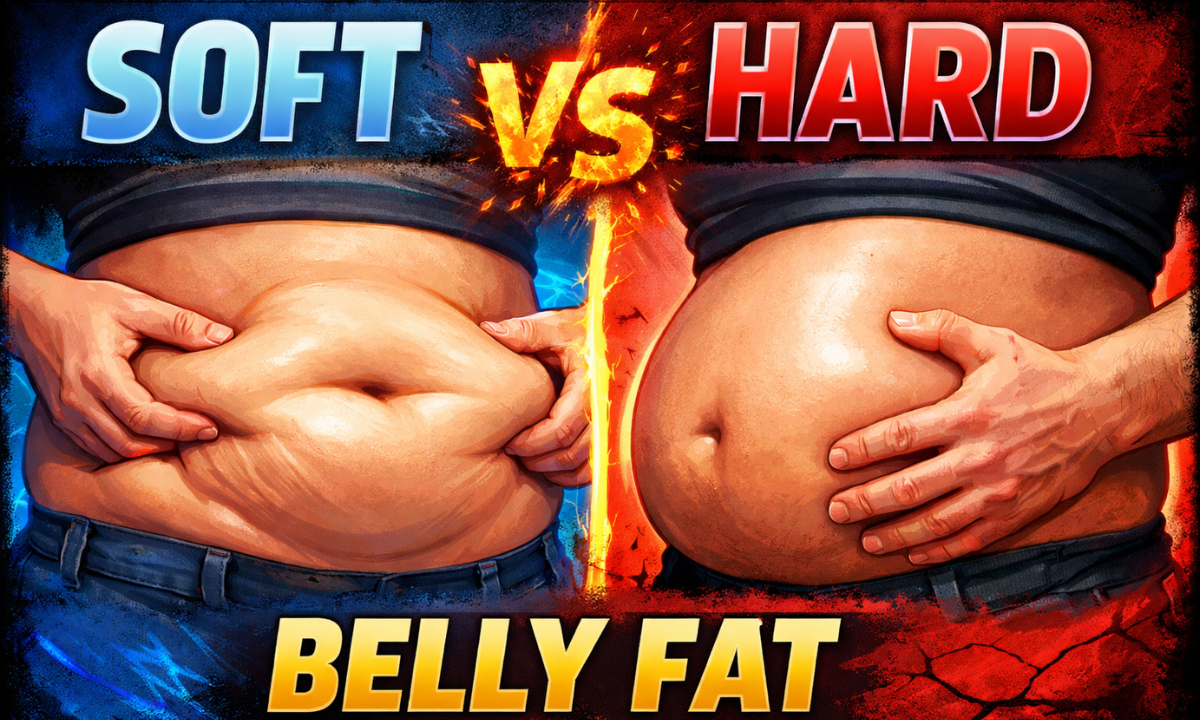

Soft vs Hard Belly Fat is not just about appearance or weight gain – it is a clear window into your internal health. Many people notice that their belly feels soft and pinchable, while others experience a tight, firm, or hard stomach, yet few understand the serious medical differences behind this.
Gastroenterologists explain that the type of belly fat you carry plays a major role in hormone balance, insulin resistance, liver function and heart health. Hard belly fat is often linked to deeper metabolic problems, while soft belly fat usually reflects lifestyle habits.
Ignoring these signs can allow silent health conditions to progress unnoticed. By understanding the difference between soft vs hard belly fat, you can identify early warning signals, make informed lifestyle changes, and protect yourself from long-term risks such as diabetes, fatty liver disease and heart problems. Awareness is the first step toward better health and lasting wellness.
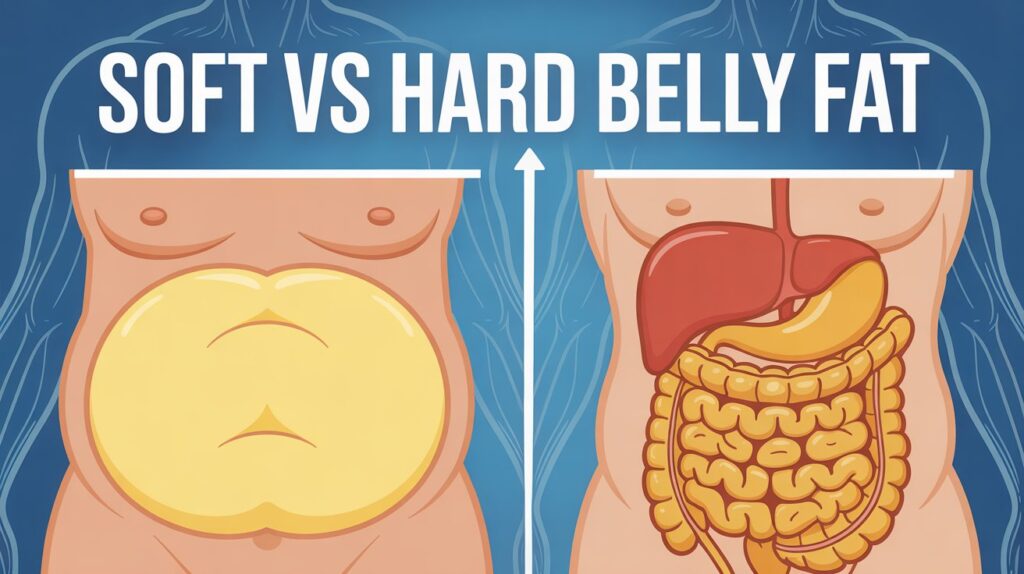
Table of Contents
🧩 What Is Belly Fat?
Belly fat refers to fat stored around the abdomen. It is different from fat stored in the hips, thighs or arms. From a medical point of view, belly fat is divided into two major types. One lies just under the skin, while the other sits deep inside the abdomen around vital organs. The way your belly feels to touch gives an important clue about which type of fat dominates your body and how risky it may be.
Read more: Protecting Your Health Demands No Money: 7 Powerful Truths Experts Reveal
🍃 Soft vs Hard Belly Fat
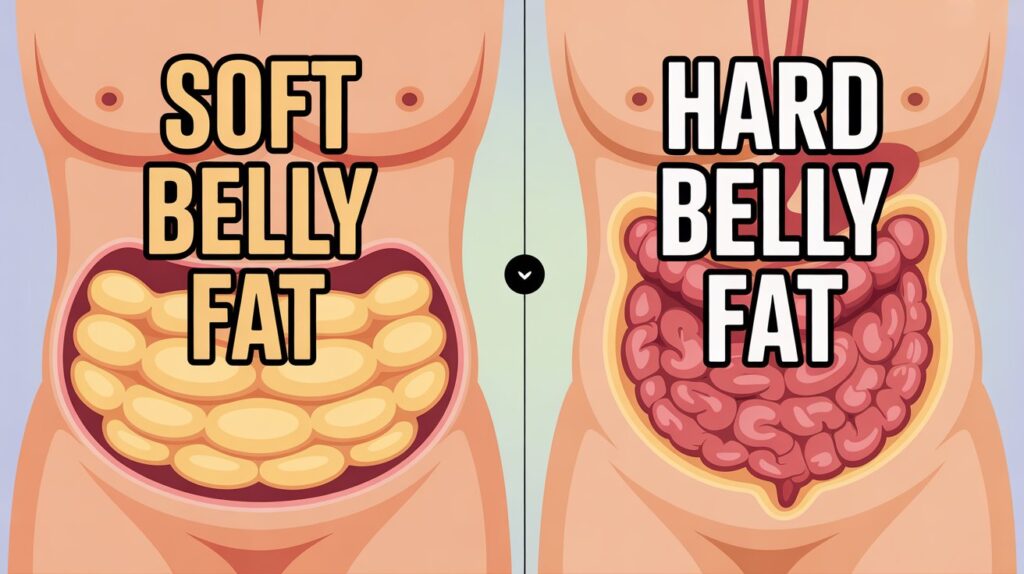
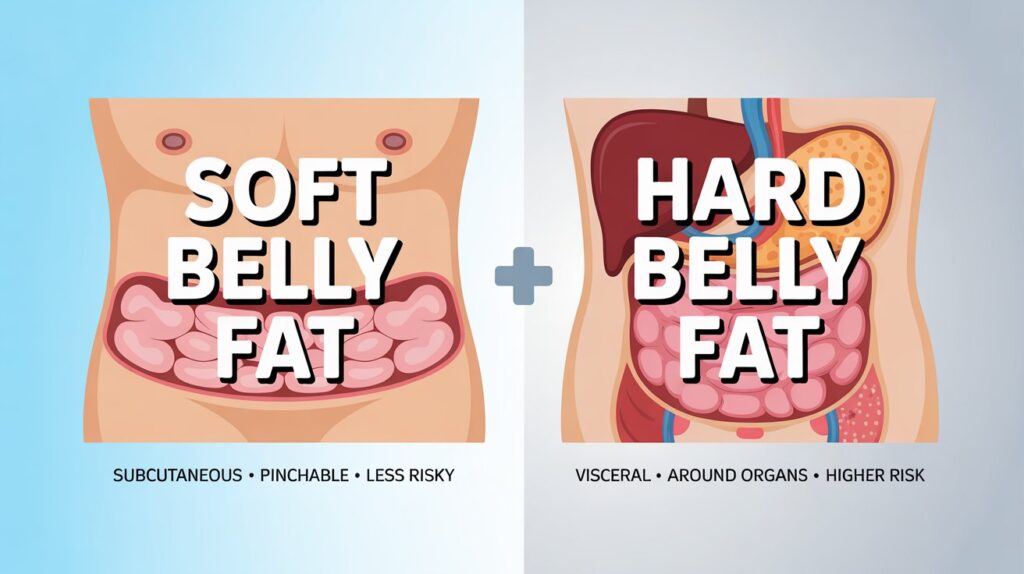
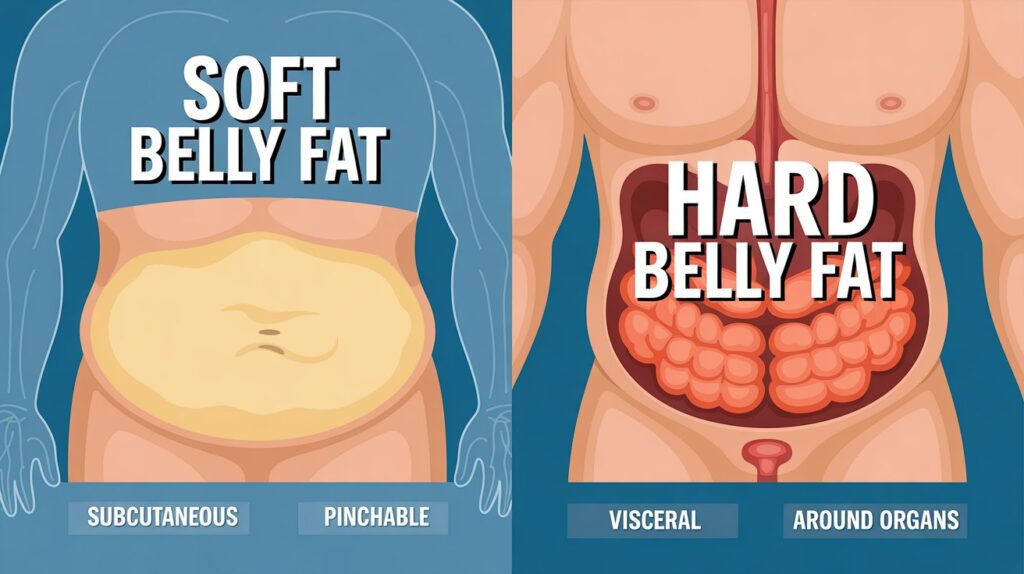
Soft belly fat is the fat you can easily pinch. It feels loose, movable and spongy.
Hard belly fat feels tight, firm, rounded and resistant when pressed.
These two types behave very differently inside the body and affect hormones, insulin, liver and heart health in completely different ways.
📊 Soft vs Hard Belly Fat Comparison
| Feature | Soft Belly Fat | Hard Belly Fat |
|---|---|---|
| Medical Name | Subcutaneous Fat | Visceral Fat |
| Location | Under the skin | Deep around organs |
| Texture | Soft, jiggly | Firm, tight |
| Visibility | Can hang or fold | Creates round, tense belly |
| Hormonal Impact | Mild | Severe |
| Insulin Resistance | Low to moderate | High |
| Liver Risk | Low | High |
| Heart Disease Risk | Lower | Very high |
| Inflammation Level | Mild | Chronic and severe |
| Health Danger | Mostly cosmetic | Medically dangerous |
🩺 Soft vs Hard Belly Fat Explained by a Gastroenterologist
From a gastroenterologist’s perspective, hard belly fat is far more dangerous than soft belly fat. The reason lies in where the fat is stored and how it behaves metabolically. Hard belly fat wraps around organs like the liver, pancreas, intestines and even affects gut blood supply. This fat is hormonally active, meaning it releases toxic substances directly into the bloodstream. Soft belly fat, although not ideal, acts more like stored energy and is less aggressive toward internal organs.
Read more: Diabetes Global Health and Economic Threat: 7 Shocking Realities the World Can’t Ignore
⚠️ Why Hard Belly Fat Is Medically Dangerous
Hard belly fat is also called visceral fat. This fat releases inflammatory chemicals known as cytokines. These chemicals disrupt insulin function, damage liver cells and stiffen blood vessels. From a digestive health point of view, visceral fat increases the risk of fatty liver disease, acid reflux, gut inflammation and poor nutrient absorption. It also compresses the intestines, slowing digestion and causing bloating and constipation.
🧬 Soft vs Hard Belly Fat and Hormones
Hormones play a major role in where fat is stored. Hard belly fat is strongly linked to cortisol, the stress hormone. Chronic stress keeps cortisol levels high, forcing fat to deposit deep inside the abdomen. In men, low testosterone promotes hard belly fat. In women, estrogen imbalance after menopause increases visceral fat accumulation. Soft belly fat is more influenced by calorie excess and lack of physical activity rather than hormonal disruption.
💉 Soft vs Hard Belly Fat and Insulin Resistance
Insulin resistance is a condition where the body stops responding properly to insulin, leading to high blood sugar levels. Hard belly fat directly causes insulin resistance by releasing free fatty acids into the bloodstream. These fatty acids block insulin receptors and push the body toward type 2 diabetes. Soft belly fat does not aggressively interfere with insulin function. People with mostly soft belly fat may still have normal blood sugar levels.
Read more: How to Fight Strongly Against India’s “Diabeticity” Crisis: 9 Powerful and Urgent Solutions
🧪 Soft vs Hard Belly Fat and Liver Health
From a gastroenterologist’s view, the liver suffers the most from hard belly fat. Visceral fat drains directly into the liver through the portal vein. This overloads the liver with fat and toxins, leading to fatty liver disease, also known as NAFLD. Soft belly fat rarely causes direct liver damage unless it becomes excessive over many years. A hard belly is often the first visible sign of silent liver disease.
❤️ Soft vs Hard Belly Fat and Heart Disease
Hard belly fat is one of the strongest predictors of heart attack and stroke. It increases bad cholesterol, raises blood pressure, stiffens arteries, and promotes plaque formation. Even people who appear slim but have a hard belly are at high cardiovascular risk. Soft belly fat may affect heart health only when total body fat becomes very high.
Read more: Beyond Yoga 7 Powerful Ways to Transform Mind, Body and Life
🔥 Inflammation: The Hidden Link
Chronic inflammation is the silent killer behind most modern diseases. Hard belly fat continuously releases inflammatory substances that damage blood vessels, liver tissue, gut lining, and even brain cells. Soft belly fat produces much lower levels of inflammatory signals. This is why doctors focus more on waist size and belly hardness than body weight alone.
🧍♂️ Why Some Slim People Have Hard Bellies
Many people are surprised to learn that thin individuals can still have dangerous hard belly fat. This condition is often caused by poor diet, lack of muscle, chronic stress, alcohol intake and lack of sleep. This is why BMI alone is not a reliable health indicator.
🥗 Diet Impact on Soft vs Hard Belly Fat
Highly processed foods, sugar, refined carbohydrates, alcohol, and trans fats directly feed visceral fat. Whole foods, fiber-rich vegetables, protein, healthy fats and fermented foods protect against hard belly fat by improving gut health and insulin sensitivity.
Read more: Shocking Truth: 12 Common Food Preservatives Which Increased Risk of Cancer
🏃 Exercise and Belly Fat Type
Strength training and high intensity movement are most effective against hard belly fat because they improve insulin sensitivity and hormone balance. Walking and light activity help reduce soft belly fat over time but are less effective for visceral fat unless combined with resistance exercise.
🛌 Sleep, Stress and Belly Fat
Poor sleep and chronic stress are powerful triggers for hard belly fat. Even with a good diet, stress hormones can force fat to accumulate deep inside the abdomen. Managing sleep and stress is as important as diet and exercise for belly fat reduction.
🌱 Can Hard Belly Fat Be Reversed?
Yes, hard belly fat can be reduced with consistent lifestyle changes. The body responds quickly when insulin sensitivity improves and inflammation decreases. Soft belly fat may take longer to disappear visually but is less harmful medically.
Read more: Sleeping Less Than 7 Hours Lifespan Warning: Shocking Study Reveals 7 Deadly Risks
🌈 Know Your Belly, Protect Your Life
Understanding Soft vs Hard Belly Fat is not about body image. It is about survival, longevity and quality of life. A hard belly is a medical warning sign that should never be ignored. It signals hormonal imbalance, insulin resistance, liver stress, and heart risk. A soft belly, while not ideal, is far less dangerous and easier to manage with gradual lifestyle improvements.
The good news is that the body is incredibly adaptable. With the right knowledge, awareness and daily habits, belly fat can be reduced, health can be restored, and life expectancy can be improved. Your belly tells a story. Make sure it is a healthy one.
❓ FAQs
Soft belly fat is stored under the skin and feels loose, while hard belly fat is stored deep around organs and feels firm. Hard belly fat is more dangerous because it affects hormones, insulin resistance, liver function and heart health. Soft belly fat is usually less harmful and mostly linked to calorie excess rather than metabolic disease.
Doctors focus on hard belly fat because it releases inflammatory chemicals directly into the bloodstream. This increases the risk of diabetes, fatty liver disease, heart attacks and strokes. Even people with normal weight can have dangerous hard belly fat, making it a silent but serious health risk.
Yes, soft belly fat can turn into hard belly fat over time if lifestyle habits worsen. Poor diet, chronic stress, lack of sleep, alcohol intake and physical inactivity can push fat deeper into the abdomen, increasing visceral fat and metabolic risk.
Hard belly fat is strongly linked to hormonal imbalance. High cortisol, low testosterone in men and estrogen imbalance in women promote visceral fat storage. Hormonal changes with aging also increase the risk of developing a hard belly even without major weight gain.
The most effective way to reduce hard belly fat is improving insulin sensitivity through strength training, reducing sugar and refined carbs, managing stress, sleeping well and eating whole foods. Consistency matters more than quick fixes, as visceral fat responds to long term metabolic improvements.