
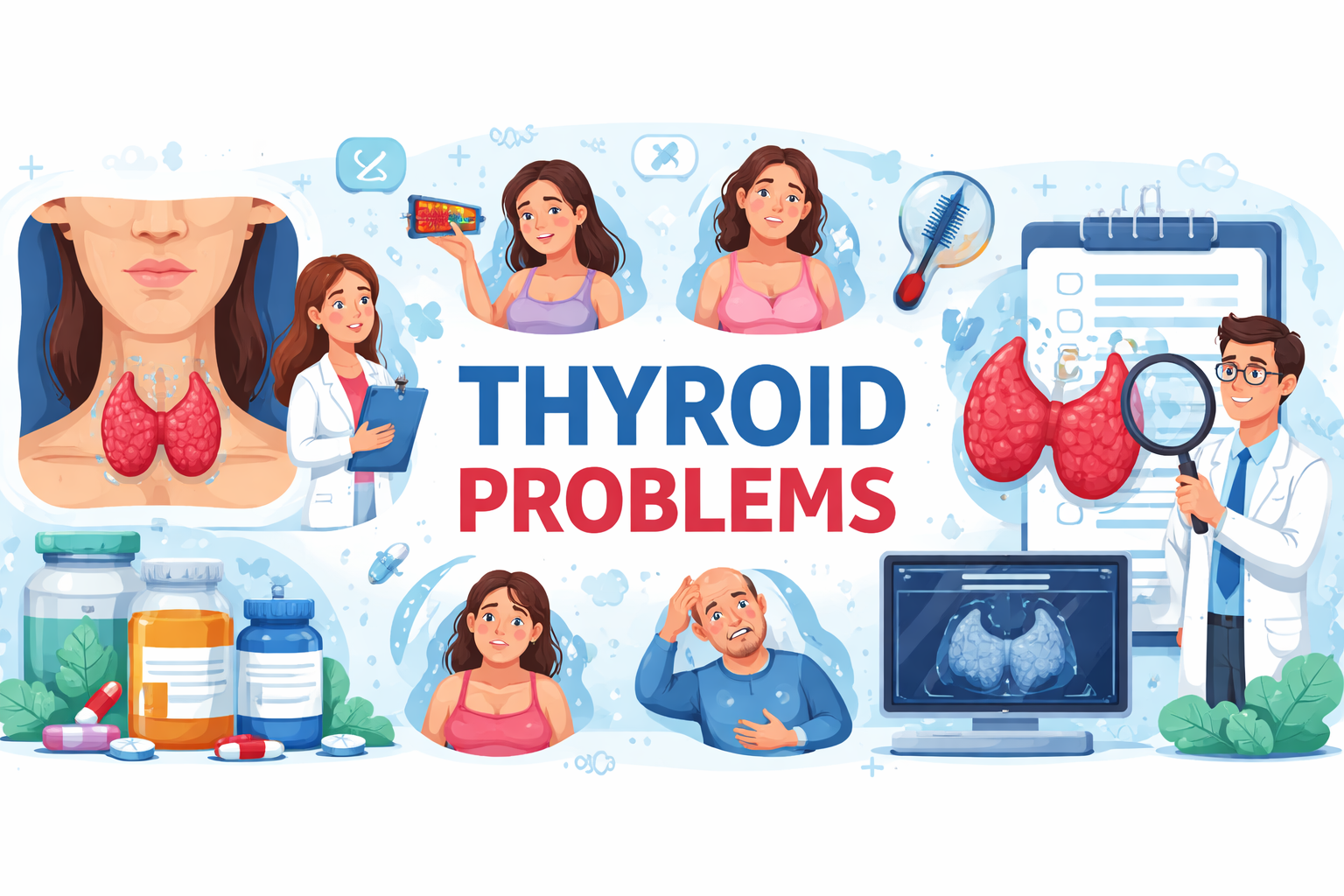

Thyroid problems are becoming increasingly common in people of all ages, especially due to modern lifestyle habits, stress, poor diet and hormonal imbalances. The thyroid is a small butterfly shaped gland located in the front of the neck but its role in the body is extremely powerful. It controls metabolism, energy levels, heart rate, digestion, weight, mood and even body temperature. When the thyroid gland does not work properly, it can slow down or speed up many vital body functions. These conditions are broadly known as thyroid problems. Many people live with thyroid disorders without realizing it because the symptoms often develop slowly and may be mistaken for normal tiredness or aging. Understanding thyroid problems early can help prevent serious health complications and improve overall quality of life.
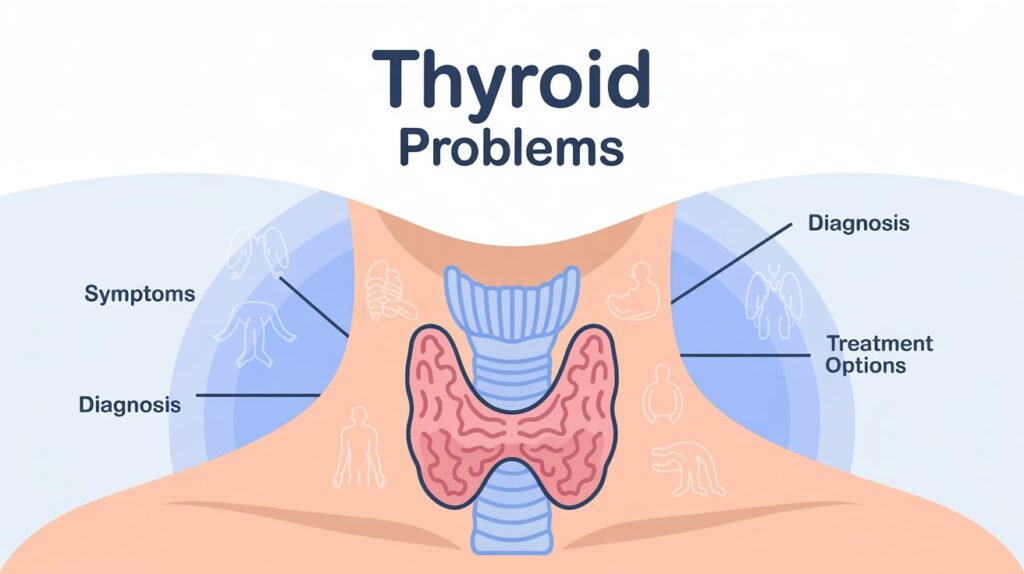
Table of Contents
🧠 What Is the Thyroid Gland and How Does It Work?
The thyroid gland produces hormones called T3 (Triiodothyronine) and T4 (Thyroxine). These hormones regulate how the body uses energy. The brain controls the thyroid through the pituitary gland, which releases Thyroid Stimulating Hormone (TSH). When thyroid hormone levels are low, TSH increases and when thyroid hormone levels are high, TSH decreases. A healthy thyroid maintains a perfect balance. When this balance is disturbed, thyroid problems begin, affecting nearly every system of the body.
⚖️ Types of Thyroid Problems
There are several types of thyroid problems, each with different causes and effects on the body. The most common ones are explained below-
📊 Common Types of Thyroid Disorders
| Thyroid Condition | Description | Main Impact on Body |
|---|---|---|
| Hypothyroidism | Thyroid produces too little hormone | Slow metabolism, weight gain |
| Hyperthyroidism | Thyroid produces too much hormone | Fast metabolism, weight loss |
| Goiter | Enlarged thyroid gland | Neck swelling, discomfort |
| Thyroid Nodules | Lumps in the thyroid gland | May or may not affect hormones |
| Thyroiditis | Inflammation of thyroid | Temporary hormone imbalance |
| Hashimoto’s Disease | Autoimmune hypothyroidism | Long-term hormone deficiency |
| Graves’ Disease | Autoimmune hyperthyroidism | Persistent hormone excess |
🚨 Symptoms of Thyroid Problems
Symptoms of thyroid problems vary depending on whether the thyroid is underactive or overactive. Many symptoms are subtle at first but gradually become more noticeable.
🧊 Symptoms of Hypothyroidism
People with hypothyroidism often feel tired and sluggish even after adequate rest. Weight gain occurs despite normal eating habits. Cold intolerance, dry skin, hair fall, constipation, depression, slow heart rate and memory problems are common. Women may experience irregular periods or fertility issues.
🔥 Symptoms of Hyperthyroidism
Hyperthyroidism often causes sudden weight loss, rapid heartbeat, anxiety, excessive sweating, heat intolerance, trembling hands, frequent bowel movements, sleep disturbances and muscle weakness. Mood swings and difficulty concentrating are also common.
| Symptom Category | Hypothyroidism (Low Thyroid) | Hyperthyroidism (High Thyroid) |
|---|---|---|
| Energy Levels | Constant tiredness, fatigue | Restlessness, excess energy |
| Weight Changes | Weight gain despite normal diet | Sudden weight loss |
| Body Temperature | Feeling cold often | Heat intolerance, sweating |
| Heart Rate | Slow heartbeat | Fast or irregular heartbeat |
| Mood & Mental Health | Depression, poor memory | Anxiety, irritability |
| Hair & Skin | Hair fall, dry skin | Thin hair, warm moist skin |
| Digestion | Constipation | Frequent bowel movements |
| Sleep Pattern | Excessive sleepiness | Insomnia, disturbed sleep |
| Menstrual Changes | Heavy or irregular periods | Light or missed periods |
| Muscle Strength | Muscle weakness, cramps | Muscle weakness, tremors |
| Neck Appearance | Possible swelling (goiter) | Possible swelling (goiter) |
| Eye Changes | Puffy eyes | Bulging or irritated eyes |
| Appetite | Decreased appetite | Increased appetite |
⌛ Recognizing these symptoms early can help in timely diagnosis and effective treatment.
🔬 Causes of Thyroid Problems
Thyroid problems can occur due to multiple reasons. Autoimmune diseases are the most common cause, where the immune system mistakenly attacks the thyroid gland. Iodine deficiency or excess can also disrupt thyroid function. Hormonal changes during pregnancy, stress, infections, genetic factors and certain medications can contribute to thyroid imbalance. Environmental factors like pollution, processed foods, and sedentary lifestyles have also increased the risk of thyroid disorders in recent years.
⚠️ Causes
• Autoimmune disorders like Hashimoto’s and Graves’ disease cause immune attack on thyroid.
• Iodine deficiency or excess disrupts hormone production and normal thyroid function.
• Genetic predisposition increases risk when close family members have thyroid disorders.
• Hormonal changes during pregnancy, postpartum period or menopause trigger thyroid imbalance.
• Chronic stress elevates cortisol, interfering with thyroid hormone conversion and regulation.
• Certain medications such as lithium or amiodarone affect thyroid hormone synthesis.
• Thyroid infections or inflammation, known as thyroiditis, temporarily disturb hormone levels.
• Radiation exposure, environmental toxins, and excessive processed foods impair thyroid health.
• Aging and pituitary gland disorders can alter TSH control over the thyroid.
🧪 Diagnosis and Thyroid Tests
Diagnosing thyroid problems is simple and usually involves blood tests. The most commonly recommended test is the TSH test. Doctors may also check T3, T4 and thyroid antibody levels for a detailed evaluation. In some cases, imaging tests like ultrasound or radioactive iodine uptake tests are used to examine thyroid structure and activity. Early diagnosis helps prevent complications and allows better management of symptoms.
💊 Treatment Options for Thyroid Problems
Treatment depends on the type and severity of the thyroid disorder. Hypothyroidism is usually treated with synthetic thyroid hormone medication that replaces the missing hormone. This treatment is safe, effective and often lifelong. Hyperthyroidism may be treated with medications that reduce hormone production, radioactive iodine therapy, or surgery in severe cases. With proper treatment and regular monitoring, most people with thyroid problems can lead normal, healthy lives.
🥗 Diet and Lifestyle for Thyroid Health
A balanced diet plays an important role in managing thyroid problems. Foods rich in iodine, selenium, zinc, and iron support thyroid function. Fresh fruits, vegetables, whole grains, nuts, seeds, and lean proteins are beneficial. Reducing stress through yoga, meditation and regular exercise can significantly improve thyroid balance. Adequate sleep and avoiding excessive caffeine and processed foods also help maintain hormonal harmony.
🧊 Hypothyroidism Diet & Lifestyle Chart
| Category | Recommended | Health Benefit |
|---|---|---|
| Iodine Sources | Iodized salt, milk, eggs | Helps low thyroid hormone production |
| Selenium Foods | Brazil nuts, sunflower seeds | Improves T4 to T3 conversion |
| Zinc Intake | Pumpkin seeds, lentils | Enhances hormone activity |
| Protein | Dal, paneer, fish | Boosts metabolism and energy |
| Vegetables | Cooked leafy greens, carrots | Improves digestion |
| Fruits | Apples, berries | Increase immunity |
| Exercise | Walking, yoga | Reduces fatigue and weight gain |
| Sleep | 7–8 hours daily | Restores hormone balance |
| Stress Control | Meditation, pranayama | Lowers cortisol |
| Foods to Limit | Raw cabbage, soy, sugar | Prevents hormone interference |
🔥 Hyperthyroidism Diet & Lifestyle Chart
| Category | Recommended | Health Benefit |
|---|---|---|
| Calcium Foods | Milk, yogurt, cheese | Protects bone health |
| Magnesium | Nuts, seeds | Reduces muscle weakness |
| Complex Carbs | Brown rice, oats | Maintains energy |
| Protein | Beans, legumes | Prevents muscle loss |
| Hydration | Coconut water, water | Prevents dehydration |
| Cooling Foods | Cucumber, fruits | Reduces heat intolerance |
| Exercise | Light yoga, stretching | Calms nervous system |
| Sleep | Proper rest | Controls hormone excess |
| Stress Relief | Mindfulness | Stabilizes heart rate |
| Foods to Avoid | Caffeine, spicy food | Reduces symptom flare-ups |
👩⚕️ Thyroid Problems in Women and Men
Thyroid problems are more common in women, especially during pregnancy, postpartum period and menopause. Hormonal fluctuations increase vulnerability. However, men can also develop thyroid disorders, often with more severe symptoms due to delayed diagnosis. Regular screening is important for both men and women, especially if there is a family history of thyroid disease.
🛡️ Can Thyroid Problems Be Prevented?
While not all thyroid problems can be prevented, early detection and healthy lifestyle choices reduce the risk. Regular health check-ups, balanced nutrition, stress management and avoiding smoking contribute to better thyroid health. Awareness is the strongest preventive tool. Understanding early symptoms and seeking medical advice can prevent long time complications.
🚀 Strong Call to Action
Thyroid problems may be common but they should never be ignored. Early awareness, timely diagnosis, and the right lifestyle choices can transform your health and energy levels. If you or your loved ones experience any symptoms of thyroid imbalance, consult a healthcare professional today. Take control of your thyroid health now and start living a more energetic, balanced and confident life.
❓ Frequently Asked Questions (FAQs) About Thyroid Problems
Early warning signs of thyroid problems include unexplained fatigue, weight changes, mood swings, hair thinning, irregular heartbeat and changes in body temperature tolerance. These symptoms often develop slowly and may be mistaken for stress or aging. If such signs persist for several weeks, it is important to consult a doctor and get thyroid blood tests done for early diagnosis and proper treatment.
Many thyroid problems, especially hypothyroidism caused by autoimmune conditions are long term and may require lifelong medication. However with proper treatment and regular monitoring, people can live completely normal lives. Some thyroid conditions like thyroiditis may be temporary and resolve on their own. The duration depends on the underlying cause and timely medical care.
Yes, thyroid problems significantly affect body weight. Hypothyroidism slows metabolism, leading to weight gain, while hyperthyroidism speeds up metabolism, causing weight loss. These changes often occur despite normal eating habits. Treating the thyroid imbalance usually helps stabilize weight, although lifestyle changes are also important for long term results.
Thyroid problems can run in families, especially autoimmune thyroid disorders like Hashimoto’s disease and Graves’ disease. Having a family history increases the risk but does not guarantee development of the condition. Regular screening and awareness of symptoms are especially important for individuals with a genetic predisposition.
Lifestyle changes play a supportive role in managing thyroid problems. A balanced diet, stress reduction, regular exercise, adequate sleep and avoiding smoking can improve overall thyroid function and enhance treatment outcomes. While lifestyle changes alone cannot cure thyroid disorders, they significantly improve quality of life and symptom control.