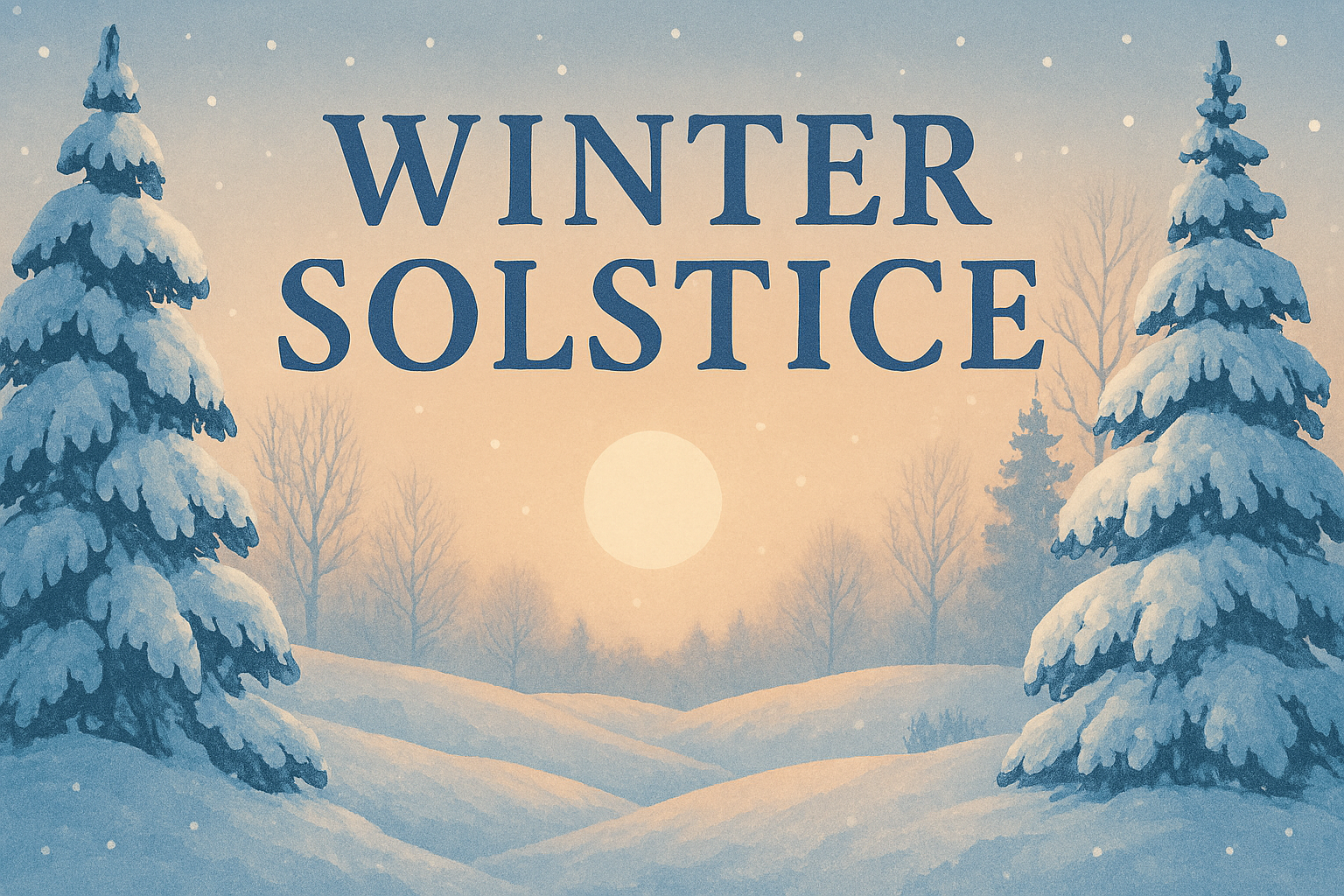

The Winter Solstice is one of the most powerful and meaningful natural events on Earth. It marks the shortest day and the longest night of the year, a moment when darkness reaches its peak before light slowly returns. For thousands of years, humans have watched the sky during this time, celebrating not darkness but the promise of brighter days ahead. The Winter Solstice usually happens around December 21 or December 22 in the Northern Hemisphere, while in the Southern Hemisphere it occurs around June 20 or June 21.
Even though modern life often disconnects us from nature, the Winter Solstice still holds deep scientific, cultural, emotional and spiritual importance. It reminds us that every ending carries a new beginning and that even the longest night eventually leads to sunrise.
Table of Contents
🌞 What Is the Winter Solstice?
The Winter Solstice happens when the Earth tilts farthest away from the Sun. At this point, the Sun appears at its lowest position in the sky at noon. Because of this angle, sunlight travels a shorter path, giving us fewer daylight hours than any other day of the year.
This event is not caused by the Earth being farther from the Sun, which is a common misunderstanding. In fact, Earth is closer to the Sun during winter in the Northern Hemisphere. The real reason lies in Earth’s tilt of about 23.5 degrees, which controls seasons and daylight length.
🔬 The Science Behind the Winter Solstice
The Winter Solstice is a perfect example of how precise and predictable nature is. Earth moves around the Sun in an elliptical orbit, and its tilt causes different parts of the planet to receive varying amounts of sunlight throughout the year.
During the Winter Solstice in the Northern Hemisphere, the North Pole tilts away from the Sun, while the South Pole tilts toward it. This is why countries like Australia experience summer when countries like India, the USA and Europe face winter.
After the solstice, daylight increases by a few seconds each day. Though this change is subtle at first, it symbolically represents growth, renewal and hope.
🌎 Winter Solstice Across the World
The Winter Solstice has been honored by cultures across the globe for thousands of years. Ancient people understood the sky better than we often imagine, building monuments aligned perfectly with the Sun’s movement.
Stonehenge in England is one of the most famous examples. On the Winter Solstice, the Sun aligns perfectly with the stones, marking the rebirth of light. In ancient Rome, the festival of Saturnalia celebrated abundance and joy during this time. In China, the Dongzhi Festival honors family, balance and harmony. In India, festivals like Makar Sankranti are closely connected to the Sun’s northward movement following the solstice.
🔥 Spiritual Meaning of Winter Solstice
Spiritually, the Winter Solstice represents transformation. Darkness symbolizes rest, reflection and inner work, while the returning light represents clarity, growth and awakening. Many spiritual traditions see this time as a moment to release old habits, forgive the past and set intentions for the future.
The long night encourages silence and stillness. It reminds us that rest is not weakness but preparation. Just as seeds rest underground before sprouting, humans also need moments of quiet to grow stronger.
🧠 Emotional and Psychological Impact of Winter Solstice
Winter often affects mood and energy levels due to reduced sunlight. The Winter Solstice can feel heavy, but it also carries comfort. Knowing that days will slowly become longer helps many people feel hopeful and motivated.
This period encourages slowing down, spending time with loved ones, reflecting on the year and practicing gratitude. Many people feel a sense of calm after the solstice, as if nature itself is gently guiding them forward.
📅 Winter Solstice Dates
| Hemisphere | Typical Date | Daylight Experience |
|---|---|---|
| Northern Hemisphere | December 21 or 22 | Shortest day, longest night |
| Southern Hemisphere | June 20 or 21 | Longest day, shortest night |
The exact date changes slightly each year due to leap years and Earth’s orbit.
🕯️ Modern Ways to Observe the Winter Solstice
Today, people celebrate the Winter Solstice in both simple and meaningful ways. Some light candles to symbolize the return of light. Others meditate, journal or spend time in nature. Families may gather for warm meals, expressing gratitude and setting intentions for the coming year.
Even without rituals, simply watching a sunrise or sunset on this day can feel deeply grounding and powerful.
📊 Informational Overview Data
| Aspect | Details |
|---|---|
| Astronomical Event | Sun reaches lowest point in the sky |
| Daylight Length | Shortest of the year |
| Main Theme | Darkness giving way to light |
| Scientific Cause | Earth’s axial tilt |
| Cultural Importance | Celebrated worldwide for renewal |
| Spiritual Meaning | Reflection, rebirth, hope |
| Seasonal Shift | Beginning of longer days |
🌟 Conclusion
The Winter Solstice is more than just an astronomical event. It is a reminder written into the fabric of nature that change is constant and darkness is never permanent. Even on the shortest day, light still exists, waiting patiently to grow stronger.
In a transitional world, the Winter Solstice invites us to slow down, reflect and reconnect with ourselves and the Earth. It teaches patience, resilience and trust in natural cycles. As the light returns, so does the promise of new beginnings.
❓ Frequently Asked Questions (FAQ) About Winter Solstice
The Winter Solstice is the day with the shortest daylight and longest night of the year.
It happens because the Earth is tilted, causing less sunlight to reach certain parts of the planet.
No, it usually falls on December 21 or 22 due to calendar adjustments.
Yes, many cultures and traditions around the world observe it in different ways.