
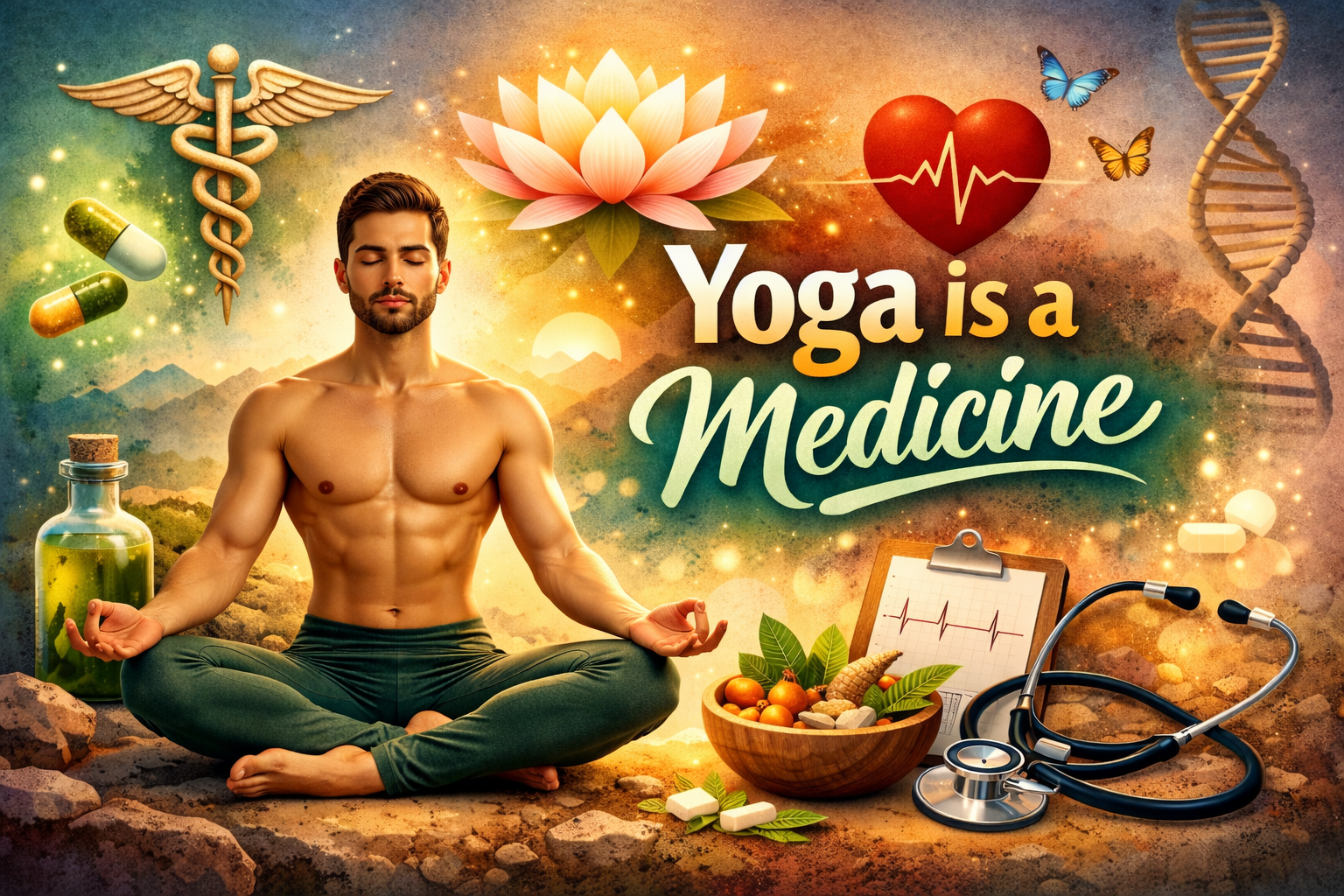

Yoga is a medicine, not a trend, not a fashion and definitely not just stretching on a mat. From ancient times to modern science labs, yoga has quietly proven one simple truth: when practiced correctly, it works like preventive and restorative medicine for the human body and mind. In a world where pills come with side effects and stress arrives without warning, yoga steps in calmly and says, “Breathe first.”

Table of Contents
🌿 What Does “Yoga is a Medicine” Really Mean?
Yoga is a medicine means yoga works on the root cause, not just the symptoms. Modern medicine often focuses on treating pain, disease or discomfort after it appears. Yoga focuses on preventing those issues and helping the body heal itself naturally.
Yoga uses movement, breath and awareness together. This combination affects muscles, joints, organs, hormones, nerves and even thought patterns. Unlike a tablet that works for a few hours, yoga builds long term balance. Think of it as upgrading your body’s internal software instead of installing temporary patches.
Read more: Top 6 Yoga Poses That Help You Stay Young and Ageless Naturally
🧠 The Logic Behind Yoga as a Natural Medicine
The human body is not a machine made of spare parts. Everything connects. Stress affects digestion. Poor sleep affects immunity. Weak posture affects breathing. Yoga understands this connection deeply.
When you practice yoga, you improve blood circulation, oxygen delivery and nerve signalling. This helps organs perform better. Stress hormones like cortisol reduce, while feel good chemicals like serotonin increase. The body then enters repair mode. That is why people often feel lighter, calmer and clearer after yoga. No magic. Just biology working as it should.

📊 Yoga vs Modern Medicine
| Aspect | Yoga as a Medicine | Modern Medicine |
|---|---|---|
| Approach | Preventive and holistic | Reactive and symptom based |
| Side Effects | Minimal when practiced correctly | Possible and sometimes severe |
| Cost | Low to almost free | Often expensive |
| Focus | Root cause healing | Immediate relief |
| Long-Term Impact | Improves lifestyle and habits | Depends on continued medication |
| Mental Health | Strong positive impact | Often treated separately |
This table shows why yoga is a medicine that complements modern healthcare rather than replacing it.
Read more: Yoga: The Ancient Path to Healthy Body, Calm Mind and Improved Life Quality for 365 Days
🧘♂️ How Yoga Works Like Medicine Inside the Body
Yoga directly influences three major systems: nervous, endocrine and immune systems. The nervous system shifts from fight-or-flight mode to rest-and-repair mode. This alone explains why yoga reduces anxiety and improves sleep. The endocrine system balances hormones. Regular yoga practice helps regulate insulin, thyroid hormones and stress hormones. The immune system becomes stronger due to better circulation, reduced inflammation and improved gut health. When these systems work well, many lifestyle diseases reduce naturally.
❤️ Yoga is a Medicine for Lifestyle Diseases
Lifestyle diseases do not appear overnight. They grow slowly through poor habits, stress and inactivity. Yoga addresses these exact causes. People practicing yoga regularly show better blood sugar control, improved blood pressure, healthier cholesterol levels and better weight management. Yoga does not force the body. It teaches it to cooperate. The best part is consistency matters more than intensity. Even gentle daily yoga creates measurable health benefits over time.
Read more: Colour of Life Revealed: 7 Powerful Truths You Must Know Today
😌 Yoga is a Medicine for Mental Health
Mental health struggles often hide behind smiles. Yoga helps by calming the mind without suppressing emotions. Breathing practices improve oxygen flow to the brain. Meditation improves focus and emotional regulation. Physical postures release stored tension. Yoga does not ask you to “stop thinking.” It teaches you how to observe thoughts without drowning in them. That skill alone can reduce anxiety and burnout significantly.
🧘 Yoga is a Medicine Backed by Science
Scientific research supports yoga’s benefits. Studies show yoga helps reduce chronic pain, improve flexibility, lower stress and enhance overall well-being. Doctors now recommend yoga for conditions like back pain, arthritis, anxiety and insomnia. Hospitals include yoga therapy programs. Insurance companies acknowledge its preventive value. Science did not create yoga. Science finally caught up with it.

🌍 Yoga is a Medicine for All Ages
Yoga does not discriminate by age. Children benefit from better focus and posture. Adults gain stress relief and strength. Seniors improve balance and joint mobility. Yoga adapts to the body instead of forcing the body to adapt. That flexibility makes yoga a medicine suitable for lifelong use.
🕉️ Why Yoga Heals Without Hurting
Yoga respects the body’s limits. Pain is not a goal. Awareness is. When practiced correctly, yoga improves body intelligence. You learn when to push and when to rest. This reduces injuries and promotes sustainable health. Yoga does not promise overnight miracles. It promises steady improvement. And that honesty makes it powerful.
😄 A Little Humor, Because Healing Should Smile
If yoga were a pill, doctors would say, “Take one deep breath daily.” Side effects may include better sleep, fewer bad moods and sudden interest in healthy food. Yoga does not shout. It whispers. And somehow, the body listens.
Read more: Somatic Yoga: The Best Healing Practice That Reconnects Your Mind and Body Naturally
🔍 Why “Yoga is a Medicine” Matters Today
Modern life moves fast. Bodies do not. Screens, stress and sitting all day push the body away from its natural rhythm. Yoga pulls it back gently. Calling yoga a medicine reminds us that health does not always come from outside. Sometimes, it starts with a breath you forgot to take.
🌟 Yoga is a Medicine, Not a Shortcut
Yoga is a medicine because it restores balance, builds awareness and helps natural healing. It does not replace doctors. It helps them. It does not fight the body. It listens to it. When practiced with patience and respect, yoga becomes one of the safest, smartest and most sustainable ways to stay healthy. The real power of yoga is simple. It teaches you how to take care of yourself – one breath at a time.
❓FAQs
Yoga is a medicine because it works beyond physical exercise. It influences the nervous system, hormones and mental health together. Unlike regular workouts, yoga combines movement, breathing and awareness, which helps prevent and manage lifestyle diseases. Medical professionals increasingly recommend yoga as a supportive therapy due to its proven benefits in stress reduction, pain management and overall well-being.
Yoga does not replace modern medicine. It complements it. Yoga works best as preventive care and supportive therapy. For serious medical conditions, professional medical treatment remains essential. Yoga helps improve recovery, reduce stress and enhance quality of life, making treatments more effective and sustainable when combined with medical guidance.
Consistency matters more than duration. Practicing yoga for 20 to 30 minutes daily provides noticeable benefits over time. Regular practice helps improve flexibility, mental clarity, digestion and immunity. Even three to five sessions per week can helps long term physical and mental health when practiced correctly and mindfully.
Yoga is safe for seniors and beginners when practiced under proper guidance. Gentle yoga styles focus on mobility, balance and breathing. Yoga adapts to individual needs, making it suitable for all ages. Listening to the body and avoiding strain ensures safety and effective healing benefits.
Doctors recommend yoga because research shows it reduces stress, improves posture, lowers blood pressure and helps mental health. Yoga improves lifestyle habits and encourages mindfulness, which plays a key role in preventing chronic diseases. Its low cost, minimal side effects and holistic benefits make it a trusted wellness tool.